

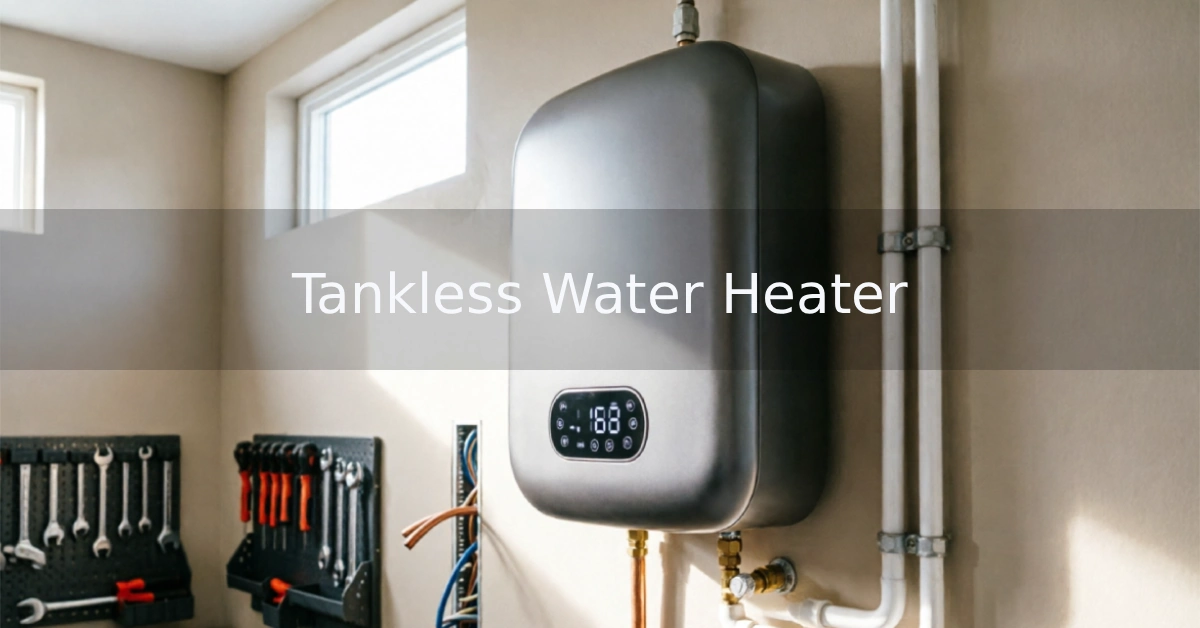
Cold showers are a hard no. If your current water heater keeps you guessing, a tankless water heater might be the upgrade your house has been waiting for. It’s not just a plumbing swap — it’s a lifestyle flex, giving you hot water on demand without the giant tank hogging space in your utility closet. Let’s break down what it does, what it costs, and whether it’s actually worth the switch.
What Is a Tankless Water Heater, Really?
A tankless water heater skips the storage tank entirely. Instead, it heats water the moment you turn on the tap, using a heat exchanger to warm it as it flows through the unit. No standing water sitting around losing heat all day. That means less wasted energy and, in most homes, a smaller utility bill over time. It’s a compact box on the wall doing a big tank’s job.
Traditional tanks keep 40 to 50 gallons hot around the clock, whether you need it or not. A tankless water heater only fires up when you open the faucet. Once you close it, the unit shuts off. This on-demand setup is the whole reason people call it more efficient than the old-school storage models.
Gas vs Electric: Which One Fits Your House?
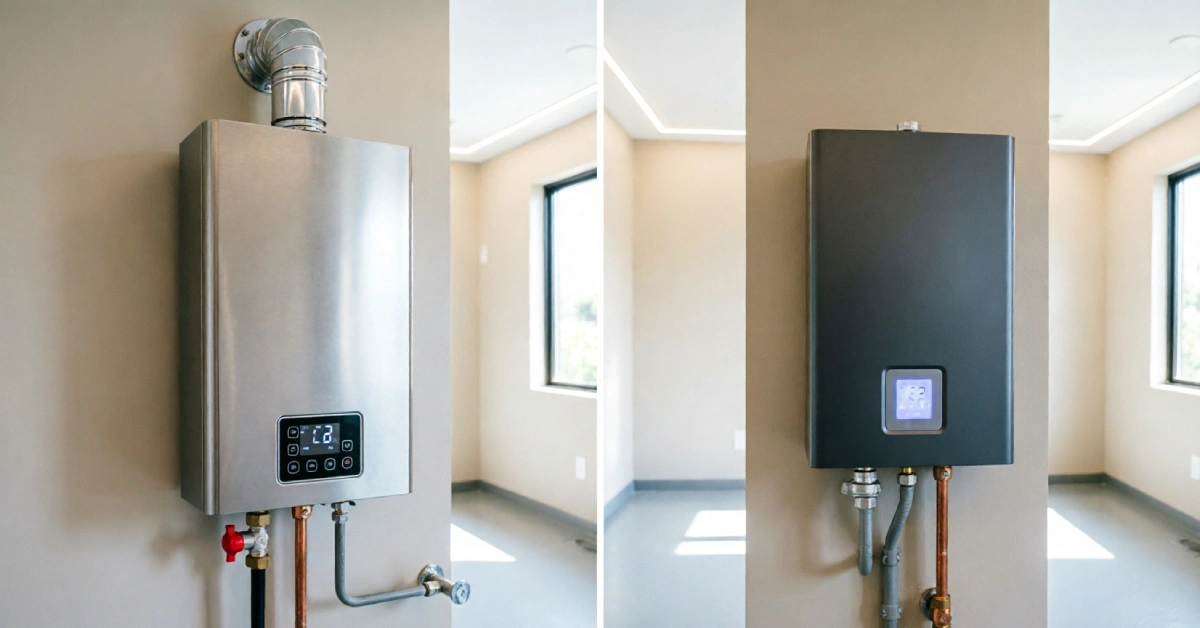
This is where most people get stuck. Gas and electric tankless water heaters both do the job, but they suit different homes and budgets. Gas units heat water faster and handle higher demand, making them a solid pick for larger households. Electric units are simpler to install and usually cost less upfront.
| Feature | Gas Tankless | Electric Tankless |
|---|---|---|
| Flow rate | Higher, better for multiple showers | Lower, best for single-fixture use |
| Install cost | Higher (venting, gas line) | Lower (no venting needed) |
| Operating cost | Depends on gas prices | Depends on electricity rates |
| Best for | Whole-house systems | Point-of-use or smaller homes |
If you’ve got a big family and multiple bathrooms running at once, gas usually wins. If it’s just you and a small apartment, electric keeps things simple and cheap to install.
Getting the Sizing Right
Buying the wrong size is the most common mistake people make. A tankless water heater needs to match your household’s flow rate, measured in gallons per minute, plus the temperature rise needed for your climate. Skip this step, and you’ll end up with lukewarm showers during peak use.
Start by counting how many fixtures might run at the same time. A shower, a dishwasher, and a washing machine running together demand more flow than a unit sized for one bathroom can deliver. Colder climates also require a larger temperature rise, so a unit that works well in Florida might struggle in Minnesota. When in doubt, talk to an installer who can run the numbers for your specific home.
What It Actually Costs
Sticker shock is real here. A tankless water heater unit itself runs anywhere from a few hundred to over two thousand dollars, depending on size and brand. Installation adds more, especially if you’re switching from a tank system and need new venting, gas lines, or an electrical panel upgrade.
Here’s the trade-off worth remembering: higher upfront cost, lower monthly bills. Most homeowners see noticeable energy savings within a few years, since the unit isn’t heating water you’re not using. Permits might be required too, so check with your city before installation day. Factor that into your total budget, not just the unit price.
Maintenance: The Part People Skip
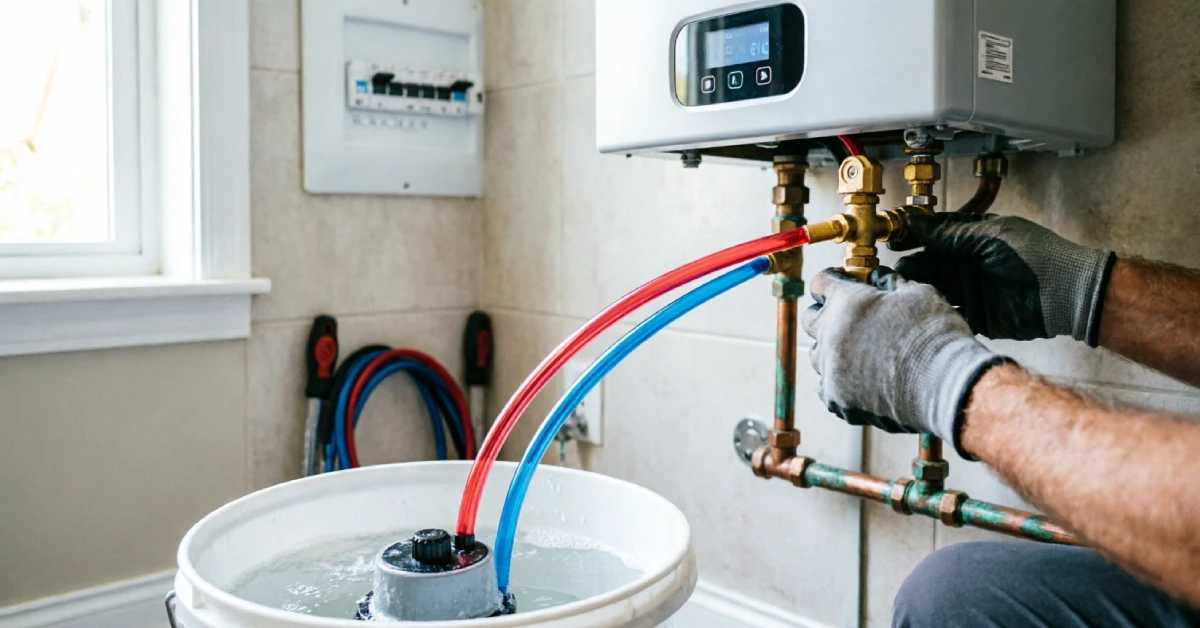
Hard water is the enemy of any tankless water heater. Mineral buildup inside the unit reduces efficiency and can shorten its lifespan significantly if ignored. The fix is simple: flush the system with a descaling solution once a year, more often if your water is especially hard.
This isn’t a huge job. Many homeowners handle it themselves with a basic flushing kit, though some prefer calling in a pro. Skipping this step is how a twenty-year unit turns into a ten-year unit. A little upkeep goes a long way toward protecting your investment.
How Long Does One Actually Last?
Here’s a number worth knowing: a well-maintained tankless water heater can run for 20 years or more, roughly double what you’d get from a traditional tank. That longevity is a big part of why the higher upfront price makes sense over time. Fewer replacements, fewer headaches.
Warranty coverage varies by brand and model, so it’s worth comparing before you buy. Some manufacturers cover the heat exchanger for over a decade, while other parts carry shorter terms. Read the fine print. It tells you a lot about how confident the company is in its own product.
Common Problems (and How to Fix Them)
The “cold water sandwich” is the classic tankless complaint — a burst of cold water between hot cycles when you turn the tap on and off quickly. It’s annoying but usually not a sign of a broken unit. Adjusting your usage habits or adding a small buffer tank can solve it.
Error codes are another normal part of tankless ownership. Most modern units display a code when something’s off, whether it’s a flow sensor issue or a venting blockage. Check your manual before assuming the worst. A lot of these issues are quick fixes, not full replacements.
Choosing a Brand You Can Trust
Rinnai, Navien, Rheem, EcoSmart, and Stiebel Eltron are among the most established names in the tankless water heater space. Each brand has its own strengths, whether that’s higher flow rates, smart app controls, or budget-friendly electric models. Look for ENERGY STAR certification too, since it signals real efficiency, not just marketing.
Read reviews specific to your climate and household size before deciding. A unit that performs great in a mild region might underperform somewhere colder. Matching the model to your actual needs matters more than chasing the flashiest name on the shelf.
Is a Tankless Water Heater Worth It?
For most homeowners planning to stay put for several years, the answer leans yes. Lower operating costs, a longer lifespan, and endless hot water add up to real value over time. It’s not the cheapest option on day one, but it’s the one that keeps paying you back.
If you’re renting or planning to move soon, the upfront cost might not make sense for your timeline. Weigh your situation honestly before committing. A tankless water heater is a long-term investment, and it works best when you’re around long enough to enjoy the payoff.
FAQs
Is a tankless water heater worth the extra cost?
For long-term homeowners, yes — lower bills and a longer lifespan usually offset the higher install price within a few years.
Do tankless water heaters need special maintenance?
Yes, especially in hard water areas. An annual flush prevents mineral buildup and keeps efficiency high.
Can I install one myself?
Electric units are more DIY-friendly, but gas systems involve venting and gas lines that typically need a licensed professional.
Ready to make the switch?
Get a few quotes from local installers, compare gas versus electric for your household size, and pick a brand with a warranty that backs up its claims. Your future showers will thank you.