

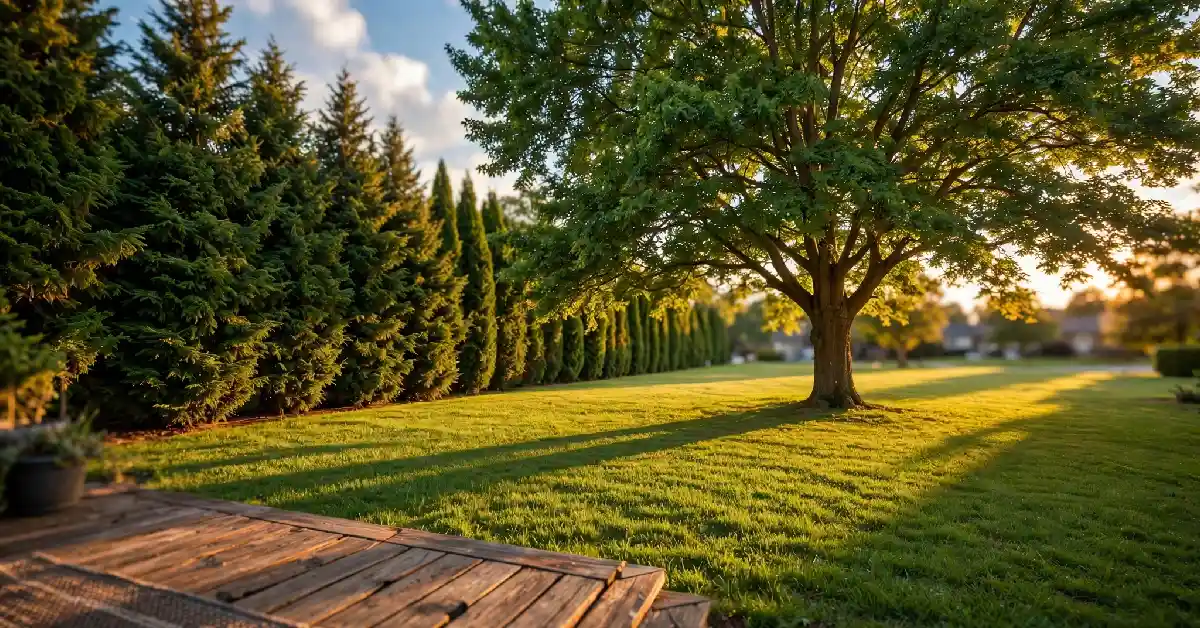
Waiting twenty years for a tree to fill in your backyard isn’t realistic for most homeowners. If you want shade to sit under, a privacy screen that blocks the neighbour’s window, or a yard that finally looks finished, Quick Growth Trees close that gap in a fraction of the time.
Quick Growth Trees are species that add well above the average annual height gain of most landscape trees, often two feet or more per year under decent growing conditions. Homeowners plant them for a mix of practical and financial reasons: faster shade means lower cooling bills sooner, a fuller canopy raises curb appeal, and a living privacy screen can replace a fence at a lower long-term cost.
How fast is fast? Growth rates vary by species, climate, soil, and how well the tree is cared for in its first few years. Some, like the Thuja Green Giant, can add three to five feet annually once established. Others grow more moderately but still outpace traditional shade trees by a wide margin.
This guide covers what actually counts as a fast-growing tree, how to match a species to your yard and climate, a full breakdown of 15 top performers, and the planting and care steps that determine whether a tree thrives or struggles.
What Are Quick Growth Trees?
What qualifies as a fast-growing tree?
Most arborists and extension services classify a tree as fast-growing if it adds 24 inches or more in height per year under normal conditions. Anything under 12 inches a year is considered slow, and 13 to 24 inches falls into the moderate range. Quick-growth trees sit above that moderate bracket, sometimes well above it.
Average growth rates of fast-growing trees
Growth rates are usually measured over a tree’s first ten years, since that’s when most species grow fastest before maturity slows things down. A Hybrid Poplar can add six feet a year in ideal soil, while a Crape Myrtle grows closer to two feet annually. The “fast-growing” label covers a wide range, so it helps to check a specific tree’s numbers rather than relying on the category alone.
Factors that affect tree growth speed
Genetics set the ceiling, but real-world growth depends on sunlight, soil quality, water availability, climate, and competition from nearby plants. A tree rated for five feet of annual growth in ideal conditions might only manage half that in compacted clay soil or a shaded planting spot. Fertilising, consistent watering during the first two years, and proper spacing all push a tree closer to its genetic potential.
Benefits of Planting Quick Growth Trees
Create shade in just a few years.
A fast-growing shade tree can start casting meaningful shade in three to five years, compared to a decade or more for slower species like oaks planted from a small sapling.
Add privacy naturally
Evergreen fast growers like Thuja Green Giant or Leyland Cypress form a dense screen faster than almost any fence installation, and they keep growing denser over time instead of needing repairs.
Improve curb appeal
A yard with mature-looking trees reads as established and cared for, which matters whether you’re settling into a new build or getting a home ready to sell.
Increase property value
Landscaping, including tree cover, is consistently cited by real estate appraisers as a factor that supports resale value, particularly when it provides shade or privacy that buyers notice on a walkthrough.
Reduce energy costs
Strategically placed shade trees can lower cooling costs by blocking direct sun on windows and roof lines during peak summer heat. The energy savings compound as the canopy fills in.
Support birds and wildlife.e
Fast-growing native and near-native species like river birch and quaking aspen provide nesting cover and food sources for local birds and pollinators much sooner than slow growers.
Prevent soil erosion
Trees with dense, spreading root systems help stabilise slopes and loose soil, which is especially useful on new construction lots where topsoil is often disturbed.
Improve air quality
Trees filter particulates and absorb carbon dioxide. A fast-growing species reaches a size where it makes a noticeable contribution to local air quality much sooner than a slow grower.
How to Choose the Best Quick Growth Tree
Choose based on your climate
Match the species to your regional temperature extremes and rainfall patterns. A tree that thrives in humid Southeast summers may struggle in dry Southwest heat, and vice versa.
Check USDA hardiness zo.nes
Every tree on this list has a hardiness zone range. Planting outside that range increases the risk of winter dieback or outright failure, even if the tree grows quickly during the warm months.
Consider available space
Fast-growing trees often mean fast-spreading roots and canopies. Check mature width, not just height, before planting near a foundation, driveway, or septic system.
Evergreen vs. deciduous trees
Evergreens hold their leaves or needles year-round, which makes them the better choice for privacy screens. Deciduous trees drop their leaves in fall, which suits shade trees since they let winter sun through when you want it.
Sunlight requirements
Most Quick Growth Trees need full sun, six or more hours a day, to hit their listed growth rates. Partial shade will slow growth even in species rated as fast growers.
Soil conditions
Well-drained, loamy soil supports faster root development than heavy clay or sandy soil. Some species, like willows, tolerate wet soil better than others.
Water requirements
Newly planted trees need consistent watering for the first one to two years regardless of species. After that, drought tolerance varies significantly by tree.
Root system considerations
Aggressive or shallow root systems, common in willows and poplars, can damage sidewalks, foundations, and underground pipes. Plant these species well away from structures and utility lines.
Maintenance level
Some fast growers, like Leyland Cypress, need regular pruning to control shape and density. Others, like Crape Myrtle, are largely low-maintenance once established.
Best Quick Growth Trees for Every Landscape
Thuja Green Giant
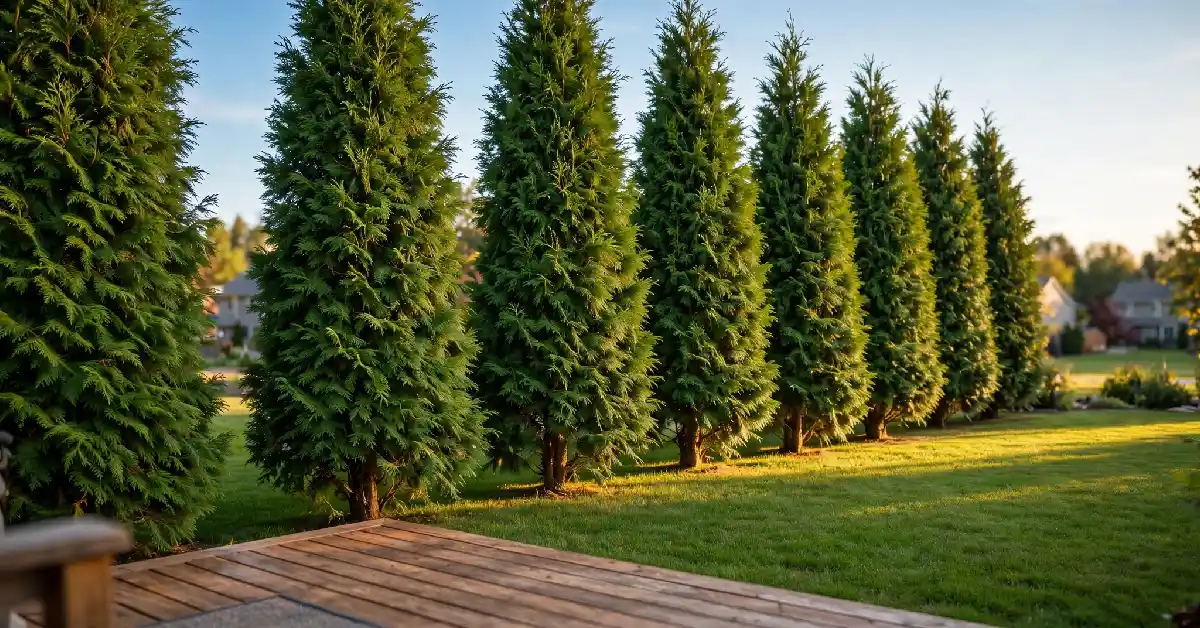
Growth rate: 3–5 feet per year Mature size: 40–60 feet tall, 12–20 feet wide Best for: Privacy screens, windbreaks Pros: Extremely fast, dense evergreen coverage; disease-resistant; tolerates a wide range of soils Cons: Needs significant width for mature spread; not ideal for small lots
Leyland Cypress
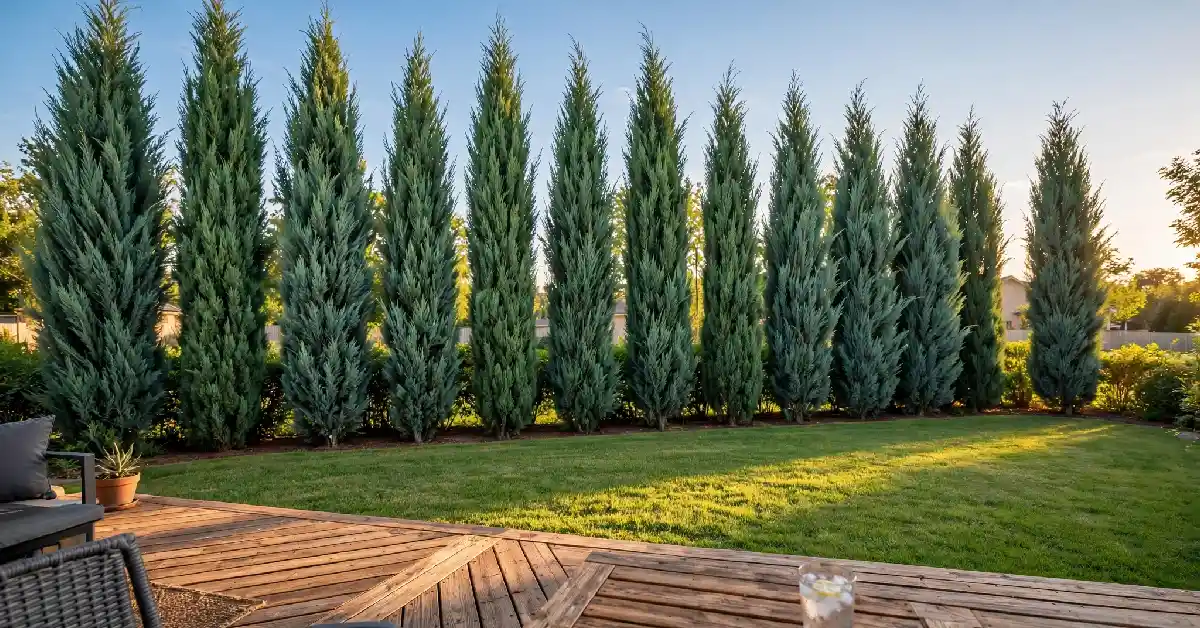
Growth rate: 3–4 feet per year Mature size: 60–70 feet tall, 15–25 feet wide Best for: Privacy hedges, quick screening Pros: Fast, uniform growth; classic dense evergreen look Cons: Susceptible to canker disease and bagworms in stressed conditions; requires regular pruning to manage size
Autumn Blaze Maple
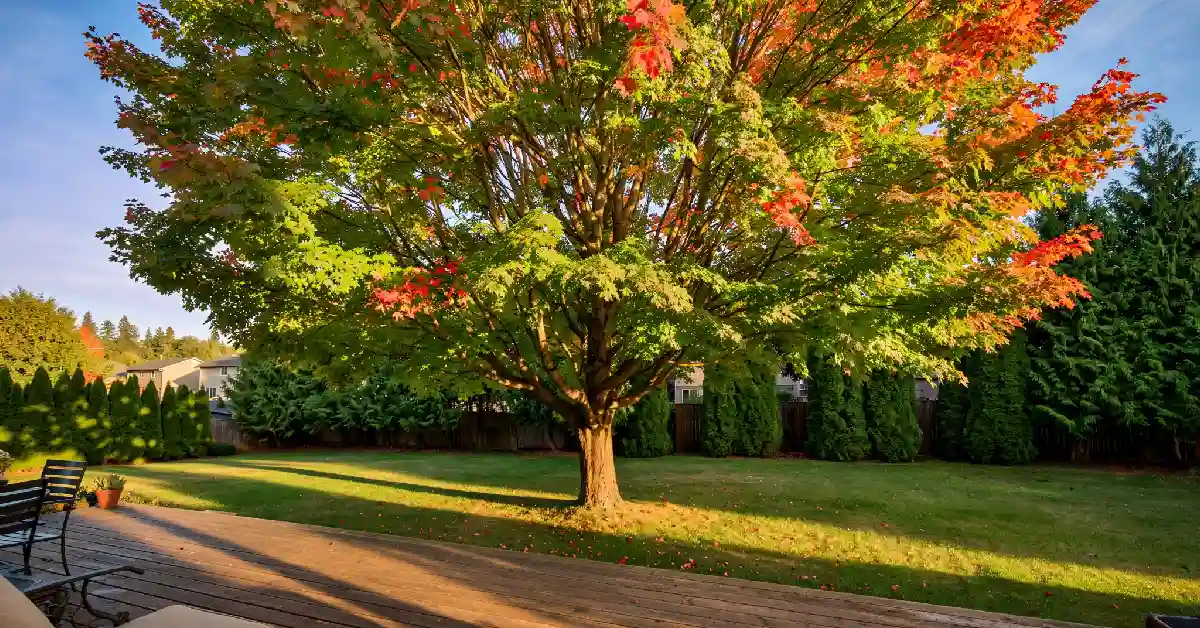
Growth rate: 3–5 feet per year Mature size: 40–55 feet tall, 30–40 feet wide Best for: Shade trees, colour Pros: Vivid red-orange fall foliage; strong branch structure compared to other fast maples Cons: Needs adequate space for a wide canopy; roots can be shallow near the surface
Weeping Willow
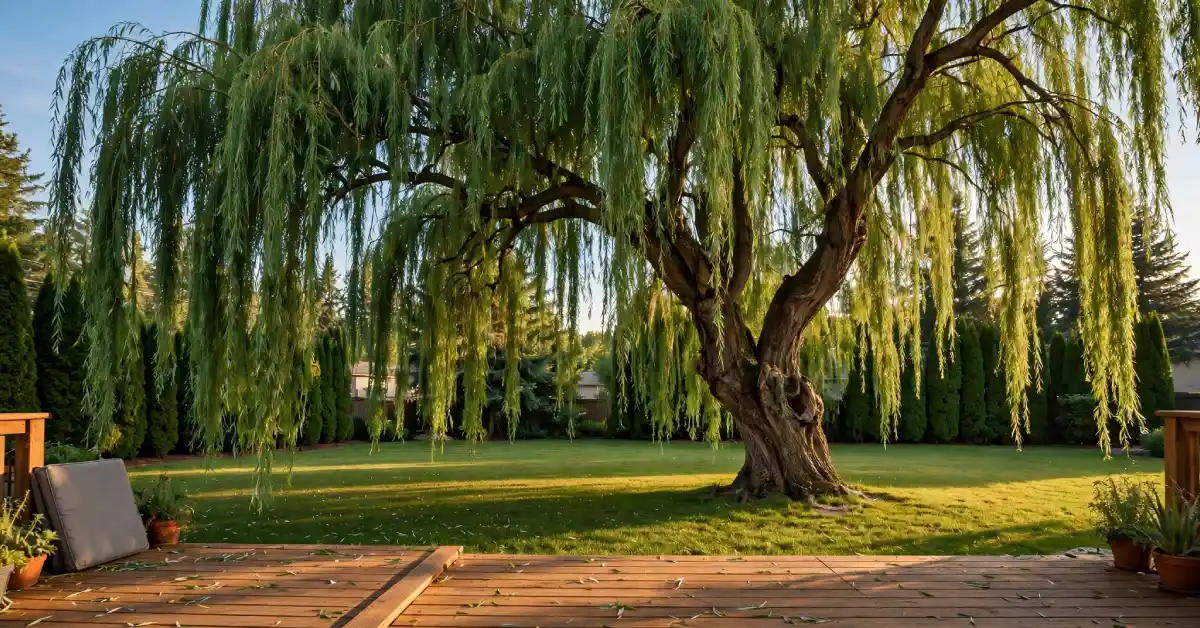
Growth rate: 3–8 feet per year Mature size: 30–40 feet tall, 35 feet wide Best for: Wet soil, pond and stream banks Pros: Among the fastest-growing trees available; distinctive graceful form Cons: Aggressive, water-seeking roots can damage pipes and foundations; short-lived compared to other shade trees
Lombardy Poplar
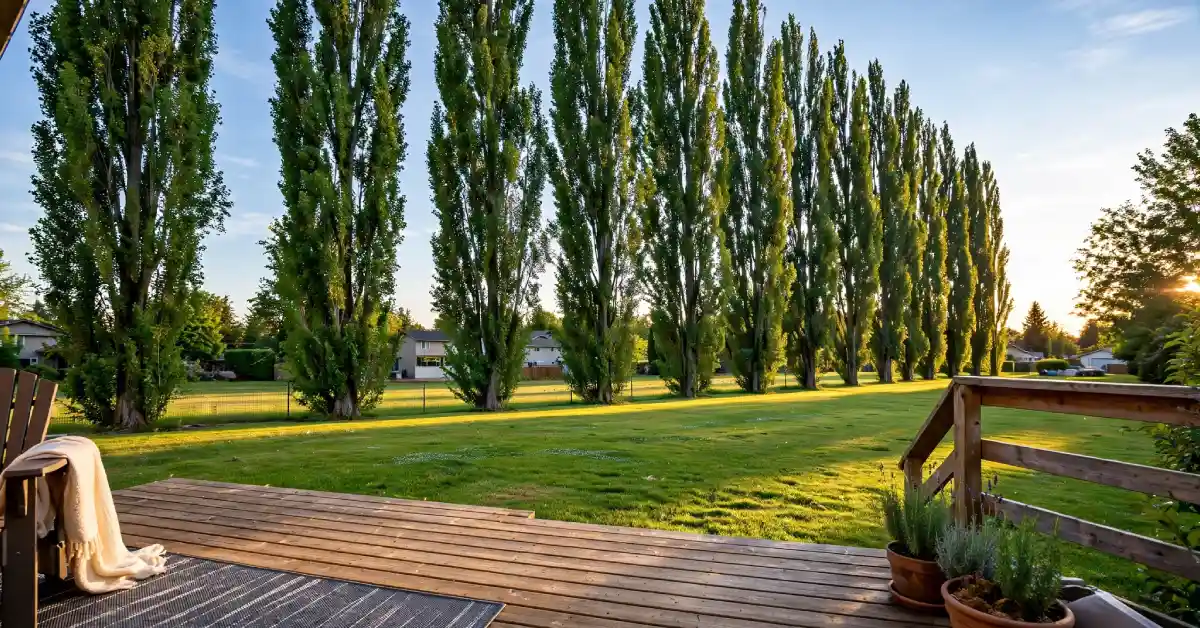
Growth rate: 5–6 feet per year Mature size: 40–60 feet tall, 10–15 feet wide Best for: Narrow privacy screens, windbreaks Pros: Very fast vertical growth in a narrow footprint; good for tight side yards Cons: Prone to canker disease and a shorter lifespan; suckers can spread beyond the planting site
Heritage River Birch
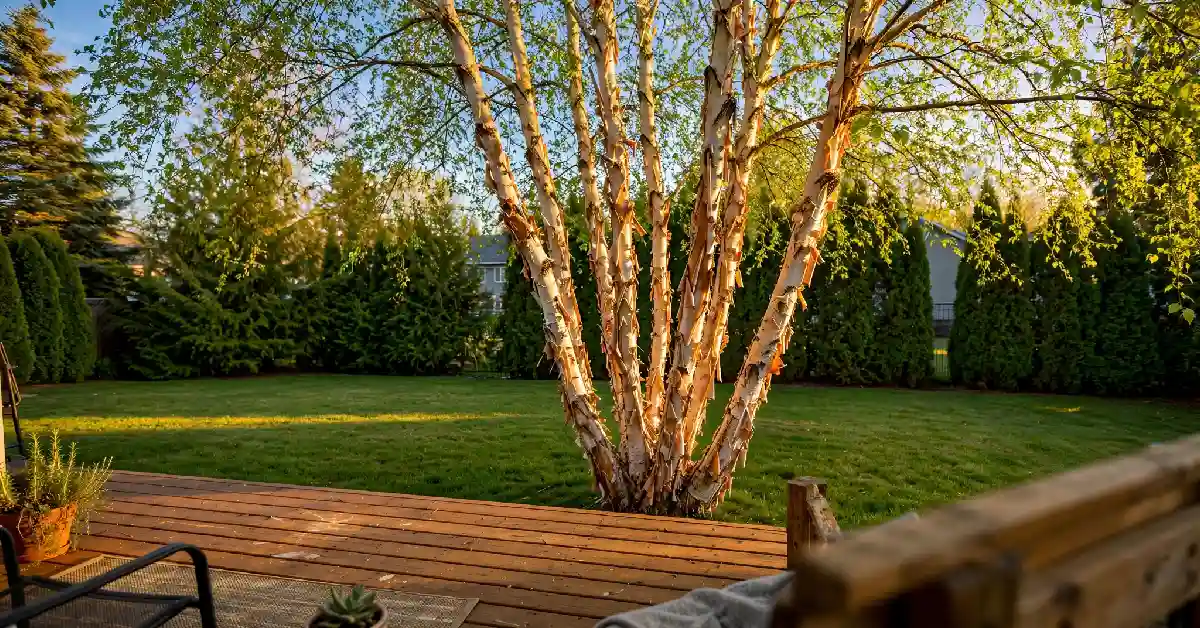
Growth rate: 1.5–3 feet per year Mature size: 40–70 feet tall, 40–60 feet wide Best for: Wet or poorly drained soil, ornamental interest Pros: Attractive peeling bark; tolerates wet sites better than most trees on this list Cons: Prefers consistently moist soil; can struggle in prolonged drought without supplemental water
Quaking Aspen
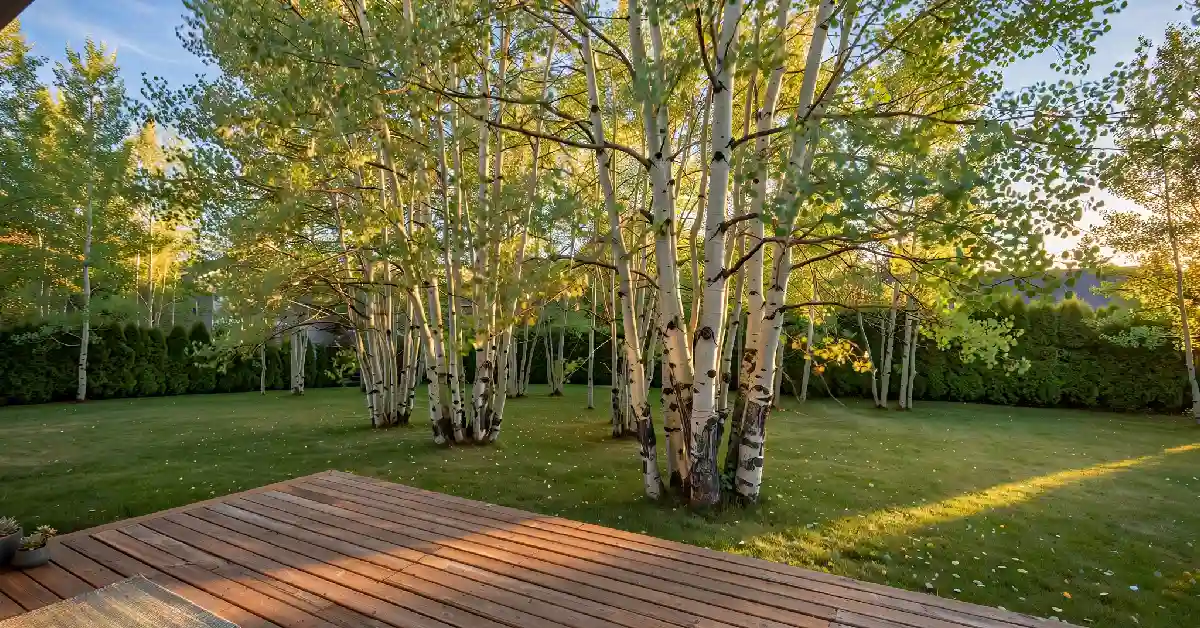
Growth rate: 2–3 feet per year Mature size: 20–50 feet tall, 20–30 feet wide Best for: Cold climates; naturalised groves Pros: Cold-hardy; leaves flutter and turn gold in fall; spreads to form a grove over time Cons: Spreads by root suckers, which can become invasive in small yards; relatively short-lived
Tulip Poplar
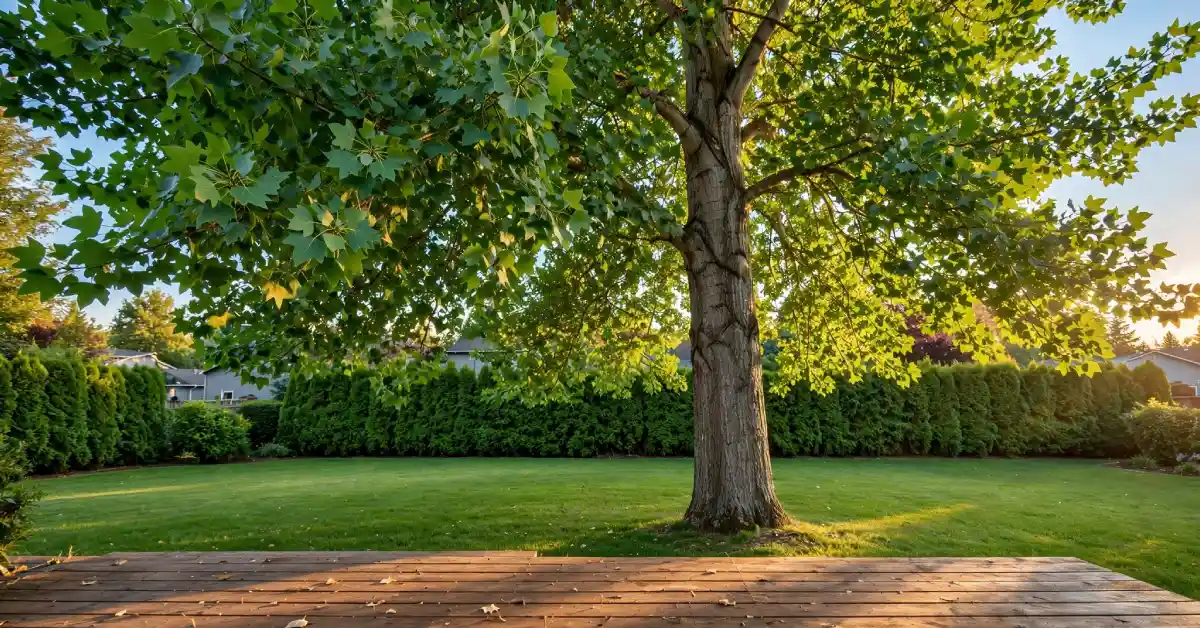
Growth rate: 2–4 feet per year Mature size: 70–90 feet tall, 40 feet wide Best for: Large properties, shade Pros: Fast growth with a strong, straight trunk; attractive tulip-shaped flowers in late spring Cons: Too large for small or midsize yards; drops sap that can affect cars or patios parked underneath
Crape Myrtle
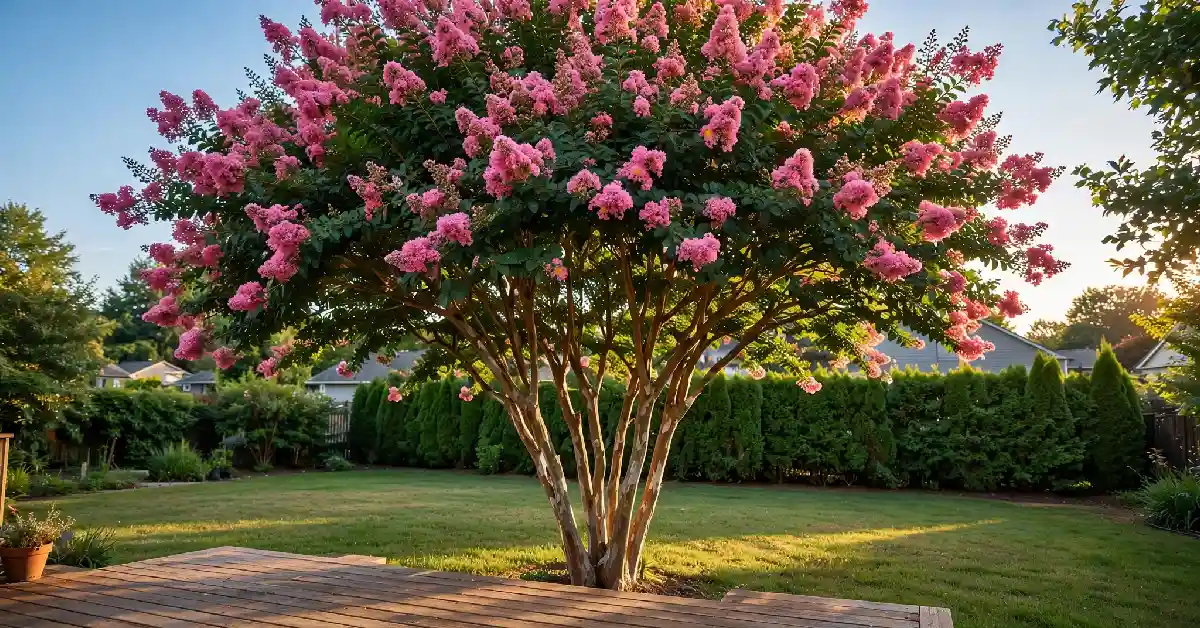
Growth rate: 1.5–2 feet per year Mature size: 15–25 feet tall, 15–20 feet wide (varies by cultivar) Best for: Flowering interest, small to midsize yards Pros: Long summer bloom period; low maintenance once established; good size for smaller properties Cons: Not cold-hardy in northern zones; slower than most other trees on this list
Jacaranda
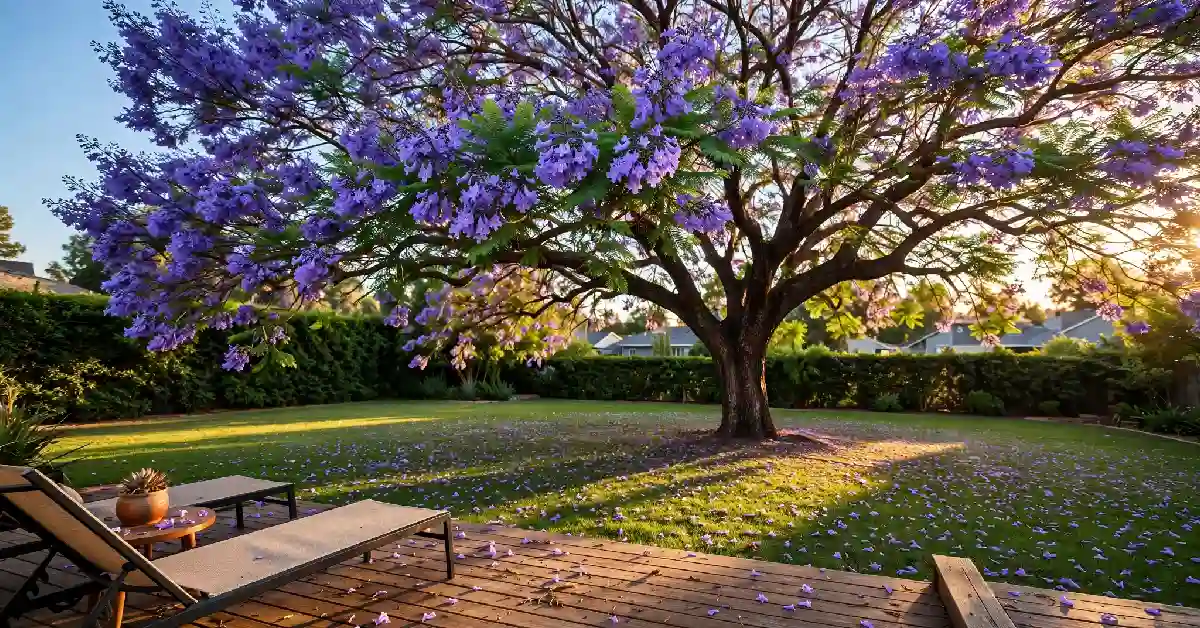
Growth rate: 2–3 feet per year Mature size: 25–40 feet tall, 25–40 feet wide Best for: Warm climates, ornamental flowering Pros: Striking purple bloom display; adaptable to a range of soil types Cons: Cold-sensitive, limited to warmer zones; dropped flowers require cleanup
Italian Cypress
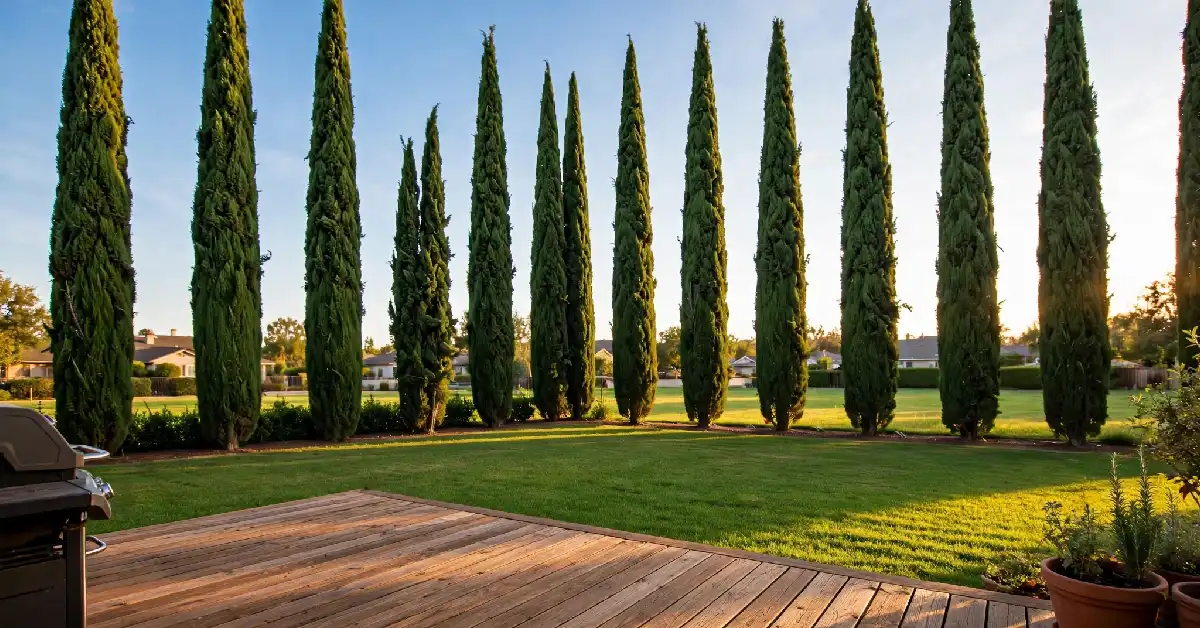
Growth rate: 3 feet per year Mature size: 40–60 feet tall, 3–5 feet wide Best for: Narrow accents, Mediterranean-style landscaping Pros: Distinctive tall, narrow silhouette; needs very little horizontal space Cons: Not cold-hardy below its rated zone; less effective as a full privacy screen due to narrow width
Hass Avocado
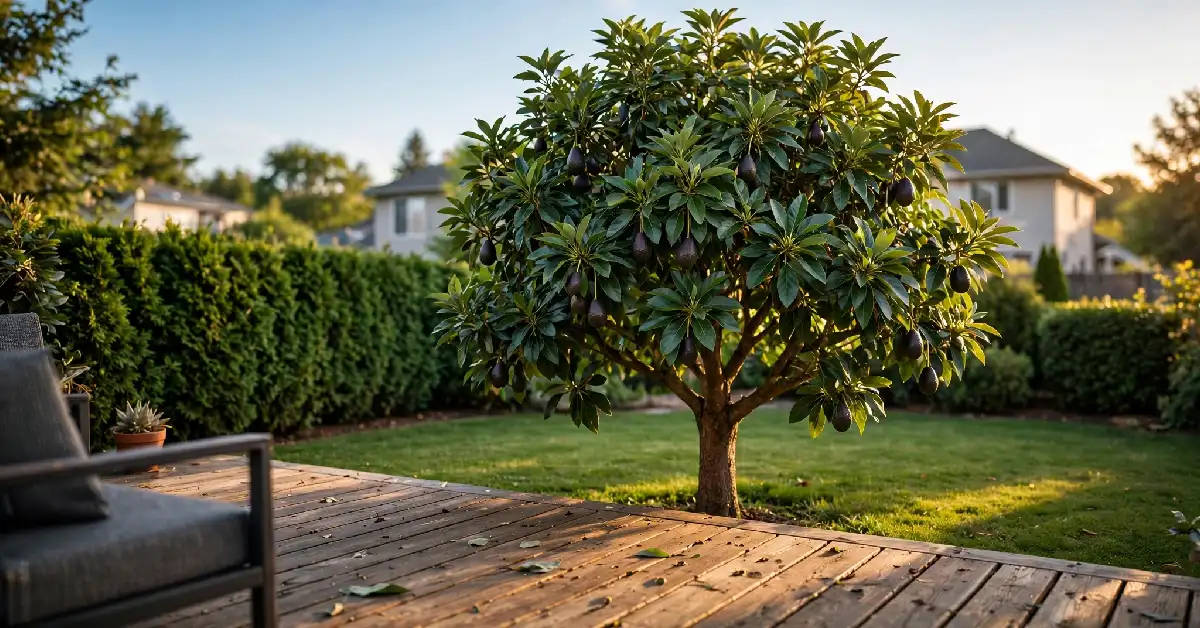
Growth rate: 2–3 feet per year Mature size: 20–40 feet tall, 20–30 feet wide Best for: Warm climates, edible landscaping Pros: Produces fruit alongside its shade value; well suited to home orchards Cons: Frost-sensitive; needs consistent water and well-drained soil to perform well
Valley Oak
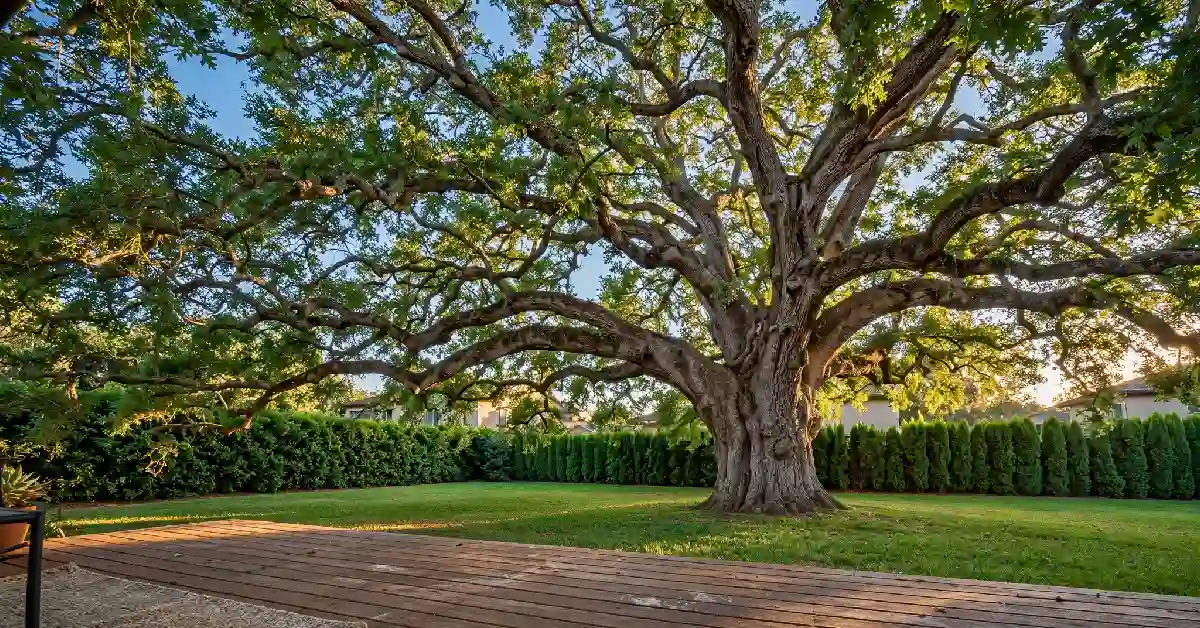
Growth rate: 2–4 feet per year (faster than most oaks) Mature size: 50–70 feet tall, 60–90 feet wide Best for: Large lots, long-term shade Pros: Faster than typical oak species; strong, long-lived, and drought-tolerant once mature Cons: Needs significant space; slower than dedicated fast growers in the early years
Rainbow Eucalyptus
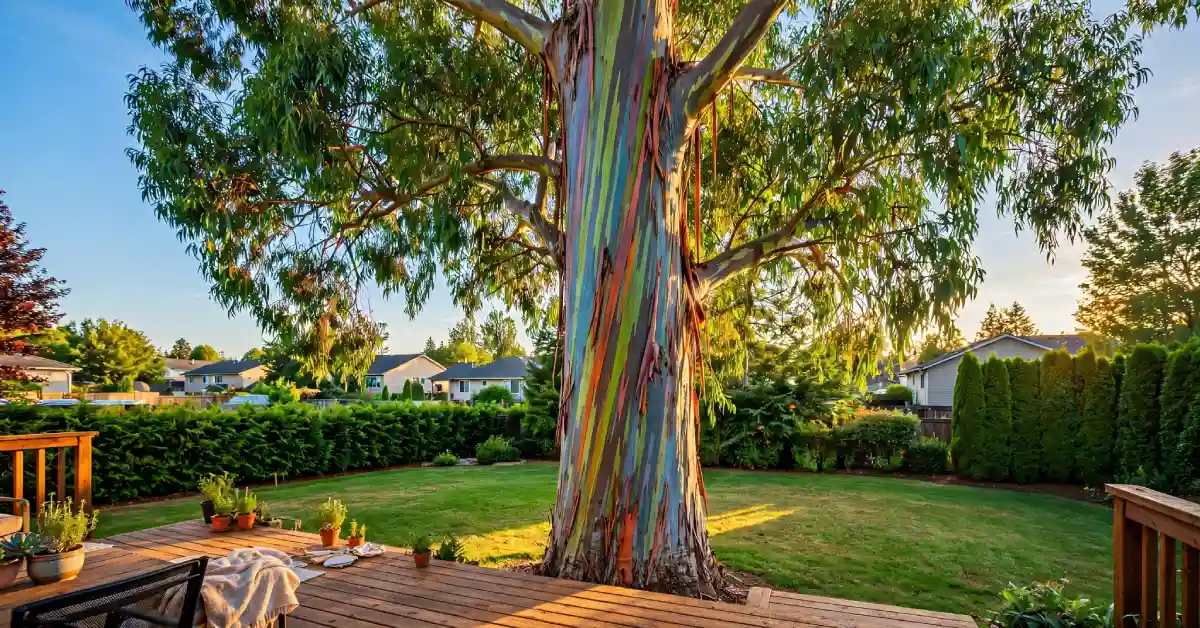
Growth rate: 3–6 feet per year in ideal climates Mature size: 60–100 feet tall, 40 feet wide Best for: Warm, humid climates, ornamental bark Pros: Multicolored, peeling bark is a strong visual feature; rapid growth in the right climate Cons: Very limited cold tolerance; needs a specific climate to thrive, ruling it out for most of the U.S.
Mexican Fan Palm
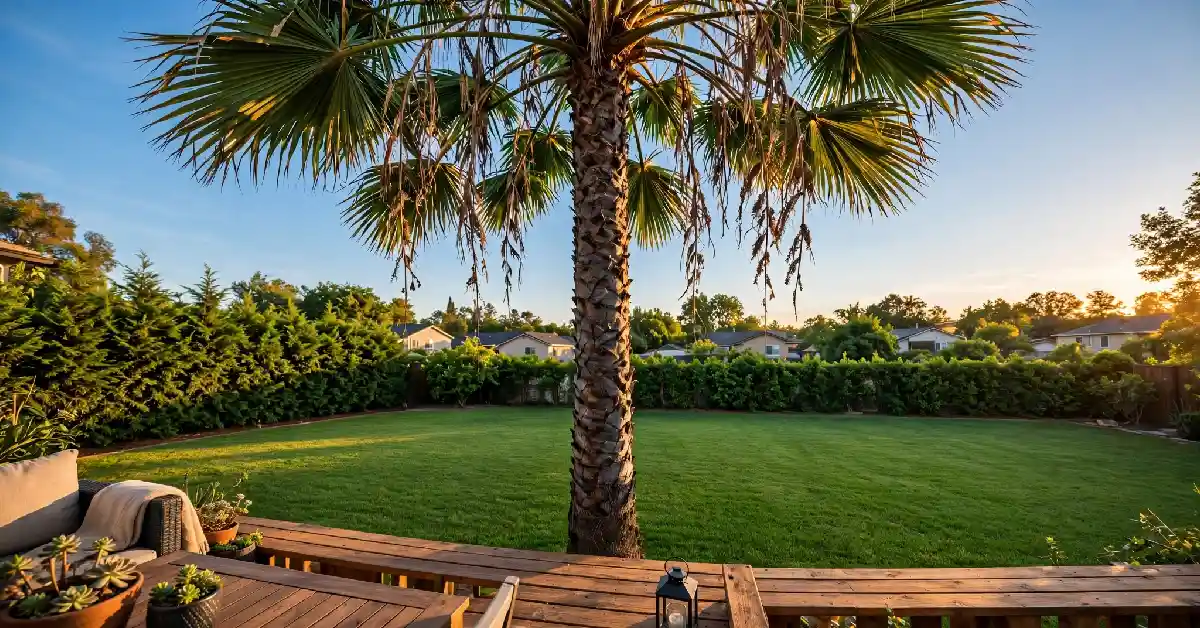
Growth rate: 3–5 feet per year Mature size: 50–100 feet tall, 10–15 feet wide Best for: Warm coastal and desert climates, vertical accents Pros: Very fast vertical growth; drought-tolerant once established Cons: Limited to warm zones; mature height can require professional trimming equipment
Best Quick Growth Trees by Purpose
Best trees for privacy
Thuja Green Giant, Leyland Cypress, Italian Cypress
Best trees for shade
Autumn Blaze Maple, Tulip Poplar, Valley Oak
Best evergreen trees
Thuja Green Giant, Leyland Cypress, Italian Cypress, Mexican Fan Palm
Best flowering trees
Crape Myrtle, Jacaranda
Best fruit trees
Hass Avocado
Best trees for small yards
Crape Myrtle, Italian Cypress
Best trees for large yards
Tulip Poplar, Valley Oak, Rainbow Eucalyptus
Best trees for wet soil
Weeping Willow, Heritage River Birch
Best trees for drought conditions
Mexican Fan Palm, Valley Oak (once established)
Best trees for cold climates
Quaking Aspen, Autumn Blaze Maple
Best trees for hot climates
Jacaranda, Mexican Fan Palm, Hass Avocado
Best low-maintenance trees
Crape Myrtle, Valley Oak
Quick Growth Trees Comparison Table
| Tree | Growth Rate | Mature Height | USDA Zone | Evergreen/Deciduous | Best For | Maintenance |
|---|---|---|---|---|---|---|
| Thuja Green Giant | 3–5 ft/yr | 40–60 ft | 5–9 | Evergreen | Privacy | Low |
| Leyland Cypress | 3–4 ft/yr | 60–70 ft | 6–10 | Evergreen | Privacy hedges | Medium |
| Autumn Blaze Maple | 3–5 ft/yr | 40–55 ft | 3–8 | Deciduous | Shade | Low |
| Weeping Willow | 3–8 ft/yr | 30–40 ft | 4–9 | Deciduous | Wet soil | Medium |
| Lombardy Poplar | 5–6 ft/yr | 40–60 ft | 3–9 | Deciduous | Narrow screens | Medium |
| Heritage River Birch | 1.5–3 ft/yr | 40–70 ft | 4–9 | Deciduous | Wet soil | Low |
| Quaking Aspen | 2–3 ft/yr | 20–50 ft | 1–7 | Deciduous | Cold climates | Medium |
| Tulip Poplar | 2–4 ft/yr | 70–90 ft | 4–9 | Deciduous | Large yards | Low |
| Crape Myrtle | 1.5–2 ft/yr | 15–25 ft | 6–9 | Deciduous | Small yards | Low |
| Jacaranda | 2–3 ft/yr | 25–40 ft | 9–11 | Deciduous | Flowering | Low |
| Italian Cypress | 3 ft/yr | 40–60 ft | 7–10 | Evergreen | Narrow accents | Low |
| Hass Avocado | 2–3 ft/yr | 20–40 ft | 9–11 | Evergreen | Edible landscaping | Medium |
| Valley Oak | 2–4 ft/yr | 50–70 ft | 7–9 | Deciduous | Large yards | Low |
| Rainbow Eucalyptus | 3–6 ft/yr | 60–100 ft | 10–11 | Evergreen | Warm climates | Medium |
| Mexican Fan Palm | 3–5 ft/yr | 50–100 ft | 9–11 | Evergreen | Warm/dry climates | Medium |
How to Plant Quick Growth Trees Successfully
Best planting season
Fall and early spring are the best windows for most regions, since the tree can establish roots before facing summer heat or winter cold stress.
Choosing the right location
Check the mature width and height before digging. Keep fast-growing species at least 15–20 feet from structures, and farther for species with aggressive roots, such as willows and poplars.
Preparing the soil
Loosen the soil in an area two to three times the width of the root ball. Amend heavy clay with compost to improve drainage without making the hole so soft that roots struggle to anchor.
Proper planting steps
Dig a hole as deep as the root ball and wider than it. Set the tree so the root flare sits slightly above grade, backfill with the native soil, and tamp gently to remove air pockets.
Watering after planting
Water deeply right after planting, then keep the soil consistently moist (not soaked) for the first few weeks while roots establish.
Mulching tips
Apply two to three inches of mulch in a ring around the base, keeping it a few inches clear of the trunk to prevent rot and pest issues.
Supporting young trees
Stake trees only if they’re in a windy location or have a top-heavy canopy, and remove the stakes after the first year so the trunk develops natural strength.
Caring for Fast-Growing Trees
Watering schedule
Water deeply once or twice a week during the first two growing seasons, adjusting for rainfall. Established fast growers generally need less frequent but deeper watering.
Fertilizing
A balanced, slow-release fertiliser in early spring supports strong growth, but avoid over-fertilising, which can produce weak, brittle growth in already-fast species.
Pruning
Prune in late winter or early spring before new growth starts, removing dead, crossing, or damaged branches to maintain structure as the tree fills in quickly.
Pest and disease prevention
Inspect fast growers regularly, since dense canopies can trap moisture and attract pests like bagworms or fungal issues. Address problems early before they spread through a hedge or screen.
Winter care
Wrap young or borderline-hardy trees, like Jacaranda in cooler zones, and avoid heavy fertilising late in the season, which can push new growth that’s vulnerable to frost.
How to encourage faster growth
Consistent watering, adequate spacing, full sun exposure, and avoiding root competition from turf grass around the base all help a tree reach its full growth potential.
Common Mistakes to Avoid
Planting too close to buildings
Fast-growing roots and canopies can crowd foundations, driveways, and utility lines within just a few years if spacing isn’t planned upfront.
Ignoring mature size
A tree that looks small at the nursery can outgrow its spot fast. Always plan for the mature height and width, not the size at planting.
Overwatering
More water doesn’t mean faster growth. Soggy, oxygen-starved soil can stunt roots and invite rot, especially in species that prefer well-drained conditions.
Choosing the wrong species
A tree rated for Zone 9 won’t survive a Zone 5 winter no matter how fast it’s supposed to grow. Match the species to your actual climate and site conditions.
Poor spacing
Planting privacy trees too close together limits root development and airflow, which can slow growth and increase the risk of disease over time.
Neglecting maintenance
Even low-maintenance fast growers benefit from early pruning and pest checks. Skipping this for a few years can lead to structural issues that are expensive to correct later.
Planting invasive trees without planning
Species like poplars and aspens spread through root suckers. Without a root barrier or regular removal of suckers, they can take over more of the yard than intended.
Final Thoughts
The right choice comes down to matching a tree’s growth habit, mature size, and climate needs to your actual yard, not just picking the fastest grower on the list. A Thuja Green Giant solves a privacy problem in a way a Crape Myrtle never will, and a Valley Oak offers long-term shade that a short-lived willow can’t match.
Start with your goal, check your hardiness zone, and plant with the tree’s full mature size in mind. Reach out to a local nursery or arborist if you’re unsure which species will perform best on your specific site.
Frequently Asked Questions
What are the fastest-growing trees?
Weeping Willow, Lombardy Poplar, and Thuja Green Giant rank among the fastest, with some able to add five feet or more in a single growing season under good conditions.
Which tree grows the fastest?
Weeping Willow is typically the fastest on this list, capable of adding up to eight feet in a strong growing season, though it requires ample water and space away from structures.
Which fast-growing tree is best for privacy?
Thuja Green Giant is one of the most reliable choices, combining fast growth with dense, year-round evergreen coverage.
Which tree provides shade the quickest?
Autumn Blaze Maple and Tulip Poplar both develop a broad, shading canopy within three to five years of planting.
Are fast-growing trees less durable?
Some fast growers, like willows and poplars, tend to have shorter lifespans and softer wood than slow-growing species. Others, like Thuja Green Giant, are both fast and reasonably long-lived.
What is the best evergreen fast-growing tree?
Thuja Green Giant is widely considered the top pick for combining speed, density, and disease resistance in an evergreen.
How fast do quick-growth trees grow?
Most quick-growth trees add two to five feet per year, with a handful of species like Weeping Willow exceeding that range in ideal conditions.
Which fast-growing trees have non-invasive roots?
Crape Myrtle and Autumn Blaze Maple generally have less aggressive root systems than willows, poplars, or aspens, making them safer near structures.
Which fast-growing trees require the least maintenance?
Crape Myrtle and Valley Oak need relatively little upkeep once established, aside from occasional pruning.
What is the best time of year to plant fast-growing trees?
Fall and early spring give trees the best chance to establish roots before facing extreme summer or winter conditions.