

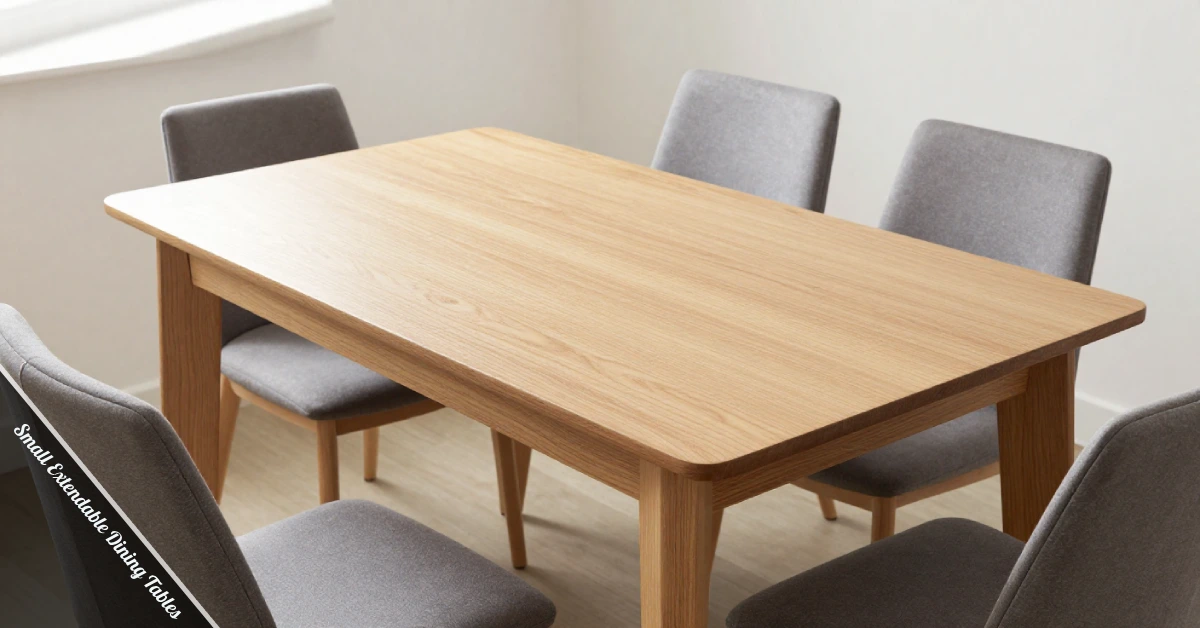
A small extendable dining table starts compact for everyday use and expands when you need more seats. Most compact models seat two to four people at their base size and stretch to fit six or more. They work best in apartments, small dining rooms, and open-plan spaces. The right one depends on your room size, how often you host, and which extension mechanism suits your lifestyle.
Why Small Dining Rooms Need an Extendable Table
Living in a smaller home doesn’t mean giving up on entertaining. It just means your furniture needs to work harder. A small extendable dining table lets you reclaim floor space on regular days and open up seating when guests arrive.
The global dining table market is projected to reach about $8.68 billion in 2025 and grow around 6.37% annually through 2030, with extendable designs among the fastest-growing segments. That growth reflects a real shift in how people furnish compact spaces.
Design consultant Karen Chenowith puts it simply: “Having an extendable dining table is perfect for special occasions when you will be hosting dinner for a large group. Then, after the event, you can close it to a more manageable size.”
Types of Extension Mechanisms Explained
Not all extendable tables work the same way. Each mechanism has trade-offs in ease of use, storage, and price.
Butterfly leaf: The leaf folds and stores inside the table. You pull the two halves apart, and the leaf rises into place. No extra parts to store. This is one of the most popular options for small spaces.
Drop leaf: Hinged panels fold down on the sides when not in use. These are the most compact options at rest, ideal for very tight spaces. The downside is that they offer less surface area when folded down.
Removable leaf: A separate panel slides in between the two table halves. It gives a clean look when extended, but requires storage for the leaf itself.
Modular/panel system: Tables like the Transformer Table use stackable panels that slot in one by one. This design can adjust from an 18-inch console table all the way to a 118-inch dining table that seats up to 12 guests.
How to Choose the Right Small Extendable Dining Table
Start with your base size. Measure how much space you use daily, not just during dinner parties. A table that’s too large at its base defeats the purpose.
Think about how often you extend it. If you host weekly, a butterfly mechanism saves time because there are no leaves to store or retrieve. If you host once or twice a year, a removable leaf is fine.
Pay attention to the build quality, especially at the joints. Interior designer Kristina Phillips advises that you make sure the table’s base can support its weight when fully extended. “Often with four-legged tables, an additional center support leg must be used to prevent bowing.” She also recommends checking that the leaf grain matches the tabletop, since lower-quality tables can look mismatched when open.
Small Extendable Dining Table: Size Guide
Getting the dimensions right is one of the most important steps. Here’s a simple breakdown:
- Two to four people (base size): look for a table between 24 and 48 inches long
- Four to six people (extended): aim for 60 to 72 inches
- Six to eight people (extended): 72 to 90 inches works well
- Eight or more people (extended): 90 inches and up
Beyond the table itself, you need clearance around it. Allow at least 36 inches between the table edge and any wall or furniture so chairs can pull out comfortably. If your room is under 10 by 10 feet, focus on tables with a drop-leaf or butterfly design that stays narrow when folded.
Round and oval shapes also help in tight spaces. A round profile keeps corners out of the way, making it easier to move around in tight spaces, while a concealed leaf lets you go from four to six seats without juggling extra parts.
Materials That Hold Up in Small Spaces
The right material affects durability, maintenance, and how the table looks over time. Here are the most common options:
Solid wood: Oak, acacia, and ash are popular for their durability and timeless look. Solid wood can be refinished if scratched, but it needs occasional care. One tested solid wood option was described as “heirloom-quality status” that “with proper care, should last a lifetime.”
Engineered wood: A wood veneer over a composite core. More affordable than solid wood and less prone to warping, but harder to repair if the surface gets damaged.
Sintered stone: A compressed mineral surface that resists heat, scratches, and stains. Because sintered stone is non-porous, it shrugs off everyday stains in a way that painted wood or laminate tops struggle with over time. It’s a strong choice for households with kids.
Mango wood with steel base: A practical pairing for small spaces. Mango wood with a steel base and built-in levellers is a practical choice; one 24-to-48-inch model seats up to six people and is made with sustainably sourced wood.
What You Can Expect to Pay
Price varies widely based on material, brand, and mechanism. Here’s a rough guide for 2025 and 2026:
- Under $250: Drop-leaf or basic removable-leaf tables, typically engineered wood
- $250 to $600: Mid-range solid wood or sintered stone options with butterfly mechanisms
- $600 to $1,200: Higher-quality hardwood or stone tops with smooth, tested extension systems
- $1,200 and up: Premium brands with designer finishes, modular systems, or imported hardwoods
If you’re on a tighter budget, focus on the extension mechanism over the material. A well-built, engineered wood table with a smooth butterfly leaf will outperform a poorly made solid wood table every time.
FAQs
What size table fits in a small dining room?
For rooms under 10 by 10 feet, start with a base size of 24 to 36 inches. Look for a table that extends no more than 60 to 72 inches to keep comfortable clearance around the chairs.
Is a round or rectangular extendable table better for small spaces?
Round tables work well in very compact spaces because there are no corners to navigate around. Rectangular tables give you more seating capacity per square foot when extended, which makes them a better choice if you frequently host larger groups.
How do I know if the extension leaf will match the tabletop?
Check the product photos closely when the table is fully extended. Read reviews that mention the leaf fit. For solid wood tables, look for products that specify the leaf comes from the same wood batch.
Can I use a small extendable table as a desk?
Yes. Many compact extendable tables work well as everyday work surfaces. Keep the table at its base size for daily use and extend it when you need dining space. Just make sure the surface material is scratch-resistant if you plan to use it for writing or laptop work daily.
How long does it take to extend most tables?
Butterfly leaf tables typically take under 30 seconds. Removable leaf models take one to two minutes, depending on the fit. Modular panel systems take a few minutes but offer greater flexibility in how many panels you add.