

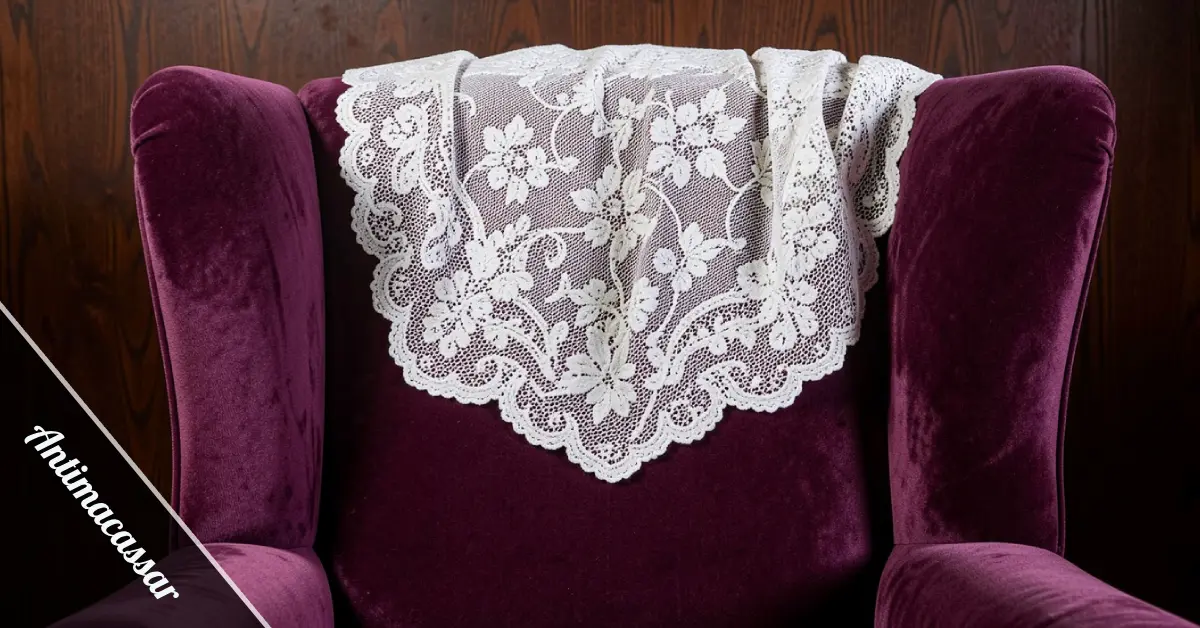
You’ve seen them in period dramas. You’ve probably sat on them at your grandma’s house without knowing the name.
They’re those little cloths draped over the backs of fancy armchairs. They look like tiny tablecloths that got lost on a sofa. But they have a name that sounds like a spell from Harry Potter: Antimacassar.
Let’s break down what this thing actually is, why it mattered, and why you might want one in your apartment right now. Forget the dusty Victorian vibes—we’re bringing this back cooler than ever.
What Exactly is an Antimacassar?
An antimacassar is a protective cloth placed on the backs and arms of chairs and sofas. Its job was simple: save the fancy fabric underneath from your greasy head.
Think of it as a shield for your furniture. Back in the day, men used a ton of hair oil. That oil would stain the expensive upholstery. So, the clever housewife of the house threw a cloth over the spot where heads rested.
The name itself is a mix of “anti” (against) and “Macassar” (the oil that caused the problem). It’s a literal solution to a slippery problem. If you want to see the exact style that started the trend, check out the Cosy Antimacassar featured in the Weldon’s Practical Knitter Eleventh Series eBook. It’s a vintage vibe that still hits today.
The Dudes Who Ruined the Couches (Macassar Oil)
So who do we blame for this whole trend? We blame the guys with slick hair. Specifically, we blame London barber Alexander Rowland (1747–1823).
He invented Macassar oil, a combo of oils and fragrance that gave Victorian men that wet, shiny, slicked-back look. It was the “drip” of the 19th century. If you were a man about town, you had your hair greased up with this stuff.
The problem? Every time a gentleman leaned back to contemplate his day, he left a greasy halo on the chair. Housewives were not amused. Thus, the antimacassar was born—a stylish protest against messy hair products.
Why You Need This Old-School Flex Today
Okay, so we don’t use Macassar oil anymore (mostly). But do we still need furniture protection? Absolutely. You have dry shampoo, hair gel, and the general wear of modern life. Your couch is expensive. Protect it.
1. The “Hard Water” Hair Hero
You wash your hair with city water. It leaves residue. When you binge-watch a show for four hours, that residue transfers to your velvet sofa. An antimacassar acts as a washable barrier.
2. The Pet Defense
If you let your dog or cat on the furniture, you know the struggle. A removable headrest cover is easier to wash than the whole couch.
3. The Rental Hack
If you rent, you don’t own the furniture. Protect it from stains to keep your security deposit safe. Slap an antimacassar on the landlord’s special chair.
How to Style Them (Without Looking Like a Museum)
Here’s the thing. We aren’t recreating a Victorian parlor. We are blending the old with the new. Here is how to make the antimacassar work in a modern space.
Go for Texture, Not Lace
Your grandma might have used stiff white crochet. You don’t have to. Look for wool, thick cotton, or boucle fabric. The texture adds depth without looking old-fashioned.
The Monochrome Move
Match the antimacassar to your sofa color. It becomes a subtle texture play rather than a loud “I’m protecting my stuff” statement. It just looks like a fancy lumbar accessory.
The Pop of Pattern
If you have a neutral sofa, use this as your accent piece. A bold geometric pattern or a vintage tapestry cut down to size works perfectly. It’s a low-commitment way to change the room’s vibe.
Fabric Choices and DIY Ideas
You don’t need to buy vintage off eBay (though you can, and it’s cool). You can make these yourself. It’s one of the easiest sewing projects ever.
Choosing the Fabric
- Linen: Breathable, durable, and gets softer with every wash.
- Cotton: Easy to clean and cheap. Perfect for beginners.
- Velvet: If you want to lean into the luxury, a velvet antimacassar adds serious “rich aunt” energy.
- Leather (faux): Wipeable. If you have kids or pets, this is the move.
The DIY Blueprint
- Measure: Measure the width of your chair back. Add an extra two inches for hemming.
- Cut: Cut a rectangle. For armrests, cut a longer strip.
- Hem: Fold the edges over twice and sew. That’s literally it.
- Secure: Use non-slip rug grippers or sew on ties to attach it to the chair.
You just made a custom antimacassar for $10. That’s a win.
Maintenance and Cleaning Tips
This is the best part about them. They are designed to be dirty so your couch stays clean. Maintenance is minimal.
Wash Regularly: Toss them in the wash every two weeks. Use cold water to prevent shrinkage, especially with cotton or linen. Avoid Bleach: If you have colored fabric, bleach will wreck it. Stick to gentle detergents. Air Dry: High heat can warp the shape. Lay them flat or hang them to dry to keep the edges crisp. Iron Low: If you want that crisp, formal look, iron them on low heat while slightly damp. This keeps them looking intentional rather than like a rag on a chair.
The Evolution: From Victorian to First Class
Here is a wild fact. The antimacassar never really left. It just changed forms.
Go to a first-class airline lounge. Look at the headrest. There’s a paper or cloth cover. That’s a modern antimacassar. Ride a train. Look at the headrest. Same concept.
We stopped using Macassar oil, but we never stopped needing to protect headrests from germs, dirt, and oils. The antimacassar simply became so common we stopped noticing it. It is the unsung hero of public transportation and luxury travel.
Comparison: Antimacassar vs. Modern Covers
To help you visualize the difference, here is a quick breakdown of how this old-school item stacks up against modern alternatives.
| Feature | Antimacassar (Traditional) | Modern Chair Cover |
|---|---|---|
| Coverage | Headrest & Arms Only | Full Chair Coverage |
| Vibe | Decorative, Lace, Crochet | Slipcover, Stretch Fit |
| Installation | Draped or Tied | Stretched or Zipped |
| Maintenance | Quick Wash | Bulky, Harder to Clean |
| Best Use | Protecting high-contact spots | Protecting entire piece |
Why the Word Matters (And 50 Ways to Say It)
Let’s be honest, the word antimacassar is a mouthful. If you’re writing a blog or a caption, you might not want to use it ten times. The research shows there are tons of alternatives that sound less intimidating.
If you’re talking to a friend, just call it a “chair cover” or a “headrest cloth.” If you’re shopping, look for “furniture protectors” or “doily covers.” The fancy word is fun for history, but the simple words sell the function.
Frequently Asked Questions
Is an antimacassar still used today?
Yes, mostly in vintage decor, high-end transportation, or as a practical tool in homes with pets or messy hair routines.
What is the easiest synonym?
“Chair cover” is the simplest modern alternative. It gets the point across without the Victorian baggage.
Can I use antimacassars in a modern home?
Absolutely. Stick to modern fabrics like linen or cotton in neutral colors. It becomes a subtle design detail rather than a historical artifact.
How do I keep them from sliding off?
Sew a small ribbon or tie to the back. You can also use silicone caulk dots on the underside for grip.
The Final Take
The antimacassar is more than a weird Victorian word. It is a lesson in smart design. It solves a specific problem (greasy heads) with a simple solution (washable cloth).
You don’t have to live in a period drama to appreciate that. You just have to own a couch you don’t want to ruin. So next time you’re scrolling for decor, skip the trend and grab a vintage-inspired antimacassar. Your sofa will thank you, and your hair products won’t stand a chance.
What about you? Do you have any “weird” vintage decor pieces in your home? Drop a comment below—I’m always looking for the next old-school trend to bring back.