

If you have a stainless steel sink, you already know how good it can look on a good day. Clean, shining, practically the highlight of the whole kitchen. But after a week of dishes, coffee grounds, and random drips, that same sink can start looking foggy and dull.
Water spots. A weird film. Tiny scratches you can’t explain.
I’ve been there. And the thing that surprised me most? You don’t need expensive cleaners or a lot of effort to fix it. Some of the best methods use stuff you already have in your kitchen. This guide walks you through how to clean a stainless steel sink the right way—without wasting time or damaging the finish.
If you’re also thinking about refreshing other parts of your kitchen space, top-down roman shades are worth a look for controlling light without blocking the view.
Why Stainless Steel Sinks Need a Little Extra Attention
At first glance, stainless steel looks tough. And it is—, but it’s not invincible.
Here’s something most people don’t know: stainless steel gets its smooth look from a grain—tiny lines running along the surface. Scrub against that grain, and scratches show up. Use the wrong cleaner, and you can dull the finish for good.
“Stainless” also doesn’t mean “stain-proof.” It resists rust and corrosion better than regular steel, but harsh chemicals like bleach or chlorine-based cleaners can pit the surface over time. Once that happens, those tiny holes trap food and moisture, and your sink looks dirty no matter how often you clean it.
In my experience, the sinks that hold up the longest aren’t the most expensive ones. They’re the ones cleaned gently and regularly. A little routine care now saves you from dealing with permanent stains or early replacement down the road.
Everyday Cleaning — The 5-Minute Routine
You don’t need to deep clean every day. But a quick daily wipe-down makes a bigger difference than most people expect.
Here’s what I do after dinner:
- Rinse the sink with warm water. This alone removes most food acids and residue.
- Sprinkle a small amount of baking soda onto a soft, damp sponge.
- Wipe in the direction of the grain—usually lengthwise, front to back.
- Rinse thoroughly.
- Dry with a microfiber cloth or soft towel.
That last step is the one most people skip. I get it—you’re tired after dinner. But water left sitting on stainless steel creates hard water spots and mineral deposits. Over time, those spots turn into stubborn white stains that are genuinely annoying to remove.
Drying takes 30 seconds. It’s worth it every single time.
Quick tip on finding the grain: Run your finger across the sink surface. It’ll feel slightly rough in one direction and smoother in the other. That smooth direction is the grain. Always scrub that way.
If you’re also dealing with a dishwasher that’s not cleaning properly, it’s worth sorting both at the same time—a lot of the same food buildup habits affect both.
How to Deep Clean a Stainless Steel Sink
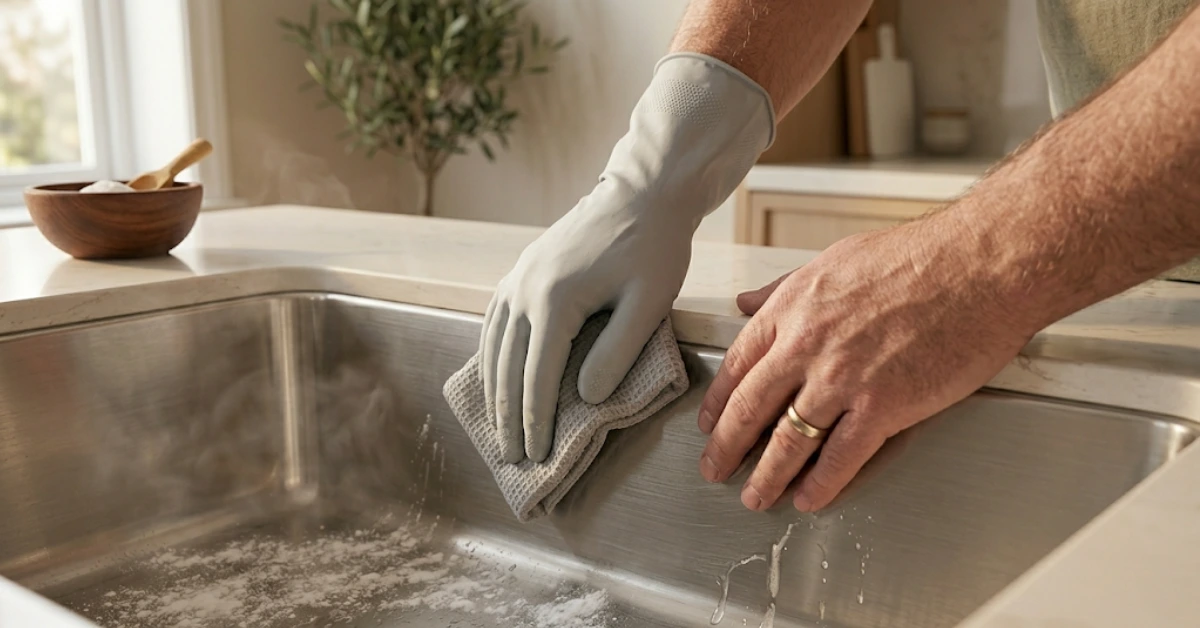
Even with daily rinsing, your sink will eventually need a deeper clean—maybe once a week or every two weeks, depending on how much cooking you do. Here’s a simple method that works without speciality sprays.
What You’ll Need
- Baking soda
- White vinegar (in a spray bottle)
- Soft sponge or microfiber cloth
- Old toothbrush (for corners and the drain edge)
- Olive oil or mineral oil (for the final step)
Step-by-Step
- Rinse and wet the sink with warm water.
- Sprinkle baking soda generously over the whole surface.
- Spray white vinegar over the baking soda. It’ll fizz—that’s normal and exactly what you want.
- Let it sit for 3–5 minutes while you wipe down the counters.
- Scrub gently with a soft sponge, always following the grain.
- Rinse thoroughly with warm water.
- Dry immediately with a clean towel.
Here’s the step most articles skip: after drying, dab a tiny amount of olive oil or mineral oil onto a soft cloth and buff the sink lightly. Wipe off any excess. This restores the shine and leaves a thin layer that keeps water spots from forming for days. I was sceptical the first time I tried it. It genuinely works.
If your sink is older or already has visible scratches, go extra easy on the scrubbing. Harder pressure on an already-marked surface makes things worse, not better.
What NOT to Use on a Stainless Steel Sink
I’ve made most of these mistakes myself, so let me save you the trouble.
- Bleach or chlorine-based cleaners — These cause pitting and corrosion over time. Not worth it.
- Steel wool or wire brushes — They leave micro-scratches that trap dirt and make the sink look permanently dull.
- Harsh drain cleaners — If they splash onto the sink surface, rinse immediately. The chemicals can etch the metal.
- Leaving cast iron pans to soak — Iron sitting in moisture can leave rust stains that are a real pain to remove.
- Clorox wipes — They often contain bleach or harsh solvents that dull the finish over repeated use.
Some people use commercial stainless steel cleaners, and some are fine for occasional use. But most situations are handled just as well—or better—with baking soda, vinegar, and a soft cloth. Cheaper too.
How to Remove Specific Stains and Scratches
Even with good habits, life happens. Here’s how to deal with the most common problems.
Hard Water Spots or White Film
That white haze is usually mineral buildup from tap water.
Fix: Soak a cloth in white vinegar and lay it over the stained area for 10 minutes. Then sprinkle baking soda on the same spot, scrub gently, and rinse clean.
Rust Spots
Rust on stainless steel usually comes from something else sitting in the sink—a metal can, cast iron, or iron particles from your water supply.
Fix: Make a paste of baking soda and water. Rub it onto the rust spot with a soft cloth, then rinse. For stubborn spots, Bar Keepers Friend (the non-abrasive powder version) works well. Use it sparingly.
Small Scratches
Light scratches are almost unavoidable in a real kitchen. But you can reduce how visible they are.
Fix: Rub a small amount of plain white toothpaste (not gel) into the scratch, following the grain. Wipe clean. For deeper marks, a stainless steel scratch-repair kit gives better results.
One honest note here: a perfectly scratch-free sink doesn’t exist in a kitchen that’s actually used. A few marks are normal. They don’t mean your sink is dirty—they mean it’s lived-in.
When DIY methods aren’t enough: If stains are still there after two cleaning attempts, you may be dealing with hard water scaling or a surface that’s already been damaged. At that point, a specialised stainless steel cleaner used once or twice is fine. If the finish itself looks permanently dull or pitted, a professional refinishing service is worth considering.
Long-Term Care — Keeping It Looking Good for Years
Once your sink is clean, keeping it that way takes almost no extra time. These small habits are what separate a sink that still looks great after five years from one that doesn’t.
- Use a sink grid or mat. It keeps pots, pans, and dishes from sitting directly on the surface, cutting down on scratches and dents significantly.
- Rinse after acidic foods. Tomato sauce, lemon juice, and coffee left sitting for more than an hour can dull or stain the finish. A quick rinse prevents that entirely.
- Oil the surface once a month. A light wipe with mineral oil or olive oil after cleaning adds a subtle protective layer and keeps the shine going longer.
- Clean the drain area too. Once a month, remove the drain strainer and scrub it separately with an old toothbrush and a baking soda paste. Food loves to hide there, and that’s usually where odours start.
- Check the drain flange occasionally. Over time, the seal around the drain can loosen, letting water seep underneath. That can lead to rust from below—damage you won’t see until it’s already significant. If you’ve also noticed slow draining, it’s worth reading up on why your kitchen sink won’t drain before it turns into a bigger problem.
Think of it like a good kitchen knife. Treat it with basic, consistent respect, and it performs well for years. Neglect it, and even quality materials show wear fast.
Final Thoughts
Cleaning a stainless steel sink isn’t complicated. The best methods are simple, cheap, and take less than ten minutes. The real difference-maker isn’t a specific product—it’s consistency. Rinse. Wipe. Dry. Deep clean once a week. That covers most of it.
Your sink doesn’t need to look like a showroom floor. It just needs to be clean, smell fresh, and stay free of the kind of buildup that becomes a bigger job later. When you hit that balance, you spend less time scrubbing and more time actually using your kitchen.
FAQs
How often should I deep clean my stainless steel sink?
Once a week works well for most households. If you cook daily, weekly is ideal. If you’re more of a weekend cook, every two weeks is fine. Daily rinsing and drying do most of the work in between.
Can I use bleach on a stainless steel sink?
No. Bleach and chlorine-based cleaners can pit the surface and cause long-term discolouration. Stick with baking soda, white vinegar, or a mild dish soap.
Why does my sink look streaky after I clean it?
Usually, it’s from water drying on the surface before you wipe it down, or from using a product that leaves residue. Dry the sink immediately after rinsing, and try buffing lightly with a drop of mineral oil on a cloth afterwards.
Is it safe to use vinegar and baking soda together on stainless steel?
Yes, when used correctly. The fizzing reaction provides a mild cleaning action without scratching. Just don’t leave vinegar sitting on the surface for more than 10 minutes, and always rinse thoroughly after.
Why does my sink smell even after cleaning?
The smell is almost always coming from the drain area—food trapped under the strainer or in the rubber gasket around the drain. Remove the strainer, scrub it with baking soda paste, and pour a mixture of baking soda and vinegar down the drain, followed by hot water. That usually clears it up.
Does stainless steel actually rust?
It can. “Stainless” means it resists rust—not that it’s immune. Surface rust usually comes from something metal left sitting in the sink or from harsh chemicals. Keeping the sink dry and avoiding steel wool or bleach prevents most rust issues entirely.