

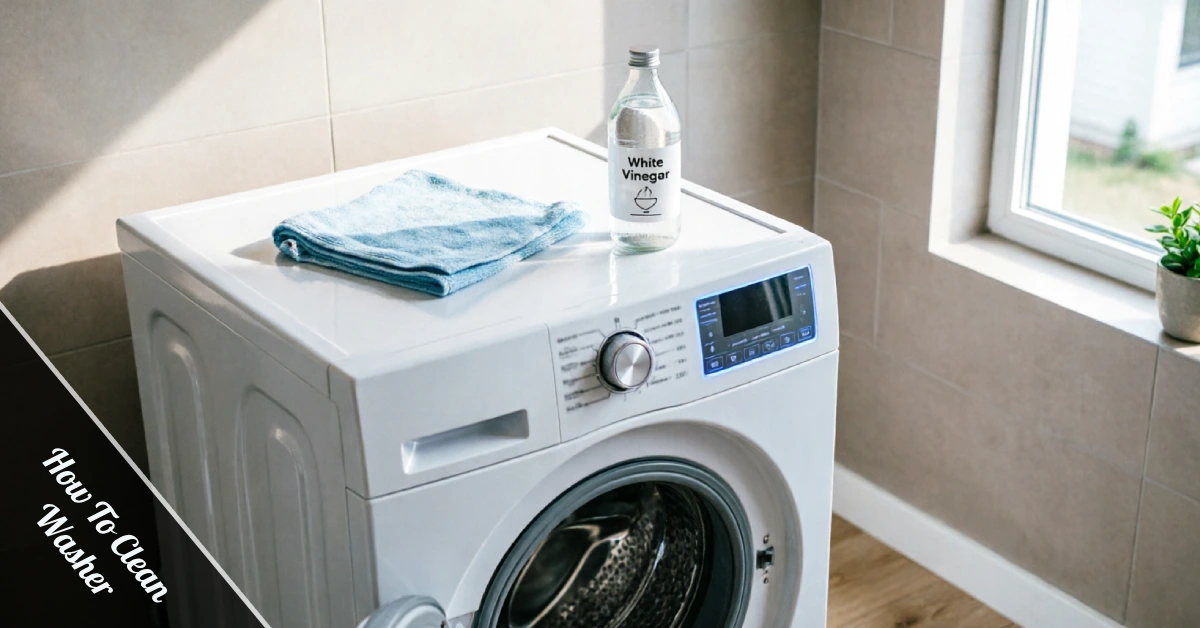
Your washer works hard every single week, and it rarely gets a thank you. Musty smells, gunky gaskets, and a slow drain are its way of asking for help.
This guide on how to clean washer machines walks you through every step. Front loader or top loader, you’ll find clear instructions with no guesswork involved.
If you’ve already tackled other spots in the house, like when you cleaned your glass stovetop, you know a little effort goes a long way toward a fresher home.
Signs Your Washer Needs Cleaning
That sour smell hitting you when you open the door isn’t your imagination. It’s buildup talking.
Detergent residue, fabric softener, and trapped moisture team up to create a breeding ground for mold and mildew inside the drum.
Clothes coming out damp, dingy, or still smelling off after a full cycle are red flags too. So is a slow drain.
A grinding noise during the spin cycle usually points to a clogged filter or a pump that needs attention soon.
What You’ll Need Before You Start
Gather a microfiber cloth, an old toothbrush, and either a washing machine cleaning tablet or plain white vinegar.
Baking soda works well for scrubbing without scratching plastic housing or rubber seals around the door.
Skip harsh chemicals unless your owner’s manual specifically approves them for your exact washer model and finish.
A small bucket or shallow towel helps catch water when you open the filter panel later on.
Run An Empty Cleaning Cycle First
Most modern washers, whether Samsung, Whirlpool, or Maytag, come with a built-in Self Clean or Drum Clean cycle built for exactly this job.
Run it empty with hot water, adding either a cleaning tablet or two cups of white vinegar to the drum.
This single step handles a big chunk of how to clean washer maintenance without much effort on your part.
Let the drum air out afterward instead of shutting the door right away, since trapped steam invites mildew back fast.
How To Clean Washer Front Loader Models
Front loaders trap moisture in that rubber gasket around the door, which is exactly why they smell first.
Pull the seal back gently and wipe out any hidden grime with a damp cloth, checking every fold carefully.
Scrub stubborn spots with a soft toothbrush dipped in a baking soda paste until the rubber looks clean again.
Always leave the door cracked open between washes so air can circulate and actually dry the drum out.
How To Clean Washer Top Loader Models
Top loaders skip the gasket problem, but they still build up scum around the agitator and drum walls over time.
Fill the tub with hot water, add four cups of white vinegar, and let it soak for an hour.
Run a full cycle afterward to flush everything out, then wipe the lid and rim while the tub drains.
Grime loves to hide in that rim, so a quick pass with a cloth saves you trouble down the road.
Cleaning The Filter And Drain
Locate your washer’s filter, usually behind a small panel near the bottom front of the machine.
Place a shallow towel underneath first, since water and lint will spill out the moment you open it.
Twist the filter cap slowly and pull out any coins, hair, or small fabric bits stuck inside.
Rinse the filter under running water, then reinsert it firmly until you hear it click into place.
A clogged filter is one of the sneakier reasons a washer starts smelling bad even after a full rinse cycle.
Cleaning The Detergent Dispenser
Slide the dispenser drawer all the way out, and check the empty slot underneath it as well.
Soak the drawer in warm soapy water for about fifteen minutes, then scrub it with your toothbrush.
Dried detergent and fabric softener cake up fast in the tiny corners of that plastic tray.
This is the same patient scrubbing you’d use on tricky grout lines when you clean shower tiles around your tub.
Rinse everything well and let the drawer air dry before sliding it back into the machine.
Vinegar Or Bleach: Which One Works Best
White vinegar is gentle, cheap, and breaks down mineral buildup and mild odors without damaging rubber seals inside the drum.
Bleach handles heavier mold and mildew, but it should never be mixed with vinegar or other household cleaners.
Check your washer’s manual first, since some manufacturers warn against bleach entirely for certain drum finishes.
For routine care, vinegar is usually enough to keep things smelling fresh between deeper cleanings.
Cleaner Comparison At A Glance
| Cleaner | Best For | How Often | Cost |
|---|---|---|---|
| White vinegar | Odors, mineral buildup | Monthly | Low |
| Baking soda paste | Scrubbing gaskets and trays | As needed | Low |
| affresh tablets | Deep mold and mildew | Monthly | Medium |
| Chlorine bleach | Heavy mold, sanitizing | Occasional, if approved | Low |
This quick chart makes it easier to grab the right cleaner instead of guessing every time you tackle how to clean washer parts one by one.
Common Mistakes To Avoid
Overusing detergent is the number one cause of the residue that leads to smells and stubborn buildup over time.
Closing the door right after a wash traps moisture and speeds up mold growth inside the gasket.
Skipping the filter for months lets lint and small debris pile up into stubborn, hard-to-clear clogs.
None of these mistakes are dramatic on their own, but they add up fast if left unchecked.
A Simple Monthly Routine
Run an empty hot cycle with vinegar or a cleaning tablet once a month, no exceptions.
Wipe the gasket, dispenser, and exterior every week or two if you do laundry often at home.
Leave the door open between loads and keep the dispenser drawer cracked slightly to let air through.
This short routine keeps your washer smelling fresh and running at full strength for years to come.
It also means less scrubbing later on, since buildup never gets the chance to settle in and harden.
When It’s Time To Call A Pro
Sometimes cleaning isn’t enough, and that’s okay. A persistent burning smell or standing water means something mechanical is wrong.
Grinding noises that don’t go away after a filter cleaning often point to a worn bearing or belt.
If your washer leaks from the bottom even after you know how to clean washer filters properly, call a technician before it gets worse.
Catching these issues early is cheaper than replacing the whole machine down the line.
Quick Recap Before You Start
Here’s the short version if you’re in a hurry:
- Run an empty hot cycle with vinegar or a tablet once a month
- Wipe the gasket and dispenser weekly if you do laundry often
- Clean the filter every few months to avoid clogs and smells
- Leave the door cracked open between loads to stop mold before it starts
Keep It Fresh, Keep It Running
A clean washer means fresher clothes, fewer repairs, and a machine that lasts longer without costly breakdowns.
Once you’ve got the routine down, it takes just minutes a month to stay ahead of buildup and odor.
And once your laundry room is sorted, you might find yourself eyeing other spots that need a refresh, like when you finally get around to cleaning your walls down the hall.
Small habits like these keep your whole home running smoother, one room and one appliance at a time.
FAQs About How To Clean Washer Machines
How often should you clean a washer?
Aim for once a month, or every two weeks with heavy use.
Can you use vinegar safely?
Yes, it’s one of the gentlest and most effective options for regular upkeep.
Why does a washer smell bad?
Trapped moisture and detergent buildup are almost always the root cause.
Can you use bleach in a front loader?
Only if your manual approves it, and never combined with vinegar.