

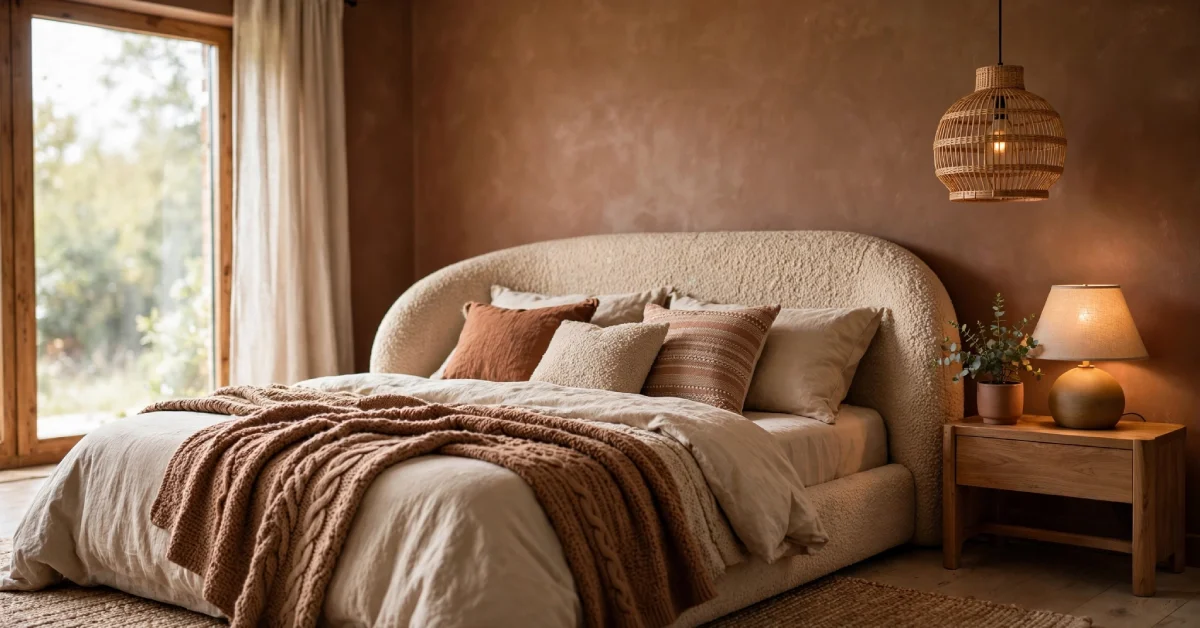
Looking for bedroom inspirations that actually work? Focus on layered lighting, breathable fabrics and calming colors that support better sleep. Add closed storage to cut clutter, then mix in one or two statement pieces such as a bold headboard or a textured ceiling. Small, deliberate changes can turn a plain bedroom into a proper retreat.
More than a fifth of UK adults rate their sleep as fairly bad, and the room you sleep in has a lot to do with that. A cluttered, poorly lit bedroom rarely helps you switch off, while a considered one can change how you feel every morning. Out of every room in the house, the bedroom is the one that gets the least attention and does the most work.
This guide covers practical bedroom inspirations you can use right away, from colour and lighting to storage, furniture and layout. You will find ideas that work in small flats and larger homes, along with a look at the mistakes worth avoiding before you spend any money.
What Shapes Good Bedroom Inspirations Right Now
Bedroom design has moved away from matching furniture sets and safe, neutral schemes. A recent survey of interior designers found that maximalism and eclecticism are now the two leading styles for 2026, with floral and botanical motifs remaining the most requested pattern choice. Designers are mixing old and new pieces rather than buying a single collection, and the same survey found that bedrooms are increasingly treated as a self-care space rather than just somewhere to sleep.
Curved furniture is also gaining ground, cited by 43 percent of designers as a leading shape trend. Wicker, rattan and skirted seating are showing up more often too, alongside irregularly shaped rugs that soften the edges of a room. The common thread across these bedroom inspirations is comfort with personality, rather than a single strict look you have to copy exactly.
Choosing a Colour Palette That Helps You Sleep.
Colour sets the mood before you even lie down. Designer Marie Cloud of Indigo Pruitt Design Studio describes a shift toward what she calls earthy cocooning, with warm cocoa brown and clay tones creating a calm, grounded feel in the bedroom. These shades work well on walls, bedding or even a single upholstered chair if you are not ready to commit to a full repaint.
If you prefer more energy in the room, pattern drenching is worth trying. Claire Hester, Head of Product at Christy, says fully coordinated prints across bedding, cushions and loungewear let you use bold pattern with confidence while keeping the room feeling soft. Whichever direction you pick, keep at least one surface, usually the walls or the bedding, as a calmer base so the room does not feel overwhelming. A simple way to test a colour before committing is to buy one cushion or a small tester pot and live with it for a week.
Textures and Fabrics Worth Layering In
Texture does as much work as colour in a bedroom. Linen, bouclé and heavy cotton all add warmth without adding visual noise. Layer a chunky throw over a lighter duvet cover, then add two or three cushions in a mix of finishes for depth. Mixing matte and slightly glossy surfaces, such as a velvet headboard against a plain linen duvet, also keeps a neutral room from feeling flat.
A textured ceiling is one of the more surprising bedroom inspirations gaining traction this year. Interior designer Paige Williams notes that textured ceilings add depth and character to a space, turning an overlooked surface into a design feature. This works especially well in bedrooms with plain walls, since it gives the eye somewhere new to land. A patterned wallpaper on the ceiling, or a simple coat of paint in a deeper shade than the walls, achieves a similar effect for less cost.
Lighting Setups That Change the Whole Room
Most bedrooms rely on a single overhead light, which is rarely flattering or restful. Aim for three layers instead: a main ceiling or wall fixture for general light, a bedside lamp for reading, and a soft accent light such as a plug-in wall light or LED strip behind the headboard. Warm white bulbs, rated around 2700 kelvin, tend to suit bedrooms better than the cooler, bluer light often used in kitchens and offices.
Dimmer switches make a real difference here. They let you shift from bright and functional in the morning to soft and calm at night, without changing a single fixture. Smart bulbs work as a lower-cost alternative if rewiring is not an option, and many can be scheduled to dim automatically in the evening.
Storage Ideas That Keep Small Bedrooms Calm
Clutter is one of the fastest ways to undo good bedroom inspirations. Under-bed drawers, a slim ottoman with hidden storage and floating bedside shelves all free up floor space without adding bulky furniture. If your room is small, look for a bed frame with built-in drawers rather than adding a separate chest, since it uses space you already have.
Closed storage tends to read calmer than open shelving, since it hides everyday items from view. Our guide to bedroom decor ideas covers more ways to balance storage with style in a small space. If you have an awkward alcove or a sloped ceiling, a fitted wardrobe built to the exact shape of the room will almost always use the space better than a standard flat-pack unit.
Wardrobe organisers and drawer dividers are inexpensive additions that keep the inside as tidy as the outside. A well-organised wardrobe also makes it easier to keep the rest of the room tidy day to day, since clothes and accessories have a fixed place to go instead of ending up on a chair.
Headboards and Statement Furniture Pieces
A bold headboard is one of the simplest ways to add character without redoing the whole room. Upholstered, curved and channel-tufted styles are all popular right now, echoing the wider shift toward curved furniture shapes. A headboard in a contrasting fabric or colour also works as a low-cost focal point if the rest of the room is fairly plain.
Technology is also being designed out of view. Designer Clive Lonstein has observed that fully analogue bedrooms, where screens and chargers are absent, are becoming more common. If you are not ready to go screen-free, designer Zoë Feldman suggests keeping any technology visually minimal, with televisions hidden behind panels or artwork and charging built into furniture rather than left on show.
For more furniture pairing ideas, our bedroom interior design ideas guide breaks down how to match a statement headboard with the rest of the room, including which finishes work well with curved or channel-tufted styles.
Adding Plants and Natural Materials
Plants are showing up in bedrooms as more than decoration. Recent design coverage points to greenery being used deliberately to support mood and a sense of calm, alongside natural materials like rattan, wood and stone. A cluster of two or three plants at different heights tends to look more considered than a single large one placed in the corner.
A snake plant or peace lily on a bedside table or windowsill needs little care and suits low light. If you want a bigger statement, a floor planter in the corner of the room adds height without taking up much space. Pairing a plant with a natural material, such as a rattan lampshade or a wooden stool, ties the look together without much extra effort.
Small Bedroom Layout Tips
If your bedroom is an awkward shape, a few layout adjustments can help before you buy anything new. Float the bed away from a sloped wall rather than pushing it into the lowest point of the ceiling. Use the space under a window for a low bench or desk instead of leaving it empty, and choose a bedside table that is narrow enough to fit a tight gap without blocking a doorway. For a box room or a shared bedroom, a few small tweaks make the space feel larger:
- Position the bed so you do not have to walk around it to reach the door
- Use a tall, narrow wardrobe instead of a wide one to free up wall space
- Choose a bed with a low profile if the ceiling feels close
- Hang curtains slightly higher and wider than the window frame to make it look larger
- Keep the colour of large furniture close to the wall colour so it recedes rather than stands out
Budget-Friendly Bedroom Inspirations to Try This Weekend
You do not need a full renovation to update your bedroom. A few small, well-placed changes can make a noticeable difference in how the room looks and feels, often within a single weekend:
- Swap out old bedding for a new duvet cover and two cushions in a fresh colour
- Fit blackout curtains or blinds; research from Hillarys found that three-quarters of people who installed them reported better sleep afterwards
- Add a dimmer switch or a plug-in lamp with a warm bulb
- Declutter the top of the wardrobe and any surfaces you can see from the bed
- Hang two or three framed prints at eye level above the bed
- Paint one wall in a warm, muted tone instead of repainting the whole room
If you are planning bigger changes over time, our home upgrading in installments guide covers how to spread the cost of a full bedroom refresh across several months, which is often more realistic than trying to do everything at once.
Common Bedroom Design Mistakes to Avoid
Screens are one of the biggest issues. National sleep research found that 91 percent of UK adults use a screen before bed, a habit linked to poorer sleep quality. Keeping phones and tablets out of the bedroom, or at least off the bed, is a simple fix that costs nothing.
An old mattress is another common problem. Around 31 percent of UK adults are sleeping on a mattress beyond its recommended seven-year lifespan, and many report discomfort as a result. If your mattress is older than your phone, it is worth checking whether it still supports you properly, since a sagging mattress can undo even the best decor choices.
Overfilling the room with furniture is a third mistake. A bedroom only needs a bed, one or two storage pieces and enough floor space to move around comfortably. Anything beyond that starts to work against the calm feeling most people want from the space.
Ignoring the ceiling and walls above eye level is a fourth mistake worth fixing. A plain white ceiling in an otherwise considered room can make the whole space feel unfinished, and it is one of the cheapest surfaces in the room to change.
FAQs
How often should I update my bedroom?
There is no fixed rule, but small changes such as new bedding or lighting every year or two keep the room feeling current without a full redo. Larger pieces like a headboard or wardrobe can reasonably last far longer.
What colours help you sleep better?
Muted, warm tones such as clay, sage and soft grey tend to feel calming, based on how designers are using colour in current bedroom schemes. Bright, high-contrast colours work better in rooms used for more than sleep, such as a home office or playroom.
Do I need to spend a lot to see a difference?
No. Lighting, bedding and decluttering make a noticeable difference for a relatively small cost, before you consider larger changes like furniture or paint. Most of the ideas in this guide can be done gradually over a few weekends.
Do plants actually help a bedroom feel calmer?
Many people find that greenery adds a sense of calm and life to a room, even though the evidence is more about perception and personal preference than measurable air quality benefits in a typical bedroom.
What is the biggest bedroom trend for 2026?
Personalization. Rather than following one fixed look, current bedroom inspirations lean toward mixing textures, colours,s and furniture that reflect the person living there, which is part of why maximalism and eclecticism have grown in popularity.