

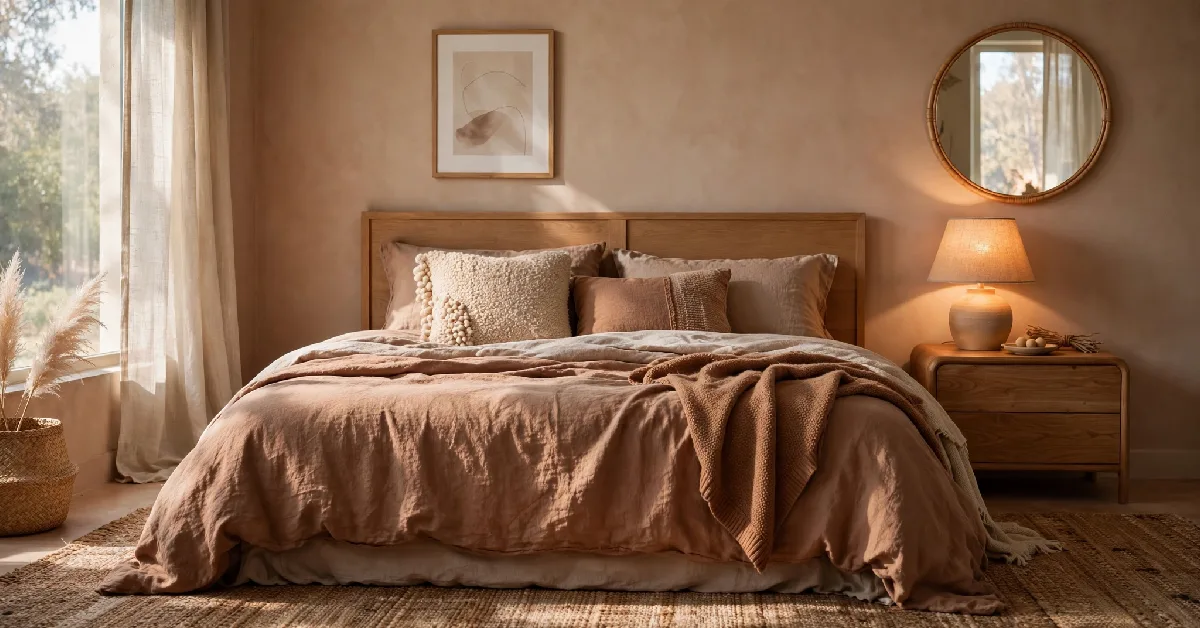
Your bedroom gets less design attention than almost any other room in the house, yet you spend more hours in it than the kitchen or living room combined. Most people notice their bedroom only when something feels off: the light is too harsh, the bed looks bare, or the room just does not feel like theirs.
Homeowners are paying closer attention to this room again. According to the 2026 U.S. Houzz & Home Study, half of all surveyed homeowners plan to take on a renovation project in 2026, and 41 percent plan to decorate, with 39 percent of respondents reporting furniture purchases last year alone. Bedrooms sit near the top of that list because the return on a modest decor update is high compared with the cost.
This guide covers the decor choices that matter most: color, bedding, lighting, wall decor, furniture, small-space fixes, and budget. Each section includes specific, checkable advice rather than general inspiration.
Bedroom Decor Trends Worth Following in 2026
Trend reports change every year, but a few 2026 shifts are worth knowing before you shop, since they explain why certain products are suddenly everywhere.
Designer Grey Davis of Meyer Davis told Elle Decor that clients are asking for spaces that feel warmer and more soulful, with rooms layered and authentic rather than styled to look a certain way in photos. That shift shows up in three consistent trends across this year’s coverage.
- Warmer, richer colour stories are replacing flat neutrals and monochrome schemes.
- Curated, personal touches such as vintage rugs and sculptural objects are favoured over matched furniture sets.
- Layered lighting and tactile fabrics are treated as functional choices, not just finishing touches.
Not every trend fits every room. A bold ceiling treatment or a fully color-drenched wall works in a larger primary suite but can overwhelm a small guest room. Pick the trends that solve a real problem in your space rather than copying a look wholesale.
Choosing a Bedroom Colour Palette
Paint colour sets the mood of a bedroom before a single piece of furniture goes in. Bright or cool tones tend to read as energizing, which is the opposite of what most people want from a room built around rest.
Designer Marie Cloud of Indigo Pruitt Design Studio describes the current shift as “Earthy Cocooning,” with cocoa brown and clay tones taking center stage to create a grounded, soulful feel. Other designers point to deep blue-gray and smoky olive as options that read sophisticated by night and calm by day.
A few practical starting points:
- Base the walls in a warm neutral such as clay, oat, or soft taupe, then add one deeper accent color through bedding or curtains.
- Test paint samples on the actual wall at night under lamp light, since bedrooms are used most after dark.
- Limit strong accent colours to two so the room still reads as restful.
- If you rent or are not ready to paint, get the same effect through a large textile: a duvet cover, a headboard slipcover, or floor-to-ceiling curtains in the target tone.
Color choice is also the cheapest decision in this entire guide to change your mind about later, so it is worth spending real time on before you commit to furniture or a full bedding set.
Bedding and Textures Worth the Investment
Texture is what keeps a neutral bedroom from feeling flat, and it is one of the most consistent trends across every 2026 report. Interior designers have moved hard into tactile materials, layering colour, pattern, and texture together instead of relying on flat paint and smooth fabric alone.
Boucle, velvet, and jacquard fabrics have all seen sharp growth in designer use and search interest heading into 2026, particularly white boucle on headboards and accent seating. These fabrics work well because a small amount goes a long way without overwhelming a room.
Practical ways to apply this:
- Add one textured throw pillow or blanket in boucle or chunky knit.
- Swap a flat duvet cover for one with visible weave, quilting, or jacquard pattern.
- Bring in a wool or high-pile rug near the bed for warmth underfoot.
- Layer curtains in linen or a heavier weave instead of a thin, flat panel.
Interior designer Liz Williams told Veranda that the current trend favours a clean, curated bedscape rather than a mountain of pillows, with one long pillow placed in front of the shams. This gets the layered look without the clutter that comes from piling on too many decorative pieces.
Lighting Ideas for a Cozy Bedroom
A single overhead fixture rarely suits a bedroom, since the room needs to work for both daytime tasks and nighttime wind-down. Trend coverage across 2026 consistently points to layered, indirect lighting as the fix.
Warm, diffused light sources such as integrated LED strips, discreet spotlights, and dimmable lamps enhance a room’s finishes while creating a soft, enveloping atmosphere rather than a flat, evenly lit box. Aim for at least three light sources at different heights: an overhead fixture, a bedside lamp, and one accent light such as a floor lamp or wall sconce.
A few fixes that make the biggest difference for the least money:
- Replace cool white bulbs with warm white bulbs in the 2700K to 3000K range for lamps used at night.
- Add a dimmer switch or smart bulb to the main overhead fixture.
- Use mirrors or other reflective surfaces near a light source to bounce light around a darker corner without adding a new fixture.
If your bedroom has been feeling flat despite decent furniture and colour, lighting is usually the first thing to check before buying anything new.
If you are working through more than one room at a time, our guide to living room decor ideas covers many of the same lighting and layering principles for a shared living space.
Wall Decor and Statement Pieces
Bare walls are the fastest way to make a finished bedroom feel unfinished. A few well-chosen pieces do more work than a wall full of small frames.
One trend worth watching for 2026 is the illustrated statement rug, used as wall art or anchored under the bed rather than kept strictly on the floor. Brush-stroke art, line-drawn faces, and abstract shapes on woven textures are showing up as a substitute for framed prints in many 2026 bedroom projects.
Reflective surfaces are also having a moment. Mirrors, glass, and metallic accents bring dimension and shine to a room where textures are traditionally soft and matte, and a well-placed mirror can visually double a small bedroom’s light and depth.
Ways to apply this without overspending:
- Hang one large piece above the bed rather than several small ones, so the eye has a clear focal point.
- Try a patterned or textured rug on the wall behind a headboard if you want texture without committing to paint.
- Add a single mirror across from a window to bounce natural light deeper into the room.
Furniture Choices That Add Personality
Matching furniture sets are losing ground for a reason: they photograph well but rarely feel personal once you actually live with them. The stronger trend for 2026 is a mix-and-match approach, where pieces are chosen individually for how they function and feel rather than because they came from the same collection.
Curvy, rounded furniture such as bubble chairs or low, softly shaped loveseats is showing up in bedrooms as both a seating option and a design statement, breaking up the straight lines of a standard bed and dresser layout. These pieces also help define a secondary zone in the room, such as a reading corner near a window or a small coffee spot by a floor lamp.
A few ways to build personality into furniture choices:
- Choose one vintage or antique piece, even a small side table, to break up newer furniture.
- Pick pieces in different finishes, such as pairing a wood dresser with a metal-frame chair, rather than matching everything.
- Reserve one corner for a non-sleep function, like reading or morning coffee, and furnish it separately from the bed area.
Small Bedroom Decor Ideas That Work
Small bedrooms benefit from many of the same principles as larger ones, just applied with more restraint. The goal is to avoid visual clutter while still adding warmth and personality.
A few adjustments matter more in tight spaces:
- Choose furniture with visible legs instead of solid bases, so floor space reads as open underneath.
- Limit the colour palette to two or three tones at most, since a busy palette shrinks a small room visually.
- Use vertical space for storage and decor, such as wall-mounted shelves, instead of adding more floor-standing furniture.
- Keep window treatments simple and light-colored unless blackout is a priority, since heavy dark curtains can make a small room feel boxed in.
Multi-purpose furniture also earns its keep in small bedrooms. A storage bench at the foot of the bed, a nightstand with a drawer and open shelf, or an ottoman that doubles as extra seating all add function without adding visual weight.
Budgeting for Your Bedroom Decor Project
Decor spending does not need to match renovation-level budgets to make a real difference. The 2026 Houzz & Home Study found that the planned median spend for 2026 projects is $15,000, a notable drop from the prior year, and much of that spending goes toward larger renovation categories like kitchens and bathrooms rather than bedroom decor specifically.
For a decor-only refresh, most of the visible impact comes from a short list of changes:
- New bedding in an updated colour and texture, which changes the whole feel of a room for a fraction of furniture costs.
- A lighting update, including bulb swaps and one new lamp or fixture.
- One or two wall decor or textile pieces, chosen deliberately rather than bought in bulk.
- Small furniture additions, such as a bench, stool, or accent chair, rather than a full furniture replacement.
Setting a firm budget before shopping keeps a bedroom refresh from turning into a much larger project. Survey data from Houzz shows that more than a third of renovating homeowners exceeded their planned spend last year, which is easier to avoid on a smaller decor project than a full renovation.
If your bedroom project is part of a larger plan across the home, our guide to financing options for home upgrades walks through ways to budget and sequence bigger projects, including instalment financing where it makes sense.
For a deeper look at layout, storage planning, and the sleep research behind why these choices matter, our companion piece on bedroom interior design ideas is a useful next read.
FAQs About Bedroom Decor
What is the easiest way to update bedroom decor on a budget?
Start with bedding, lighting, and one textured accent piece such as a throw or rug. These three changes touch the senses most directly and cost far less than new furniture.
What colors are trending for bedrooms in 2026?
Warm, earthy neutrals such as clay, cocoa brown, and soft taupe are leading the year, along with deeper accent tones like smoky olive and blue-gray for people who want more drama.
How many light sources does a bedroom actually need?
Three works well for most rooms: an overhead fixture, a bedside lamp, and one accent light such as a floor lamp or sconce. This gives you both bright, functional light and a dimmer, calmer option at night.
Should I match all my bedroom furniture?
No. Current design guidance favors mixing finishes and eras over matched sets, since a mix-and-match approach tends to feel more personal and holds up better as your taste changes.
How do I decorate a small bedroom without making it feel cluttered?
Keep the ccolourpalette to two or three tones, choose furniture with visible legs, and use vertical wall space for storage and decor instead of adding more floor furniture.