

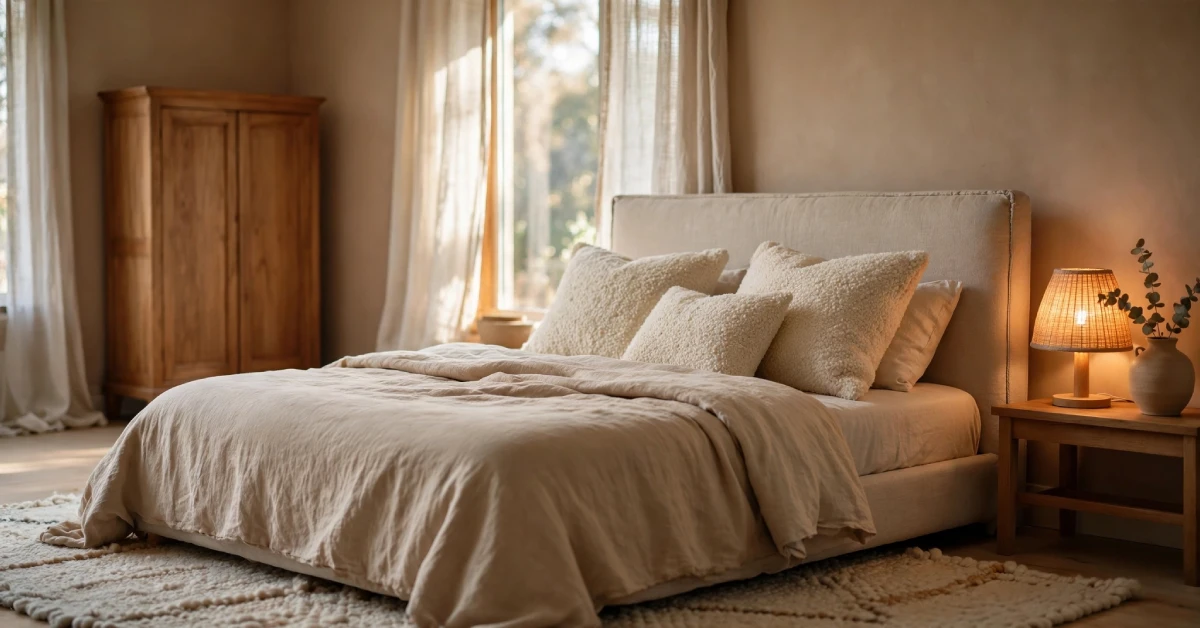
A good bedroom interior design plan starts with three things: a calm color palette, furniture placed to keep clear walking paths, and lighting that can be dimmed at night. Layer in soft textures and closed storage last. These four choices affect comfort more than any single piece of furniture.
Your bedroom probably works harder than any other room in your home. It has to help you fall asleep, wake up on time, get dressed, and sometimes act as a home office corner or a reading nook. Yet it is often the last room to get any real design attention.
Recent UK research backs this up. In the Land of Beds 2026 Sleep Report, only 27.9 percent of adults get the recommended seven or more hours of sleep a night, and over half of respondents do not follow any consistent wind-down routine before bed. A bedroom that is set up poorly will not fix that on its own, but a room designed around calm, comfort, and order can make falling asleep noticeably easier.
This guide walks through the choices that matter most: color, layout, lighting, textures, storage, and budget-friendly updates, plus the mistakes worth avoiding.
Why Bedroom Interior Design Matters for Sleep
A bedroom is not just a place to put a bed. It is a room your body reads for cues about whether it is safe to rest. Clutter, harsh light, and cramped layouts send the opposite signal, even if you do not notice it consciously.
According to Hillarys’ 2025 UK sleep statistics report, 87.08 percent of UK adults say their bedrooms are dark enough, and three-quarters of people who fitted blackout curtains or blinds report better sleep afterwards. That single change, control over light, shows how much interior choices influence rest.
Designers are also framing bedrooms around recovery rather than looks alone. Argent Design founder Fontanella told Veranda that plush bedding, blackout layers, and warm-dim lighting create what she calls recovery zones, a shift away from bedrooms designed purely to be photographed.
If you are also working through other rooms in the house, treat the bedroom as part of the same plan rather than an afterthought. Our guide to home upgrades worth doing first covers how to sequence renovation projects, so you don’t redo work twice.
Choosing a Bedroom Colour Palette

Colour sets the tone before anything else in the room is finished. Warm, muted tones tend to outperform bright or cool colours for a bedroom because they read as calming rather than stimulating.
Jodie Hatton, design manager at Brintons, told Country & Town House that earthy neutrals, which gained ground in 2025, are deepening further into richer, more cocooning palettes for 2026. Marie Cloud of Indigo Pruitt Design Studio described a similar shift to Good Housekeeping, pointing to cocoa brown and clay tones as ways to create a grounded, soulful feel.
A few starting points:
- Base walls in a warm neutral such as clay, oat, or soft taupe, then add one deeper tone through bedding or curtains.
- Keep ceiling colour a shade or two lighter than the walls unless you want a deliberately cocooned, low feel.
- Test paint on the actual wall at night under lamp light, not just daylight, since bedrooms are used most after dark.
- Limit accent colours to two, so the palette still reads as restful rather than busy.
If your bedroom connects visually to a hallway or open landing, try to keep some tonal continuity rather than a hard colour break at the doorway.
Furniture Layout and Placement
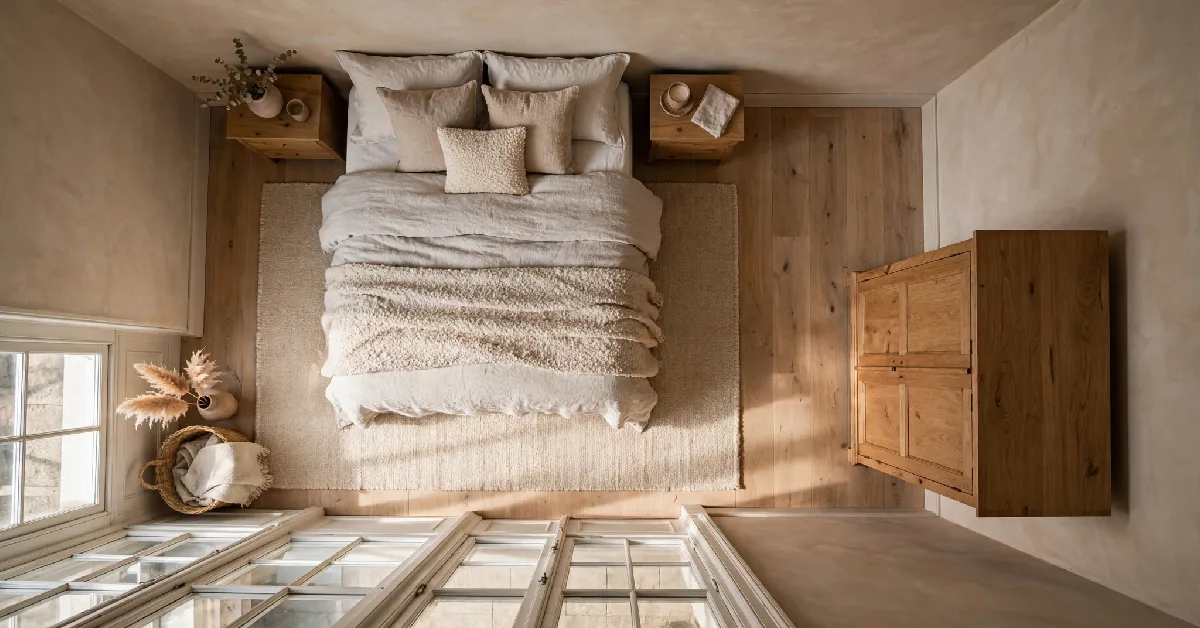
Layout decides whether a bedroom feels open or cramped, regardless of how much floor space you actually have. The goal is a clear walking path from the door to the bed and from the bed to the wardrobe, with nothing you have to step around.
Start with the bed. In most rooms, it works best centered on the longest wall, away from direct drafts near windows or doors. From there, place nightstands close enough to reach without leaving the bed, and leave at least 6 centimetres of clearance on each side for walking room.
Free-standing furniture is having a moment again. Homes & Gardens reports that armoires, antique dressers, and modern sideboards are replacing built-in wardrobes in many 2026 bedroom designs, since freestanding pieces can be moved, resold, or restyled without a full renovation. That flexibility matters if you rent, or if you expect your needs to change in a few years.
For smaller rooms, a few adjustments help:
- Choose a bed frame with legs rather than a solid base, so the floor is visible underneath and the room reads larger.
- Skip a full dresser if a wardrobe already has drawer space; doubling up on storage furniture eats floor space fast.
- Angle a bed into a corner only if the room is genuinely too narrow for a centered layout. It is a compromise, not a first choice.
Lighting for a Restful Bedroom
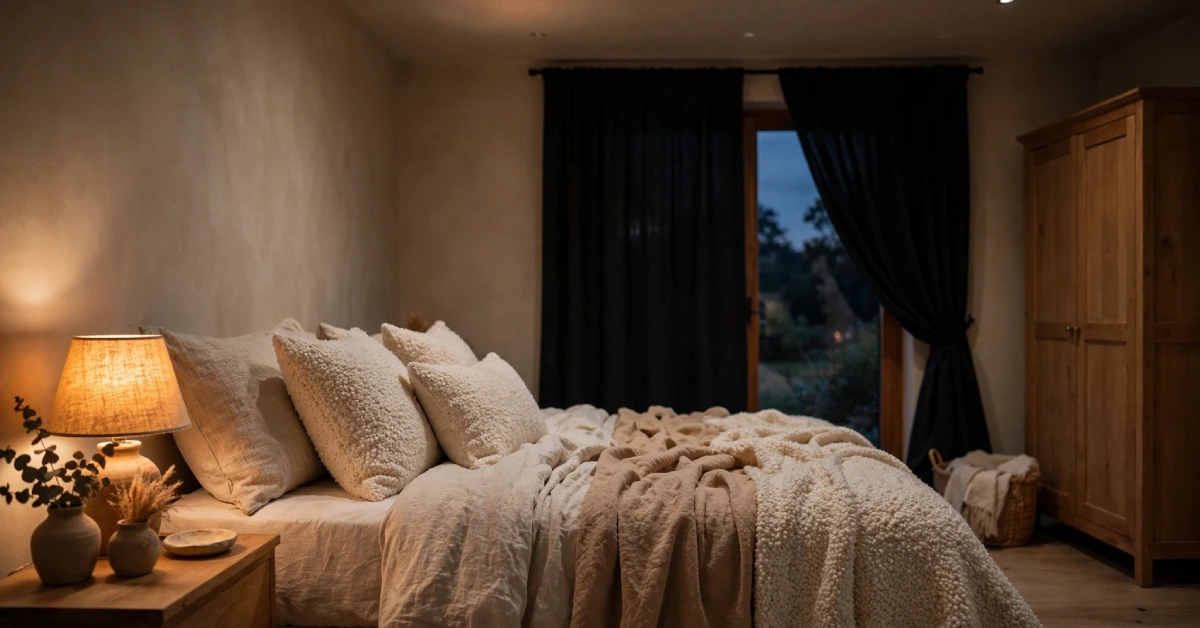
Lighting affects mood and sleep quality more directly than almost any other design choice, and it is one of the easiest to get wrong. A single bright overhead light does not suit a room meant for winding down.
Layer three types of light instead of relying on one source: an overhead fixture for general use, a bedside lamp for reading, and a dimmer or warm-toned accent light for the last hour before sleep. Warm white bulbs, generally in the 2700K to 3000K range, feel calmer at night than cool white or daylight bulbs.
Blackout curtains or blinds are worth the investment. They were the most common sleep aid in the Land of Beds 2026 report, used by 33.3 per cent of respondents nationally, and usage was highest in the North East and North West of England. If your bedroom faces a streetlight or gets early morning sun, this single change can matter more than any furniture upgrade.
A dimmer switch or smart bulb costs relatively little and lets the same fixture serve both daytime brightness and nighttime calm, which is useful if your room doubles as a dressing area.
Textures and Materials That Add Warmth
Texture is what stops a neutral bedroom from feeling flat. Interior designers have leaned hard into tactile materials for 2026, and it shows up consistently across recent trend reports.
Boucle, velvet, and jacquard fabrics have all seen strong growth in search interest and designer use, according to Saatva’s 2025 trend research reported by AOL, with white boucle in particular seeing a sharp rise in popularity. These fabrics work well on headboards, throw pillows, and bench seating because a little texture goes a long way without overwhelming a small room.
Country & Town House describes this broader shift as texture-maxxing, where designers layer colour, pattern, and tactile materials together rather than relying on flat paint and smooth fabric alone. You do not need to buy new furniture to try this. A textured throw, a set of linen curtains, and a wool rug can shift the whole feel of a room for a modest cost.
If you already have a favourite fabric or pattern style from another room in the house, it is worth carrying a version of it into the bedroom. Our cosy living room ideas piece covers texture pairing in more depth if you want a starting point.
Storage Solutions for Small Bedrooms
Storage is where most bedroom plans fall apart, usually because it gets added last instead of planned first. Decide where clothing, bedding, and everyday items will live before you buy any decorative furniture.
A few reliable approaches for tight spaces:
- Use under-bed storage boxes for out-of-season clothing or spare bedding, especially with a bed frame that has clearance underneath.
- Add a slim console or bench at the foot of the bed for folded throws instead of leaving them on a chair.
- Choose a wardrobe with internal drawers rather than a wardrobe plus a separate chest of drawers, if floor space is limited.
- Keep nightstands to one drawer and one open shelf; anything larger tends to collect clutter rather than useful items.
Built-in storage is also coming back into favour for people who want a more permanent solution. Homes & Gardens notes that classic carpentry, including built-in wardrobes and shelving carved around existing alcoves, is regaining ground in 2026 after several years of freestanding furniture dominating the market. Which approach suits you depends on whether you plan to stay in the property long term or want furniture you can take with you.
Budget-Friendly Bedroom Updates
A full bedroom redesign is not necessary to get most of the benefit. A handful of changes, done well, cover most of what matters for comfort and appearance.
Start with what touches your senses most directly: bedding, lighting, and scent. New bedding in a warm, muted tone changes the whole feel of a room for a fraction of the cost of new furniture. A warm-toned bulb swap in your existing lamps is close to free and improves the evening atmosphere immediately.
The 2026 UK Sleep Survey from Dreams found that the average British bed frame is 9.3 years old, and 29 percent of people are sleeping on frames that are 11 years or older. If your frame or mattress is in that range, replacing it is likely to do more for both comfort and appearance than most decorative changes combined.
If you are planning updates across the whole home rather than just the bedroom, our living room decor ideas guide is a useful companion piece, since many of the same texture and colour principles carry across rooms.
Common Bedroom Interior Mistakes to Avoid
A few mistakes show up repeatedly in bedrooms that otherwise have potential:
- Overhead lighting as the only light source, which makes the room feel clinical rather than restful at night.
- Furniture placed to fill space rather than to keep a clear walking path, which makes a room feel smaller than it is.
- Too many accent colours competing for attention, which undercuts the calming effect a bedroom is meant to have.
- Storage added as an afterthought, which leads to visible clutter no amount of decor can hide.
- Skipping window treatments, given how strongly light control is tied to sleep quality in recent UK survey data.
Fixing even one or two of these tends to make a bigger visible difference than adding new decorative pieces to a room that already has these underlying problems.
FAQs
What is the most important part of bedroom interior design?
Layout and light control matter more than decoration. A clear walking path around the bed and the ability to dim or block light at night affect comfort and sleep quality more than colour choice or furniture style.
What colours work best for a bedroom interior?
Warm, muted neutrals such as clay, oat, and soft taupe tend to read as calming. Designers moving into 2026 are leaning further into these earthy, cocooning tones rather than bright or stark white schemes.
How do I make a small bedroom feel bigger?
Choose a bed frame with visible legs, avoid doubling up on storage furniture, and keep the color palette to two or three tones. Built-in or under-bed storage also helps, since it removes clutter without adding floor-standing pieces.
Do blackout curtains actually improve sleep?
UK survey data supports this. In the Hillarys 2025 sleep report, three-quarters of people who installed blackout or thermal curtains said their sleep improved afterwards, and blackout curtains were the most commonly used sleep aid nationally in 2026 survey data.
How often should I update my bedroom interior?
There is no fixed schedule, but bedding, pillows, and lighting are worth reviewing every couple of years. Larger items like bed frames and mattresses tend to be replaced far less often than they should be. UK survey data puts the average bed frame at over nine years old.


