

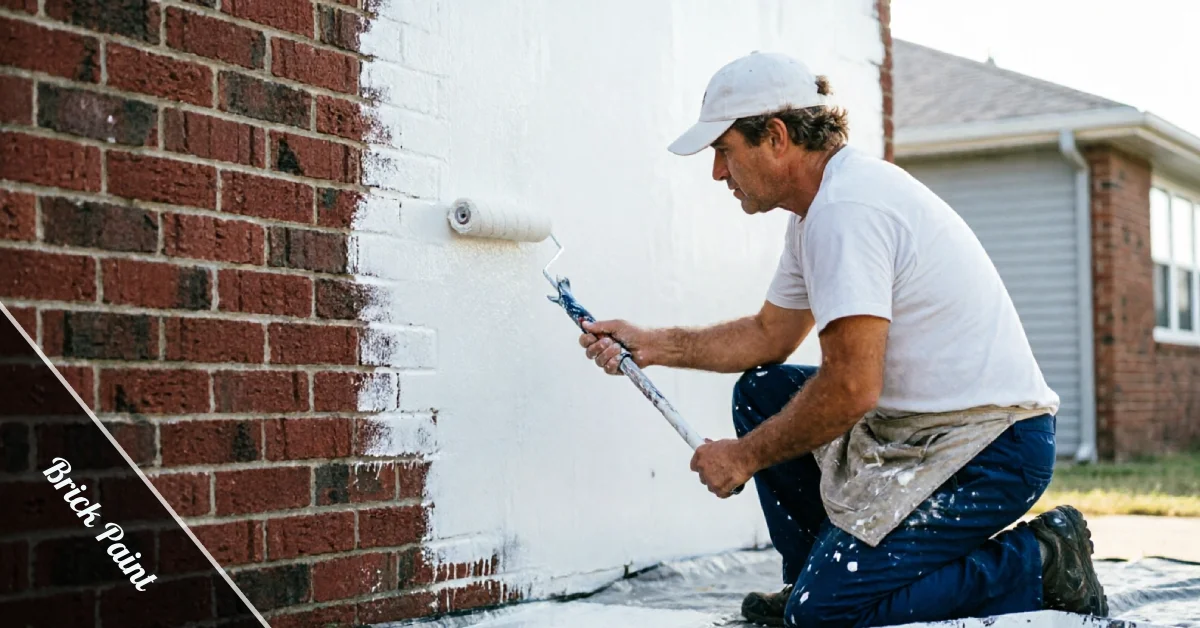
Brick paint turns tired, dated walls into something you actually want to look at. It’s one of the fastest ways to update a house without touching a single brick, and the results can be dramatic when the right product goes on the wall. Before you grab a roller, though, you need the basics down first. Some people even ask if outdoor paint works indoors, which shows how confusing the whole product aisle can get once you start comparing labels.
Here’s a fast breakdown of the main options before we go deeper into the details.
| Type | Best For | Finish | Durability |
|---|---|---|---|
| Masonry paint | Exterior walls | Matte or low-sheen | High, weather-resistant |
| Elastomeric coating | Cracked or older brick | Flexible matte | Very high |
| Mineral silicate paint | Historic brick | Breathable matte | High |
| Interior latex | Feature walls | Eggshell or matte | Moderate |
Should You Paint Brick?
Painting brick is permanent in a practical sense. Once it’s done, going back to bare brick means expensive, messy stripping work that many contractors avoid taking on. So think this decision through carefully before you buy a single tin.
Ask yourself why you want the change in the first place. Fresh color, hiding old stains, or matching a wider renovation each point toward a different product and a different level of surface prep.
The choice also affects resale value down the line. Some buyers love the crisp, updated look a fresh coat brings. Others want original exposed brick and see any coating as a downside worth negotiating on.
Main Types of Masonry Coatings
Not every coating works the same way once it hits a brick wall. Some sit right on the surface. Others soak in and let the brick breathe, which matters outdoors.
Masonry paint is the most common pick for most homeowners. It handles rain, UV rays, and temperature swings without peeling fast or fading within a season.
Elastomeric coatings stretch slightly under pressure. That flexibility helps older brick with hairline cracks, since the coating moves instead of splitting apart over time.
Mineral silicate paint bonds chemically with the brick itself. It costs more upfront, but it lets moisture escape, which protects historic or soft brick from trapping damp inside the wall.
Best Brick Paint for Different Projects
Your project shapes the product choice more than color ever will, so start there before browsing swatches.
For a full exterior repaint, go with a masonry-rated coating built for your climate. Look for mildew resistance if you live somewhere humid or coastal.
For an interior accent wall, standard latex in eggshell gives a clean look without the heavy-duty weatherproofing exterior brick actually needs.
For chimneys and older brick with visible wear, elastomeric or mineral silicate options handle movement and moisture far better than a basic tin of paint.
Interior Brick Paint and Finish Options
Interior brick paint gets to skip a lot of the weatherproofing exterior jobs require. That opens up more finish choices for the room.
Matte finishes hide texture and small imperfections well, which works nicely on exposed brick feature walls in living rooms or hallways.
Eggshell adds a slight sheen without looking glossy or plasticky under normal room lighting, which a lot of homeowners prefer for a softer look.
Some homeowners choose a limewash effect instead of a solid, opaque finish. It keeps some brick texture visible while still shifting the overall color noticeably.
Choosing Paint for Brick Exterior Surfaces
Exterior brick faces sun, rain, and freeze-thaw cycles every single year without much of a break. That’s a genuinely tough job for any coating to handle well.
Pick a product labeled specifically for masonry, not general-purpose exterior paint from the same aisle. A masonry formula accounts for the porous surface and alkaline nature of brick itself.
Check the manufacturer’s climate guidance too before buying anything. A coating built for dry heat won’t necessarily perform in constant rain or heavy coastal humidity year-round.
Masonry Paint for Brick: Features That Matter
A few specific features separate a good product from one that fails within a single year of use.
Breathability tops the list for most experts. Brick naturally absorbs moisture, and a coating that traps it in causes blistering and flaking fast.
UV resistance keeps the color looking fresh for longer. Cheaper products chalk and dull within just a couple of summers outdoors.
Flexibility matters most on older brick. A rigid coating cracks as the brick naturally shifts and settles with temperature changes.
Brick Paint Colors
Color choice on any brick wall changes the entire feel of a house, inside and out.
Warm whites and soft grays are popular right now because they read as clean and modern without feeling cold or clinical. Agreeable Gray is one shade that keeps coming up in renovation conversations for good reason, and it pairs well with most trim colors.
Deep charcoal or near-black gives a bold, modern edge, especially on smaller accent areas like a chimney breast or a single feature wall.
Test actual swatches on the brick before committing to a full order. Brick’s rough texture changes how color reads compared to a smooth painted wall.
Preparing Brick Before Painting
Skipping prep is the single biggest reason a fresh coat fails early, according to most professional painters.
Start by cleaning the surface thoroughly with a stiff brush and a mild cleaner. Dirt, mildew, and old efflorescence all block proper adhesion.
Let the brick dry completely, ideally 24 to 48 hours after cleaning it. Painting damp brick traps moisture underneath the fresh coating right away.
Repair any cracks or missing mortar first, since brick paint isn’t a filler and won’t hide structural problems.
Apply a masonry primer if the brick is porous or has never been painted before. This one extra step noticeably improves how long the finish lasts.
How to Apply Brick Paint Correctly
Good technique makes an ordinary product perform like a premium one, and it costs nothing extra.
Use a thick-nap roller for the flat faces and a brush for mortar lines and tight edges. Rough brick eats a regular roller fast.
Apply in thin, even coats rather than one heavy layer of paint. Thin coats dry properly and avoid drips pooling in mortar joints.
Two coats are standard for most jobs. Check drying times between coats carefully, especially during humid or damp weather conditions.
Common Mistakes That Cause Early Failure
Most failures trace back to a small handful of avoidable mistakes homeowners make.
Painting over damp or dirty brick is the biggest one by far. Trapped moisture under a coating leads to bubbling and peeling within just months.
Using interior paint outdoors is another common error people make. It simply can’t handle UV and weather the way a masonry formula can.
Skipping primer on bare, porous brick often means uneven color and poor adhesion right from day one of the project.
Cleaning and Maintaining Painted Brick
Painted brick isn’t maintenance-free, but it’s genuinely manageable with a little routine care.
Rinse exterior surfaces yearly with a garden hose to clear dust, pollen, and general grime buildup. Avoid pressure washers on close, aggressive settings.
Check for hairline cracks or peeling each spring before the weather turns warm again. Small touch-ups now prevent bigger, costlier repaint jobs later on.
If you’re tackling a full renovation alongside the brickwork, this room reno breakdown walks through pairing wall color with other finishes in the space.
Indoor painted brick just needs occasional dusting and a damp cloth for the odd mark or smudge.
Conclusion
Brick paint can genuinely transform a home when it’s done with the right product and proper prep. Rushing the process, or picking the wrong type of coating for the job, is what leads to disappointment down the road. Take your time on prep, pick a masonry-rated product for anything outdoors, and the results should hold up for years without much fuss.
Frequently Asked Questions
Does painted brick stop moisture damage?
A good masonry-rated coating reduces water absorption but still needs to let some vapor escape naturally.
How long does an exterior coating last?
Quality masonry paint typically lasts 10 to 15 years with proper prep and regular maintenance.
Can you paint brick that’s never been painted before?
Yes, but priming first is essential since bare brick is highly porous and absorbent.
Is painting brick a DIY-friendly project?
Small areas are manageable for confident DIYers, though full exteriors often benefit from professional application.