

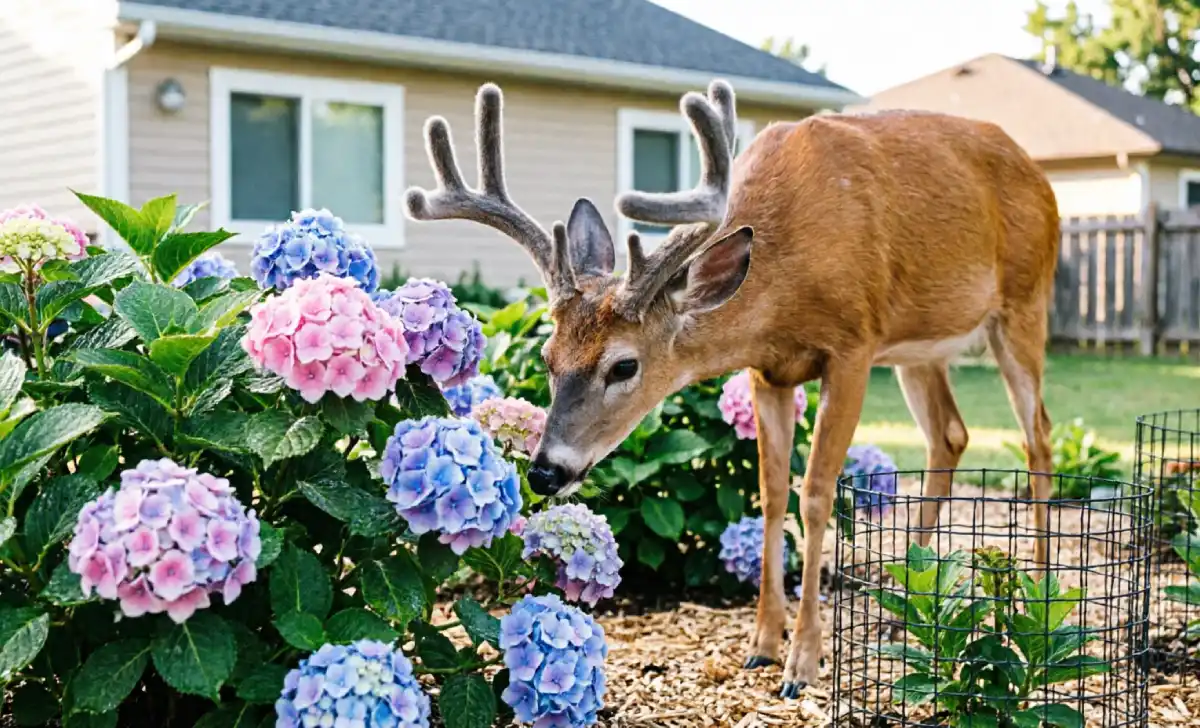
Yes, deer eat hydrangeas, and they eat them often. Hydrangeas rank among the top targets in a deer’s diet, especially in spring and summer when new growth is soft and tender. If you’ve noticed stripped leaves or missing flower buds, deer are the likely culprit. Before you edge your garden beds as a first line of defense, it helps to understand why these plants attract deer in the first place.
| Question | Quick Answer |
|---|---|
| Do deer eat hydrangeas? | Yes, frequently, especially new growth |
| Which varieties are safest? | Panicle hydrangeas are less appealing |
| Best protection method | Fencing plus scent-based repellents |
| Worst season for damage | Spring and early summer |
| Will damaged plants recover? | Usually yes, with proper care |
Why Hydrangeas Attract Hungry Deer
Hydrangea leaves are soft, high in moisture, and easy to chew. Deer prefer plants that require little effort to eat. The flower buds are just as appealing, packed with nutrients deer need after a long winter. When food is scarce nearby, hydrangeas become an easy meal.
This is really the heart of the matter when people ask whether deer eat hydrangeas, since the answer comes down to simple biology. Deer forage based on effort versus reward, and hydrangeas offer plenty of reward for very little effort. A yard bordering woods or open fields sees far more browsing pressure than a fenced, tightly landscaped property.
Signs Deer Have Been Eating Your Hydrangeas
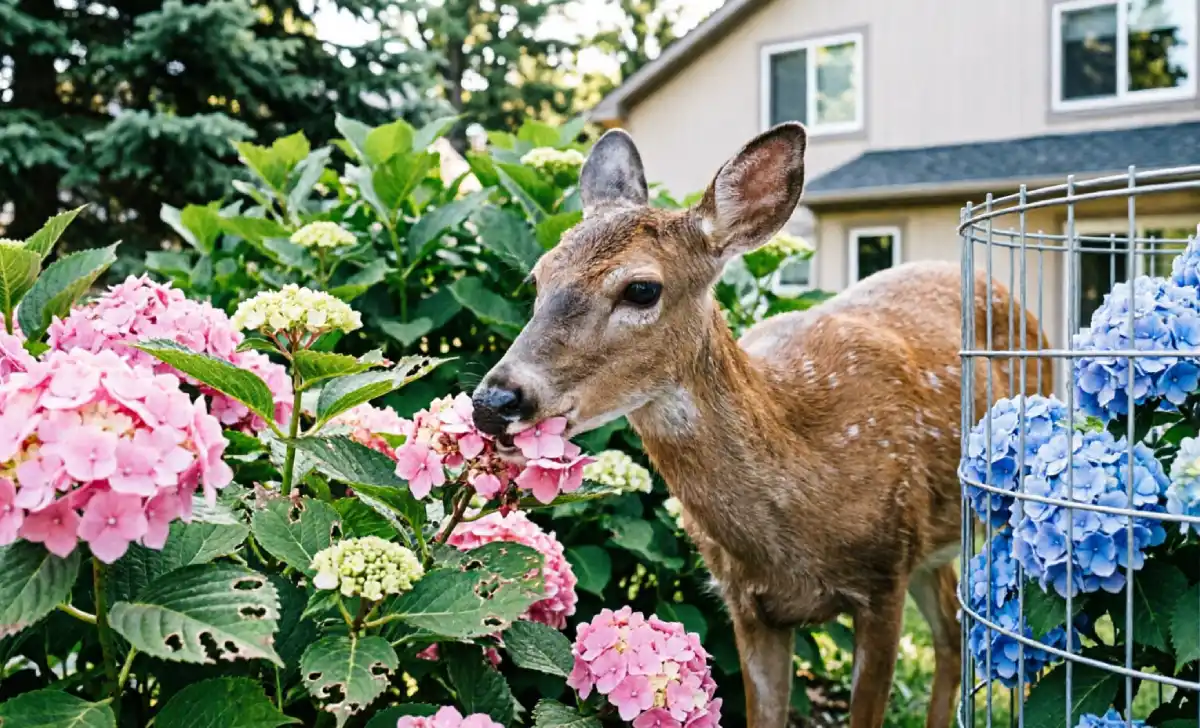
Deer damage looks different from insect damage or disease. Look for ragged, torn leaf edges rather than clean cuts, since deer lack upper front teeth and tear plant material instead of biting cleanly. Missing buds near the top of the plant are another clear sign. You might also spot hoof prints in the soil nearby or trails leading through the yard.
Damage usually appears overnight, since deer feed most actively at dawn and dusk. A plant that looked fine yesterday but is half-stripped points today straight to deer rather than a slower-moving pest. Checking your hydrangeas each morning during peak season helps you catch a pattern before it turns into serious harm.
How Deer Damage Affects Hydrangea Growth and Flowers
Repeated browsing weakens a hydrangea over time, even if the plant survives. Lost buds mean fewer blooms that season, and stripped leaves reduce the energy the plant can produce through photosynthesis. A hydrangea that gets hit hard year after year often grows smaller and blooms less reliably than one left alone.
Hydrangea Types Most Vulnerable to Deer
Not every hydrangea variety faces equal risk. Bigleaf hydrangeas, the classic mophead and lacecap types, tend to suffer the most damage. Smooth hydrangeas like Annabelle are also frequent targets because of their soft, wide leaves. Deer generally leave panicle hydrangeas alone, since their leaves feel rougher and less appetizing.
Gardeners often ask if deer eat hydrangeas of every kind equally, and the honest answer is no. Leaf thickness and scent make a real difference in how often a variety gets targeted. Choosing the right type from the start can save you years of frustration and repeated plant damage.
What Hydrangeas Do Deer Not Eat?
Panicle hydrangeas, including popular varieties like Limelight and Little Lime, sit lower on the deer menu. Their leaf texture and mild scent make them less appealing compared to bigleaf types. Planting panicle varieties near the edges of your yard can reduce overall browsing pressure. This won’t guarantee complete protection, but it shifts the odds in your favor when food is scarce.
Do Deer Eat Hydrangeas in the Fall?
Deer eat hydrangeas in the fall, though damage often slows as the plants head into dormancy. Fall browsing tends to focus on remaining leaves rather than flower buds, since most blooms have already faded. This is also when deer start building fat reserves for winter, so any accessible greenery becomes fair game.
Do Deer Eat Hydrangeas in Winter?
Winter damage shifts to stems and buds rather than leaves, since most leaves have dropped by then. Deer eat hydrangeas in winter out of necessity, when natural food sources thin out. This is actually one of the riskier seasons for old-wood varieties, since eaten buds mean no blooms the following spring.
Old-Wood vs New-Wood Hydrangeas After Deer Damage
Old-wood hydrangeas, like most bigleaf types, form next year’s flower buds on the current season’s stems in late summer. If deer eat those buds over fall or winter, you lose blooms for the entire following year. New-wood varieties, including panicle and smooth hydrangeas, form buds on fresh spring growth. This makes them far more forgiving after a rough season of browsing.
Physical Barriers That Protect Hydrangeas
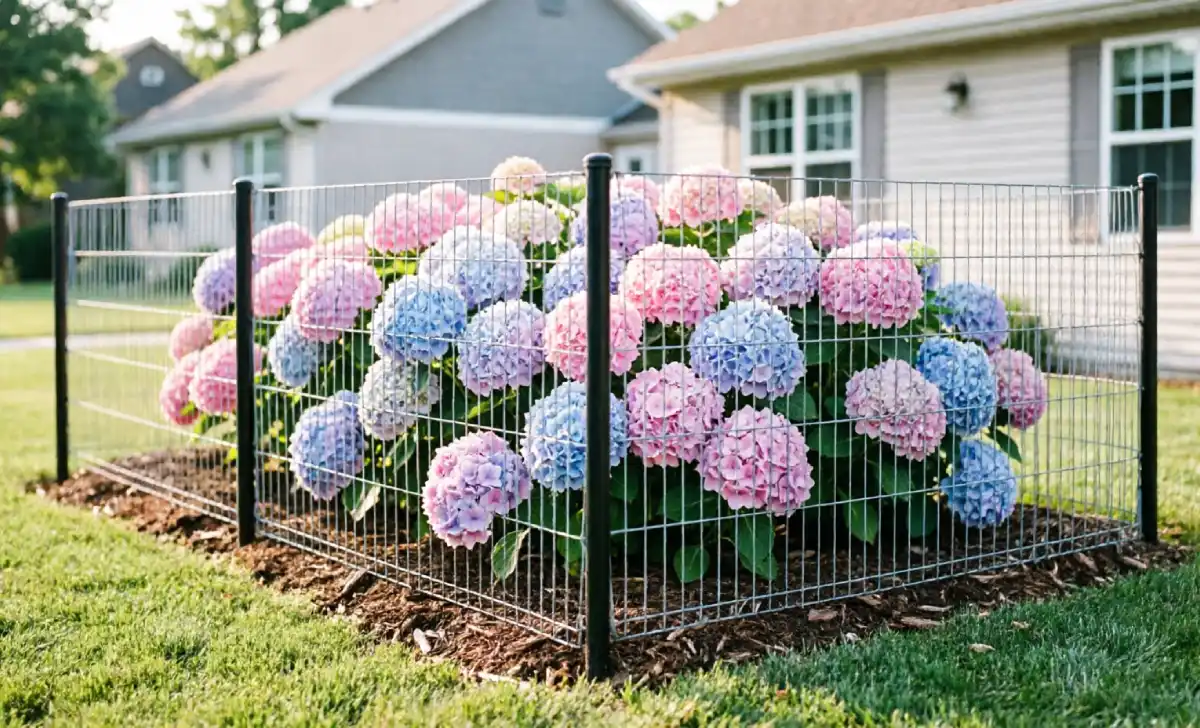
Fencing remains the most reliable deer deterrent available. A fence needs to stand at least eight feet tall, since deer can clear shorter barriers with ease. Mesh netting draped directly over smaller shrubs works well for individual plants. Raised beds with solid borders also help, since a clean edge disrupts the easy path deer prefer when moving through a yard.
Repellents, Companion Plants, and Motion Deterrents
Scent-based repellents containing predator urine or garlic often keep deer away for weeks at a time, though reapplication after rain is necessary. Motion-activated sprinklers startle deer effectively and teach them to avoid the area over time. Planting strong-smelling companions like lavender, rosemary, or catmint around hydrangeas creates a natural scent barrier deer tend to avoid.
Deer, Rabbits, and Azaleas: Identifying the Real Culprit
Rabbits chew low to the ground, usually no higher than two feet, leaving clean-cut stems behind. Deer damage reaches much higher, often three to six feet up, and leaves torn rather than sliced edges. Azaleas face similar browsing pressure from both animals, so checking the damage height is the fastest way to identify which one is responsible.
Whichever animal is responsible, a tidy, well-maintained yard makes problem areas easier to spot early. Keeping artificial turf sections free of digging also removes one more spot where wildlife might linger near your beds.
Long-Term Protection Strategies
Combining methods works better than relying on one approach alone. Fencing paired with repellents and companion planting covers gaps that any single method might miss. Rotating repellent types every few weeks prevents deer from growing used to one scent. Checking plants weekly during spring and fall catches new damage before it spreads.
A healthy lawn and garden bed also support recovery after browsing, since a stressed plant fights off deer damage less effectively. If you’re dealing with other lawn issues alongside deer pressure, it’s worth checking for signs of mushrooms in your lawn too, since damp, unhealthy soil often invites more than one kind of problem.
Final Thoughts
Deer eat hydrangeas whenever the opportunity arises, but the damage doesn’t have to be permanent. Choosing deer-resistant varieties, combining physical barriers with repellents, and checking your plants regularly gives your hydrangeas a real fighting chance. A little planning now saves a lot of frustration once spring growth starts coming in.
Frequently Asked Questions
Do deer eat hydrangeas more than other shrubs?
Yes, hydrangeas rank among the more frequently browsed ornamental shrubs, mainly due to their soft leaves and nutrient-rich buds.
Will my hydrangea recover after deer damage?
Most hydrangeas bounce back within a season or two, provided the roots and main stems remain undamaged.
Do deer eat hydrangea paniculata?
Rarely. Panicle hydrangeas are one of the more deer-resistant varieties available, thanks to their rougher leaf texture.
What time of year is deer damage worst?
Spring and early summer see the heaviest browsing, when new growth is at its softest and most appealing.
Can repellents alone stop deer from eating hydrangeas?
Repellents help but work best paired with fencing or netting, since hunger eventually overrides scent deterrents.