

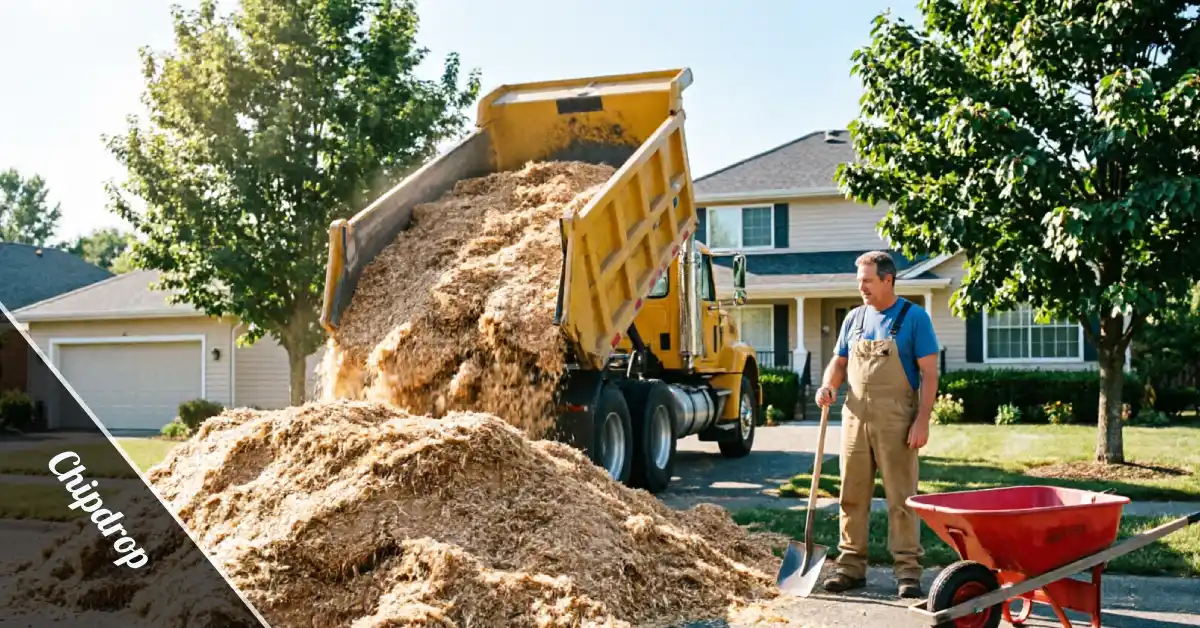
Homeowners searching for cheap mulch keep coming up with the same name. ChipDrop connects tree companies with people who want free wood chips. The idea sounds simple, but the details matter before you sign up. This guide walks through how the service works, what shows up on your driveway, and whether it fits your yard. If you’re still figuring out how much mulch a typical yard actually needs, that context helps you judge whether a load makes sense for your space.
What Is ChipDrop and How Does It Work?
ChipDrop is an online matching service. Arborists and tree removal crews sign up to drop wood chips somewhere close to their job site instead of paying a dump fee. You sign up on the website, mark your delivery zone, and add notes about access. A driver picks your address when a job nearby produces a fresh load. There’s no fixed schedule.
Requests can sit for weeks or arrive within days, depending on local tree work. Rural areas often wait longer. Cities with steady tree removal work tend to see faster matches. The platform doesn’t guarantee timing, and that’s the part new users most often misunderstand.
Is ChipDrop Legit?
Yes, it’s a real, established service used across the US, Canada, and parts of the UK. It launched in 2015 and has delivered wood chips to hundreds of thousands of addresses since then. The company doesn’t process the chips itself; it simply routes drivers to nearby requests. Complaints usually trace back to expectations, not fraud.
Some users tip drivers to speed up their turn or request a smaller load. Tipping isn’t required, but it’s common in areas with high demand. Reviews mention long waits, oversized piles, and drivers arriving without warning. None of that points to a scam. It points to a free service with limited control over timing.
What You’ll Receive in Your Delivery
Expect a mixed pile of ramial wood chips, leaves, and small branches. The blend depends entirely on what the crew removed that day. You might get mostly oak, or a pile heavy with pine and cedar. Some loads include bark chunks larger than a fist. Others come finely shredded.
There’s no sorting before delivery. Drivers dump whatever came off the truck. This randomness is the trade-off for free material. If you need one specific texture or species for a formal bed, the service won’t reliably deliver that.
How Large Is a Load?
A standard delivery ranges from 10 to 20 cubic yards, though some loads reach higher. That’s roughly the volume of a small dump truck bed. For scale, a single cubic yard covers about 100 square feet at a 3-inch depth. A 15-yard load could mulch a sizable backyard with plenty left over for pathways or compost.
This size surprises first-time users most. Photos online show driveways buried under towering piles. Requesting a smaller load in your sign-up notes can help, though drivers don’t always accommodate it if their truck is full.
Can You Choose Tree Species?
Not directly. The platform lets you leave notes requesting a preference, like avoiding walnut if you’re worried about juglone toxicity near garden beds. Drivers read these notes when time allows, but nothing is guaranteed. If a species match matters for your project, this isn’t the right tool.
Local tree services sometimes offer species-specific chips if you call directly and ask about upcoming jobs. That route takes more effort but gives you actual control.
Preparing a Safe and Accessible Drop Location
Clear a spot at least 20 feet wide near the street. Drivers need room to back a dump truck in and tip the load without hitting fences, mailboxes, or parked cars. Mark the exact spot with a cone or a note in your delivery profile.
Check for low branches or wires overhead. A loaded dump truck bed rises several feet when tipping. Confirm your local rules too. Some municipalities restrict how long a wood chip pile can sit on a driveway or curb before it counts as a code violation.
Delivery Times, Free Requests, and Optional Payments
Standard requests are free and can take anywhere from a few days to several months, depending on tree work in your area. There’s also a paid option through the “Get Chips Now” feature, which moves your request higher in the queue for a fee, usually in the range of $20 to $60. That fee doesn’t guarantee same-day delivery, but it does shorten the wait considerably in most regions.
Weather and seasonal storm cleanup affect timing too. After a major storm, chip supply often spikes because crews are clearing more downed trees than usual.
Best Uses for a Large Wood Chip Load
Fresh arborist chips work well as pathway cover, weed suppression around trees, and slow-release mulch for perennial beds. Layer chips 3 to 4 inches deep and keep them a few inches back from trunks and stems to avoid rot. Piled chips also make a solid base for a hot compost pile, breaking down over a season or two into rich material for vegetable beds.
Orchard growers sometimes use chip mulch to insulate root zones through winter, which can reduce the kind of cold-snap damage described in reports on Italian fig crop loss from unexpected frost. A thick chip layer buffers soil temperature swings and protects shallow roots during cold nights.
Using Fresh Arborist Chips Responsibly
Avoid piling fresh chips directly against wood siding or fence posts, since the moisture they hold can encourage rot over time. Give chips a few weeks to start breaking down before using them near vegetable seedlings, since fresh wood pulls nitrogen from soil as it decomposes.
Keep chip piles away from low-lying areas that already collect water. Standing moisture under a chip pile attracts pests and can smell unpleasant during hot weeks.
Reviews, Complaints, and Common Surprises
Most negative reviews center on three things: unexpected pile size, long wait times, and drivers arriving without advance notice. A smaller number of users report piles blocking driveways for days until they could move the material. Positive reviews highlight the value of free mulch for large properties and the convenience for anyone doing serious landscaping work on a budget.
Reading recent reviews for your specific city gives a better sense of local reliability than national averages, since driver availability varies so much by region.
Is ChipDrop the Right Choice for Your Project?
This service makes sense if you have space for a large pile, flexible timing, and a use for wood chips beyond a single flower bed. It’s a poor fit if you need chips by a specific date or want a particular wood species. Pair chip mulch with a good pruning schedule, similar to timing described in guides on Italian prune care and seasonal cuts, and you’ll get more consistent results from your yard overall.
For anyone with the patience and the space, it remains one of the better free resources for large-scale mulching projects.
FAQs
Is ChipDrop free?
Standard requests are free. A paid “Get Chips Now” option exists for faster delivery, typically costing $20 to $60.
How long does ChipDrop take?
Wait times range from a few days to several months. Urban areas with active tree work tend to see faster matches than rural zones.
How much mulch arrives?
Loads typically range from 10 to 20 cubic yards, enough to cover a large yard several inches deep.
Is ChipDrop legit?
Yes. It’s an established platform that has run since 2015, connecting tree crews with people who want free wood chips.
Can I choose tree species?
Not reliably. You can leave notes with preferences, but drivers deliver whatever chips they have on the truck that day.