

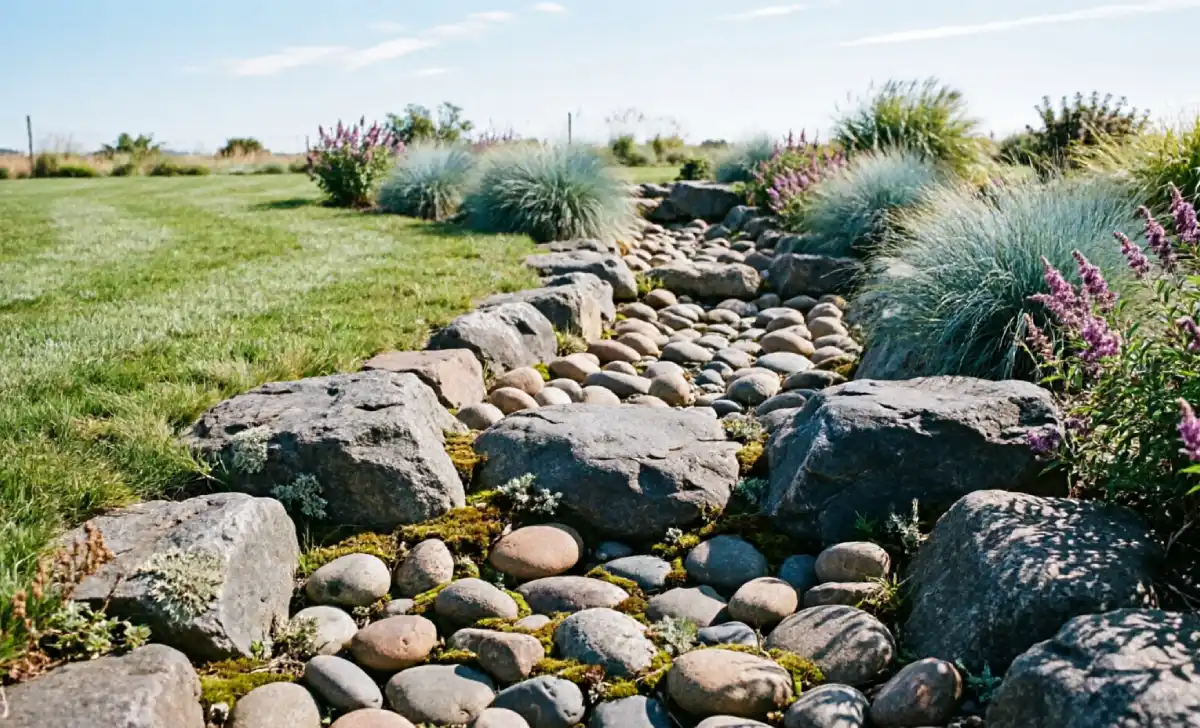
Standing water in your yard after every rain? A dry creek bed fixes that and looks good doing it. Think of it as your yard’s cheat code, moving water while adding serious curb appeal, and it pairs perfectly with a low-maintenance setup like artificial grass for dogs if pets share your outdoor space. This guide walks you through everything you need to build one right, from picking the spot to choosing rock, so you can stop guessing and start digging with confidence.
What Is A Dry Creek Bed?
This landscaping feature is a shallow channel filled with rock and gravel. It mimics a natural stream, but stays dry most days.
It only fills with water during heavy rain, then drains it away safely. That’s the whole point.
Landscapers love it because it solves a problem while looking intentional. No boring ditch, just a designed feature that works hard.
You’ll see this style in front yards, side yards, and even tucked behind a patio. It blends into almost any landscape theme, from modern to cottage garden, without looking out of place.
Some homeowners build one purely for looks, with no real drainage problem to solve. Others need it badly, especially on sloped lots where rain runs straight toward the house.
Why Your Yard Needs One
Drainage is the big win here. A dry creek bed carries surface runoff away from your foundation and lawn.
Standing water breeds mosquitoes, kills grass, and can seep into basements over time, so directing it matters more than most homeowners realize. A well-placed channel handles that job quietly.
Beyond function, it adds texture and movement to flat yards. Rocks and boulders break up green space nicely.
It’s also low maintenance once built. No mowing, no watering, no fuss.
Real estate agents often point to features like this as a selling point. Buyers notice a yard that handles rain without turning into a swamp.
Picking The Right Spot And Route
Start where water already pools. That’s usually your answer for where the creek bed should go.
Follow the natural slope of your yard, since water always moves downhill, and fighting that grade wastes time and money later. Map the path before you dig anything.
End at a safe outlet, like a storm drain, rain garden, or property edge away from neighbors. Never dump water onto someone else’s land.
Call 811 before digging. Utility lines run closer to the surface than most people expect.
Sketch the route on paper first, marking downspouts, low spots, and property lines. A rough drawing saves you from redoing work halfway through the project.
Materials That Make It Pop
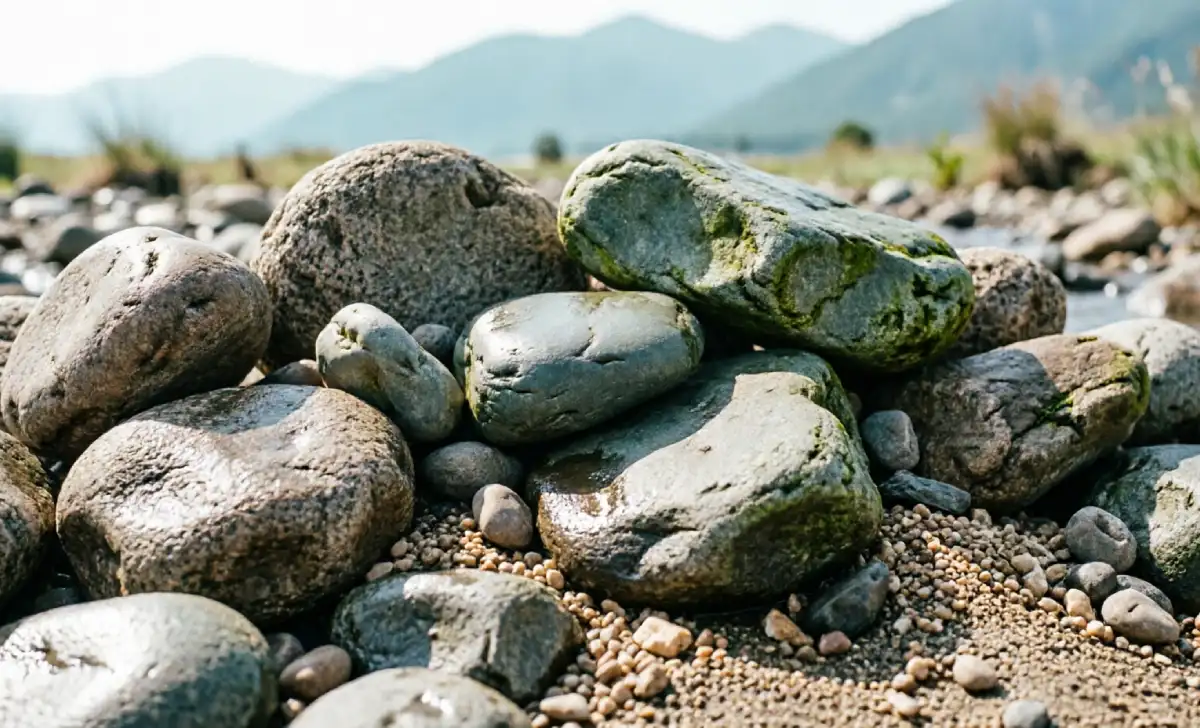
River rock forms the base of most creek beds like this. Rounded stones look natural and handle water flow well.
Mix stone sizes for realism. Large boulders anchor the edges, medium rocks fill the middle, and small pea gravel smooths the bottom for that authentic streambed texture.
Landscape fabric goes underneath everything. It blocks weeds without stopping water from draining through properly.
Edging keeps mulch and soil from creeping in. Steel or stone edging holds the line for years.
Budget usually lands between five and fifteen dollars per square foot, depending on stone type and how much digging your yard needs. DIY work trims that cost significantly.
Building Your Dry Creek Bed Step By Step
Dig the channel two to three feet wide and about a foot deep for most residential yards. Adjust based on how much water you’re managing.
Lay landscape fabric along the base and sides first. Overlap the seams so weeds can’t sneak through the gaps.
Add larger rocks and boulders along the edges to create natural-looking banks. Stagger them instead of lining them up evenly.
Fill the center with river rock and gravel, then blend in a few accent stones for a wild, unplanned look that reads as authentic.
Check the slope with a level before you finish. Water should flow toward your chosen outlet without pooling anywhere along the way. If you’re refreshing the whole yard at once, it’s worth comparing synthetic grass installation prices for the areas surrounding your new channel.
Tuck a few drought-tolerant plants along the edges once the rock settles. Roots help hold the banks steady during heavy storms.
Dry Creek Bed Design Ideas You’ll Love
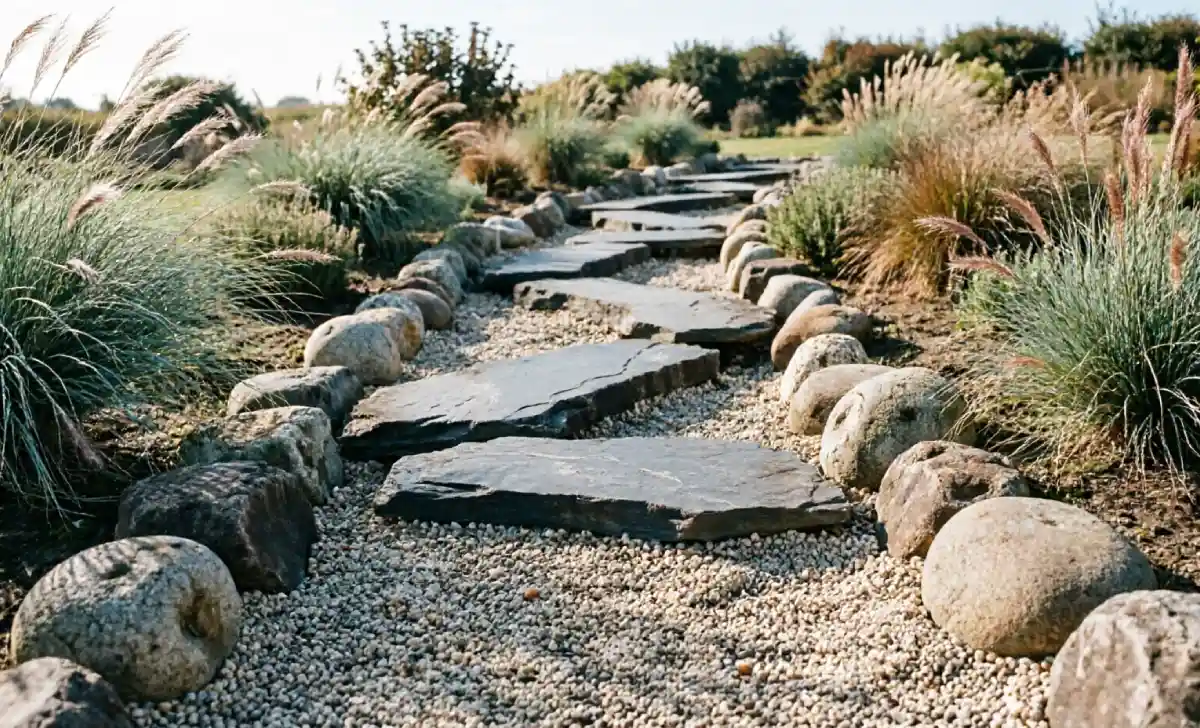
Running a dry creek bed along a fence line hides drainage work while framing your yard beautifully. Add native grasses beside it for softness.
A creek bed doubling as a walkway feels adventurous. Flat stepping stones across the rock create a path guests actually enjoy using.
Curve the channel instead of running it straight. Nature rarely moves in a straight line, and neither should your design.
Add a small bridge over a wider section for a charming focal point that photographs beautifully year-round.
Solar lights along the banks stretch the design into evening hours. A soft glow on wet stone looks better than you’d expect.
Pair the channel with a small rain garden at the outlet. Moisture-loving plants soak up extra water while adding another layer of color.
Dry Creek Bed Vs French Drain
A French drain uses buried perforated pipe to move water underground, out of sight and out of mind.
This above-ground option does the same job as a French drain, only visibly, and it doubles as a design feature instead of hiding underground. Many yards actually benefit from combining both systems for tougher drainage problems.
Cost tends to favor the surface option too, since there’s no pipe or heavy digging involved. Choose based on your priorities. Want looks and function together? Go with the creek bed every time.
Mistakes That Wreck The Look
Skipping the slope check tops the list. Flat channels just collect water instead of moving it anywhere useful.
Using one size of rock throughout looks fake fast. Real streambeds have variety, so your design needs it too.
Forgetting the outlet point causes flooding elsewhere. Always plan where the water actually ends up before you start digging.
Cheap landscape fabric tears within a year or two. Spend a little more upfront to save yourself the regrowth headache later.
Ignoring buried sprinkler lines causes headaches too. Locate irrigation before digging so you don’t cut through a working system by accident.
Building it too narrow limits how much water it can carry. Wider channels handle sudden downpours far better than a tight, skinny trench ever could.
Maintenance: Keep It Looking Sharp
Rinse dust and debris off the rocks a few times a year with a garden hose. It keeps the colors vivid.
Pull any weeds that sneak through fabric seams right away. Catching them early keeps roots from digging in.
Check the channel after major storms for shifted rocks or new erosion spots. A quick fix now prevents a bigger rebuild later.
Top off gravel every few years as stones settle or wash downstream slightly. A small bag from the garden center usually covers it.
When To Call In The Pros
Steep slopes, major drainage issues, or nearby structures usually call for professional grading and engineering help. Getting the grade wrong can flood a basement fast.
If your project involves connecting to municipal storm drains, permits often apply, and a landscaper who knows local codes saves you serious hassle down the road.
Simple, flat backyard projects are usually fine as a weekend DIY. Save the pros for anything involving structural water flow.
Get two or three quotes before hiring anyone. Prices swing a lot between contractors, and a second opinion rarely hurts. While you’re planning yard upgrades, it’s also worth checking whether deer eat your hydrangeas if that’s part of your landscape too.
A dry creek bed rewards homeowners who plan carefully and build with the right materials, whether you tackle drainage problems or want fresh landscaping ideas. Get the slope right, choose varied stone, and your channel will handle storms for years to come.