

George Kittle spends his NFL season in the Bay Area, but the offseason belongs to Tennessee. He and his wife Claire built their life around a property west of Nashville, in the Kingston Springs area, where rolling pasture and a spring-fed pond replace the traffic of Santa Clara.
The move was not a spur-of-the-moment choice. Kittle has talked openly about wanting a place where his family could slow down between seasons, and Nashville gave him that without pulling him too far from friends who play for the Titans or pass through for Tight End University, the offseason event he co-founded with Travis Kelce and Greg Olsen.
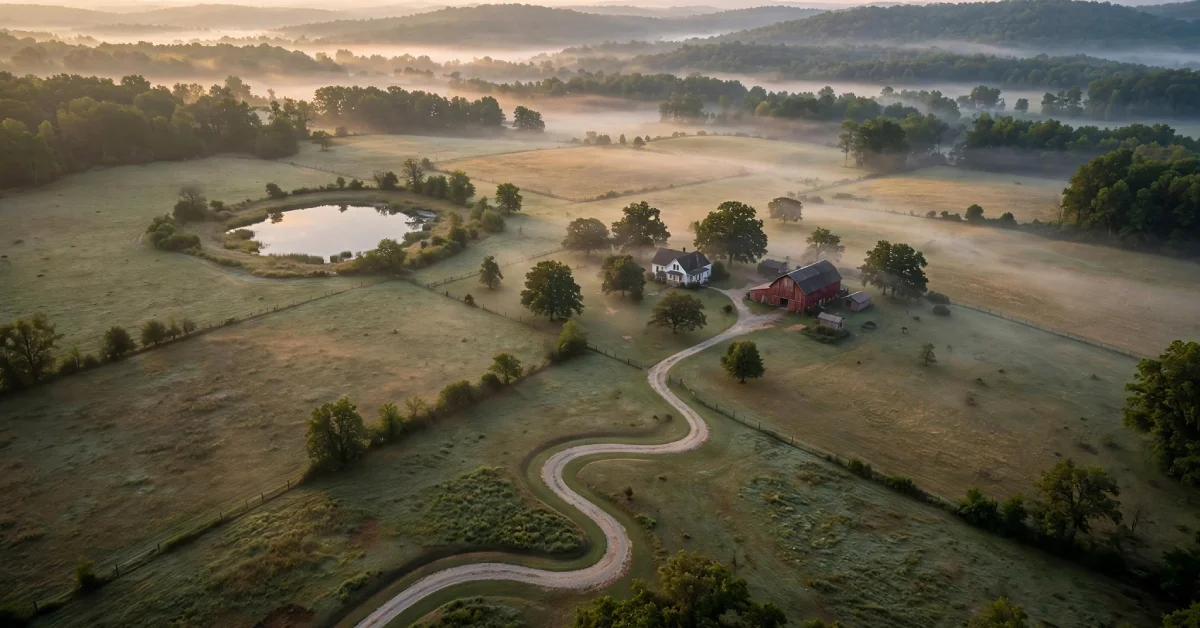
You can see the appeal the moment the gate opens. Long gravel drives lead past a working pasture, a stocked pond and a converted barn before you even reach the main house. It reads more like a working farm than a typical athlete’s mansion, and that is by design.
Nashville has quietly become a favourite offseason base for pro athletes who want land without giving up quick flights back to their team’s home market. A working farm buys Kittle something a condo in San Francisco never could: room to build a gym, a course and a family home on his own timeline, without a homeowners association weighing in on any of it.
George Kittle Nashville House Purchase Price and Timeline
Public records and real estate reporting point to more than one purchase over the years, which explains why you will see different acreage and price figures depending on the article you read. Here is what has been reported and when.
- May 2020: Kittle bought afour-bedroomm property in the Green Hills area of Nashville for 940,000 dollars, a short drive from downtown and Lipscomb University.
- Fall 2020, shortly after his first 75 million extension: Kittle and Claire purchased a much larger spread west of the city, reported at roughly 3,472,660 dollars, built around a modern farmhouse constructed in 2017.
- 2025: Claire began documenting the restoration of a separate log cabin on Instagram, describing it as an “off-season project.”
- June 2026: Homes and Gardens published the finished cabin tour, done in partnership with Pottery Barn’s Design Crew.
Some outlets describe the farm as 75 acres; others put it closer to 178 acres. The discrepancy likely comes from combining the original Green Hills purchase with later land acquisitions, since Kittle has continued adding to the property over several years rather than buying everything in one deal.
That step-by-step approach mirrors how a lot of athletes handle offseason real estate. Rather than committing to one finished estate on day one, Kittle bought a smaller home first, then scaled up once his second contract confirmed the long-term investment made sense. It is a pattern more common among current players than the single mega mansion purchases that tend to make headlines.
Inside the Log Cabin Renovation
The log cabin is the newest chapter of the George Kittle Nashville house story, and it is the one drawing the most attention right now. Claire kicked off the project in early 2025 with a simple Instagram caption: “We just bought this cutie cabin, and she just needs some TL. I’m so excited for her.”
What followed was more than a year of demolition, framing and design decisions, all shared in a highlight reel her followers still reference as “Cabin project.” She worked with Pottery Barn’s Design Crew to move the space away from a dated log cabin look and toward something the brand calls modern Americana.
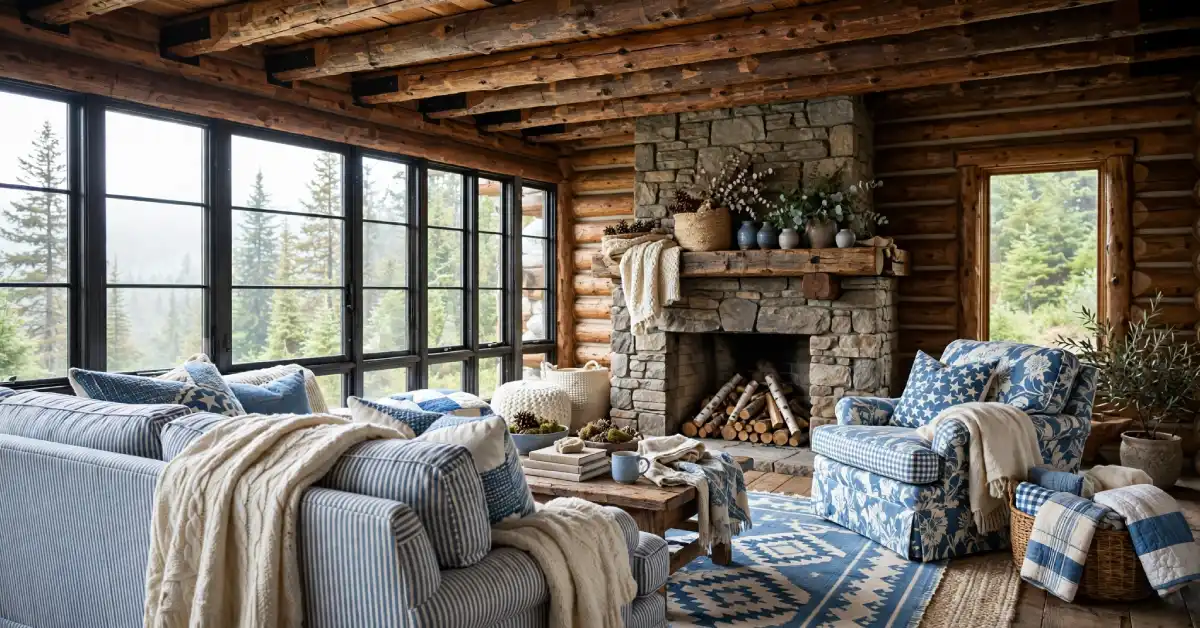
The finished home leans into texture over trend. Wood beams stay exposed in the living room, paired with cosy blue and white furnishings that soften the cabin’s bones instead of hiding them. A wraparound patio functions as a full outdoor living room, with Adirondack chairs and wrought iron lanterns set up for warm Nashville evenings.
George put it simply when Homes and Gardens toured the finished space: “My favorite thing about the cabin is just the natural light that’s everywhere, and then the big comfy couch that I get to sit on while drinking a cup of coffee and looking out into the trees and into the nature because it makes me feel like I’m in a tree house.” Claire agreed, calling the finished result “total tree house vibes.”
The sunroom carries that same feeling further. Oversized windows flood the room with light, and Claire jokingly credits the tall lounge chairs there to her husband’s height on the roster. It is a small detail, but it is the kind of personal touch that separates a real family home from a staged listing.
The Barn: George Kittle’s Private Training Facility
 Backyard Golf Course and Other Grounds
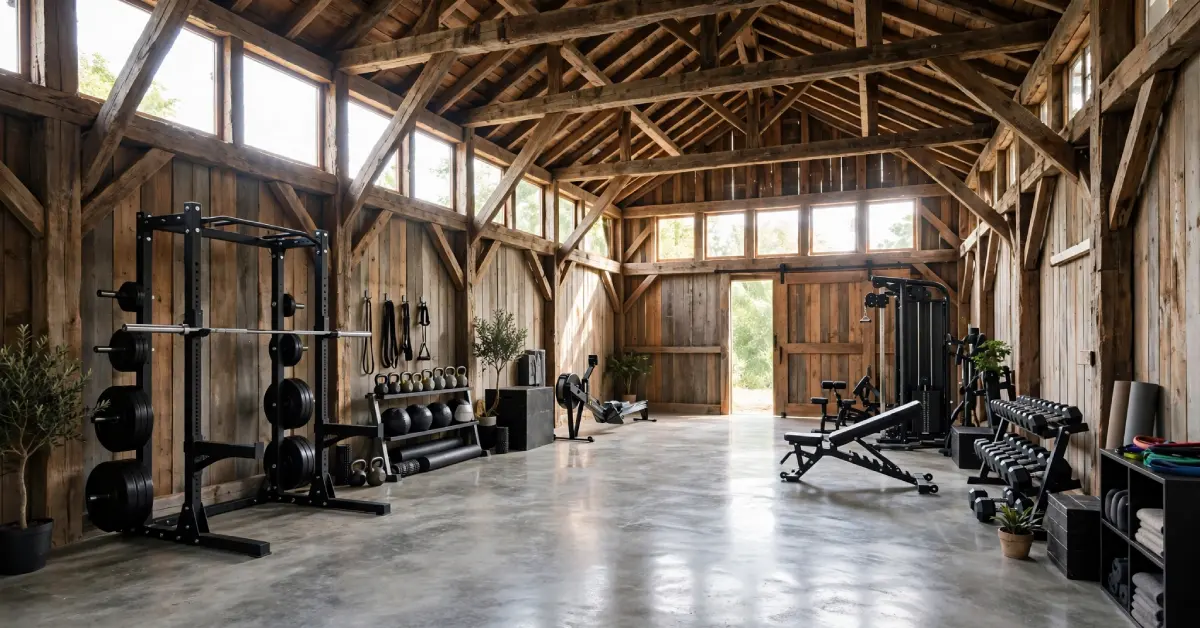
Long before the cabin project, Kittle turned a three-story horse barn on the property into a personal training facility he calls The Barn. His father and father-in-law helped pour concrete where dirt floors used to be, and Technogym supplied the equipment: treadmills, squat racks, bikes and rowing machines.
The build did not stop at cardio equipment. Kittle converted half of the first floor into a full kitchen staffed by a personal chef, carpeted the third floor for yoga, and set aside a room for physical therapy tables and massage sessions, with a therapist coming twice a week.
“It has been a dream of mine to create my own facility and fill it with positive people who have a desire to be great and hold themselves and others around them to the highest standard,” Kittle wrote when the space opened. The result functions less like a home gym and more like a small athletic performance centre, one that keeps him training year-round without leaving the property.
Backyard Golf Course and Other Grounds
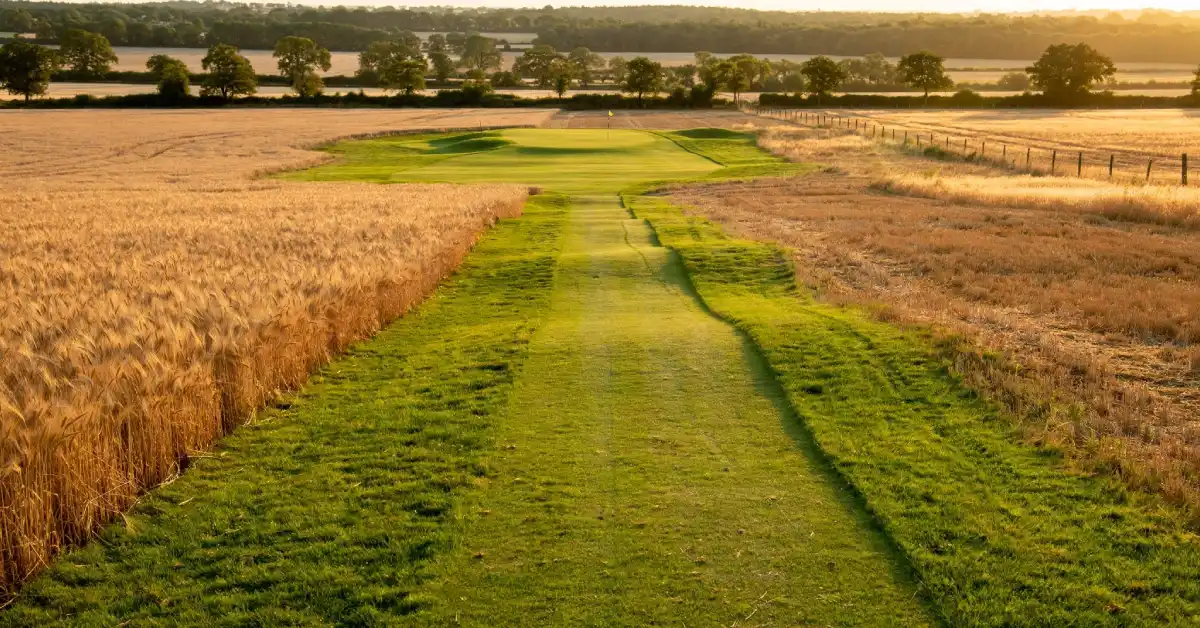
Kittle’s competitive streak did not stop at football. During a Masters broadcast, he and a friend mowed a section of the pasture down to about one inch, planted flags and built a working six-hole course: four par threes and two par fours.
There is one house rule. “Closest to the pin is what it is,” Kittle has said, since the group skips putting entirely and plays for proximity instead. He and his friends treat it as a daily ritual, often loading a cooler onto a golf cart and playing after lifting sessions at The Barn, with a standing Friday game among the group.
The wider property also includes a synthetic turf football field long enough for real route running, along with trails, creeks and the pond that gives the farmhouse its quiet, secluded feel. Every addition has come gradually, which is part of why the property looks less like a single purchase and more like a project the Kittles keep building on year after year.
How the Cabin Compares to the Main Farmhouse
It helps to think of the property as two homes with two different jobs. The main farmhouse, built in 2017 and purchased alongside the larger land parcel, is where The Barn, the golf course and the football field live. It is set up for training, hosting friends and the daily routine that keeps Kittle ready for the season.
The log cabin serves a quieter purpose. Claire has described it as her own project, separate from the busier main house, a place built around rest rather than reps. The colour palette leans softer, the furniture is lower and more relaxed, and there is no equipment in sight, just the couch George mentioned sitting on with his coffee.
Readers comparing the two spaces in photos should expect that contrast. One home photographs like a training compound. The other photographs like a cabin retreat, and that difference is the whole point of the renovation.
Why George Kittle Chose Nashville Over the Bay Area
Nashville offered something the Bay Area could not during the season: real distance from football while staying close enough to fly back for training camp. Kittle has described wanting a place to decompress, and a working farm with a gym, a golf course and now a fully renovated cabin gives his family several ways to do that without leaving the gate.
The choice also lines up with a broader pattern among NFL players who keep a permanent home away from their team’s market. Nashville in particular has become a common offseason base for athletes who want privacy, land and a lower cost per acre than California can offer, while still landing direct flights to most NFL cities.
Financially, the timing tracks with his career earnings. The farm purchase followed his first major extension in 2020, and continued property investment has lined up with his second, afour-yearr, 76.4 million deal signed in 2025 that made him the highest-paid tight end in the league. Put together, the Nashville property has grown alongside his contracts rather than in one lump sum.
Final Thoughts
The George Kittle Nashville house has grown in stages: a starter property in 2020, a larger farm purchase months later, a barn turned training centre, a homemade golf course, and now a fully restored log cabin that gave Claire a creative project of her own.
Together they tell a more complete story than any single photo tour can, one where an NFL career and a family home have been built up side by side.
FAQs
How big is George Kittle’s Nashville property?
Reporting varies. Some outlets cite 75 acres tied to his original 2020 purchase, while others put the combined property closer to 178 acres after later land additions. The higher figure appears to reflect the full current footprint rather than the first parcel alone.
Is the log cabin the same house as George Kittle’s main Nashville residence?
No. The log cabin Claire renovated with Pottery Barn is a separate structure on or near the family’s Nashville land, described as an off-season project rather than the primary farmhouse where The Barn and the golf course are located.
How much did George Kittle pay for his Nashville property?
Records point to two purchases: about 940,000 dollars for the original Green Hills property in May 2020, and roughly 3.47 million dollars for the larger farm parcel later that year, following his first contract extension.
Who designed the Kittles’ Nashville cabin renovation?
Claire Kittle led the project and worked with Pottery Barn’s Design Crew on furnishings and styling, aiming for a cosy, modern Americana look that kept the cabin’s original wood beams and log construction visible.
Does George Kittle still train at The Barn during the offseason?
Yes. The converted horse barn remains his primary offseason training base, with strength equipment, a yoga floor, a recovery room and a kitchen staffed by a personal chef.