

Johnny Rodriguez sang about dusty roads and small Texas towns for fifty years, and his own address list reads like one of his songs. He never owned a mansion. He never chased one. The story of the Johnny Rodriguez house is really the story of four modest homes across South Texas, each one tied to a different chapter of his life.
Rodriguez died in May 2025 at age 73, closing out a career that made him the first major Hispanic star in country music. Before he was topping the Billboard charts, though, he was a kid in a crowded four-room house outside San Antonio. That is where his story, and this one, starts.
Who Was Johnny Rodriguez
Juan Raoul Davis Rodriguez was born December 10, 1951, in Sabinal, Texas, a ranching town about sixty miles west of San Antonio. He was the second youngest of ten children. His father worked as a welder at Kelly Air Force Base, and the family lived tight, both in space and in money.
A string of events as a teenager, including a stint in the Uvalde County jail, put him in front of Texas Ranger Joaquin Jackson, who heard him sing and connected him to Alamo Village promoter Happy Shahan. Shahan hired the shy teenager to perform for tourists at his movie-set attraction near Brackettville, and that stage is where country stars Tom T. Hall and Bobby Bare first heard him sing.
Hall and Bare convinced Rodriguez to try Nashville. He landed there in 1971 with three shirts, three pairs of pants, and a guitar wrapped in cellophane, plus fourteen dollars in his pocket. Within a year he had signed with Mercury Records, and his debut single, “Pass Me By (If You’re Only Passing Through),” reached number nine on the country charts. Three of his next four singles went all the way to number one.
Over the following decade, Rodriguez became one of country music’s most successful male artists, recording six number-one hits and forty-five charting singles across 26 albums. He was also the genre’s first Mexican American star, and he made that history without hiding his background. He sang verses in Spanish on songs meant for mainstream country radio, at a time when almost no other artist in Nashville was doing anything close to that. In 2007, he was inducted into the Texas Country Music Hall of Fame, and in 2010 he received the Institute of Hispanic Culture’s Pioneer Award for opening that door.
The Johnny Rodriguez House in Sabinal Where He Grew Up
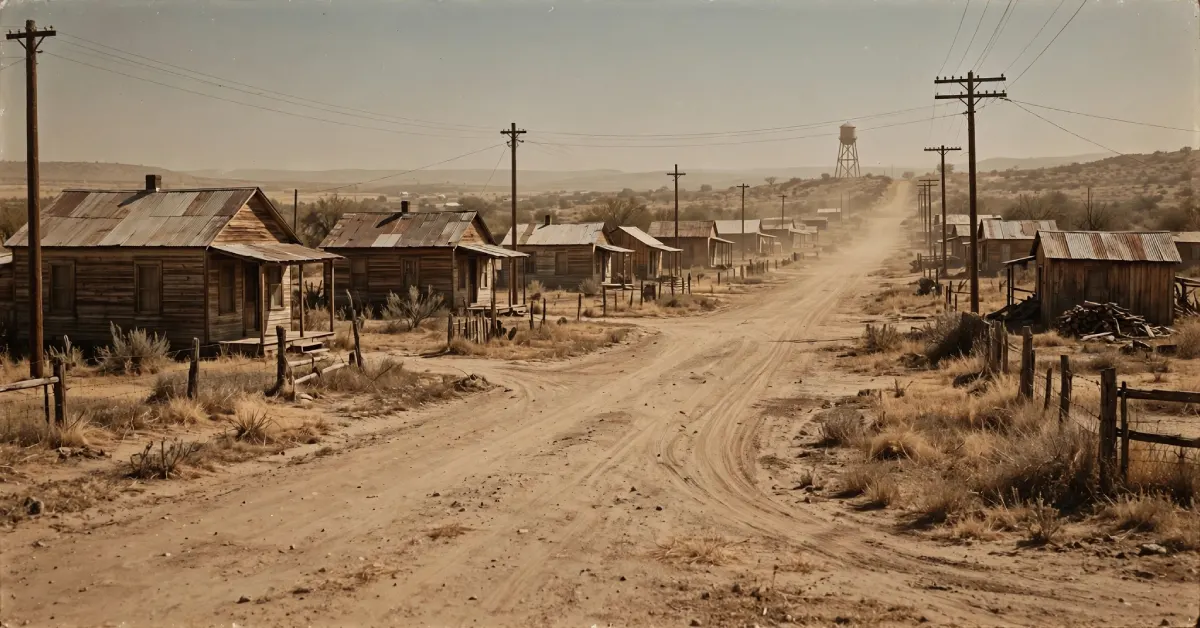
The first Johnny Rodriguez house was not really a house people would tour today. It was a small, four-room structure in Sabinal, shared by a family of twelve. There was no extra space and no privacy, just the kind of close quarters that shape a person’s sense of what actually matters.
Rodriguez talked about that home often in interviews over the years, and biographers consistently point to it as the starting line for everything that followed. He lost his father to cancer when he was sixteen, and his older brother Andres died in a car accident the following year. Those two losses, layered on top of an already hard upbringing, pushed him toward music and, eventually, toward Nashville.
The House He Built for His Mother in Sabinal
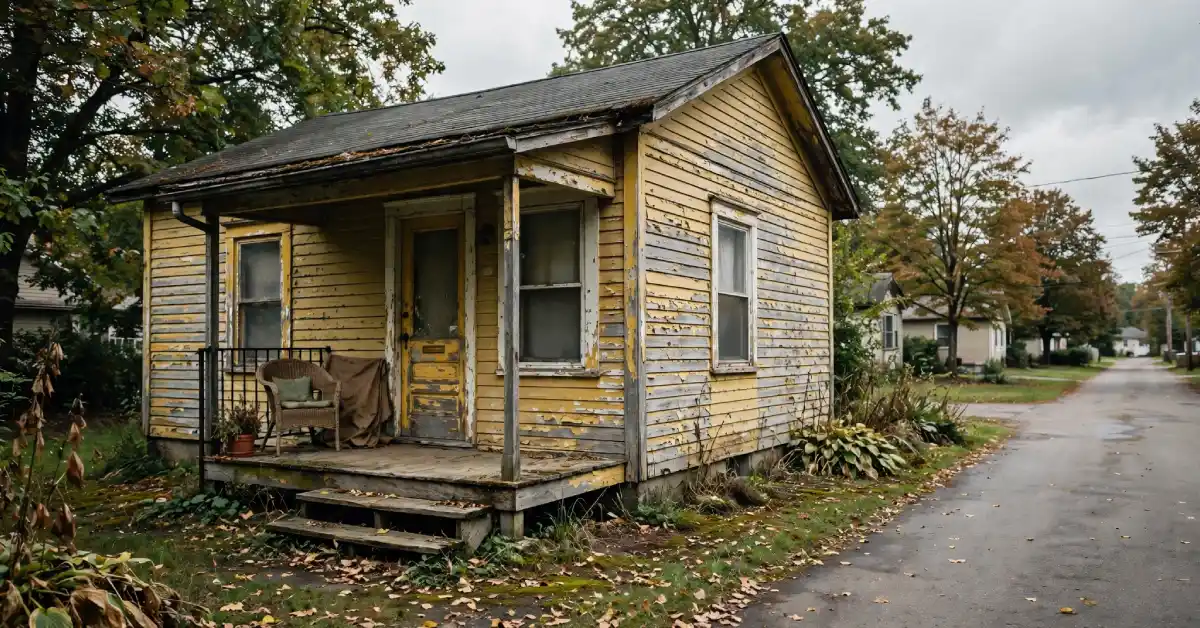
Once Rodriguez started earning real money from his recording career, he did something a lot of newly successful musicians talk about, but few actually follow through on. He tore down the four-room house where he grew up and built his mother a proper home in its place, on North Pickford Street in Sabinal.
That house became the site of the most difficult chapter in Rodriguez’s life. In the early hours of August 29, 1998, he shot and killed 26-year-old Israel Borrego there, later saying he mistook him for an intruder. Rodriguez was charged with murder, and in October 1999, a jury acquitted him after accepting his self-defence claim. Texas Monthly’s coverage from that period, reported by John Morthland, described the property as a modest wood-frame house with peeling yellow paint, a detail that undercuts any claim of a limestone showpiece at that address.
The case stayed with Rodriguez for the rest of his life, and Sabinal residents still bring it up when his name comes up. His brothers Reynaldo and Ricky both served in local government there, and his sisters worked in the Sabinal schools, so the family’s roots in that small town ran deep on both sides of the tragedy.
Even setting the shooting aside, the North Pickford Street house says something about how Rodriguez handled success. Plenty of musicians talk about taking care of their parents once the money starts coming in. He actually did it, tearing down the cramped four-room home of his childhood and putting up something sturdier in its place, on the same patch of Sabinal ground his family had always called home.
Life at the San Marcos House With Debbie McNeely
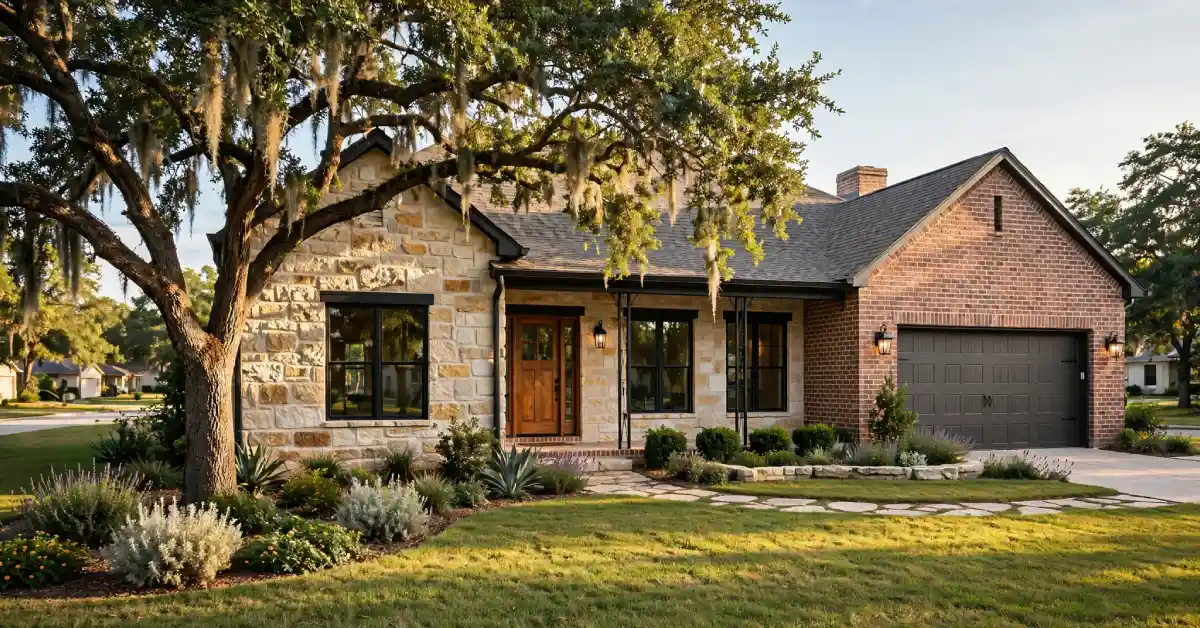
By the late 1990s, Rodriguez had married for the third time, to Debbie McNeely, a hair salon owner from San Marcos, Texas. The couple settled into a home in San Marcos, and their daughter, Aubry Rae Rodriguez, was born there in 1998.
This marriage lasted the rest of his life, longer than his first two combined. His first marriage, to flight attendant Linda Diann Patterson, ended after several years on the road took a toll. His second, to Lana Nelson, daughter of Willie Nelson, lasted only about seven months in 1995. Debbie was different. Friends who knew the couple described a steadier household, one built around family time rather than tour schedules.
Even during the San Marcos years, Rodriguez kept pulling back toward Sabinal. He spent long stretches there with childhood friends, playing guitar and talking through old songs, a habit that stayed with him well into his later years. His longtime friend Carlos Tovar once summed up what those visits were really about: Rodriguez wanted just a couple of old friends and a guitar, nothing more.
That pull toward home life, rather than the road, matched the shift in his career during those years. He was recording less often and touring closer to Texas, playing around fifty shows a year instead of the packed national schedules of his 1970s peak. Fans who saw him during this period often remember smaller venues and a more relaxed, conversational style on stage, a far cry from the arena tours of his younger years.
His Final Home and Years in San Antonio
Johnny Rodriguez spent his last years in San Antonio, close enough to Sabinal for an easy drive west but far enough to have some distance from the small-town attention that came with his name. He passed away there on May 9, 2025, with his wife Debbie and daughter Aubry by his side, according to family statements shared at the time.
Several outlets covering his death described his final years the same way: quiet, private, and centred on family rather than public appearances. He had entered hospice care shortly before he died, and reports at the time noted visible health decline in the months leading up to it, though his family did not share the specific medical cause.
His passing drew tributes from across the country music world, recognising him as the artist who opened the door for Hispanic performers in a genre that had rarely made room for them before.
How Much Was Johnny Rodriguez Worth
There is no confirmed, official figure for Johnny Rodriguez’s net worth, and readers should treat every number online with some caution. Published estimates vary widely and rarely cite a real source. Here is what shows up most often:
- One million to five million dollars, the range cited by several biography sites drawing on his royalty income and decades of touring
- Five million dollars, a flat figure repeated across several celebrity net worth pages without documentation
- Seven million to ten million dollars, higher estimates found on a smaller number of sites, again without a clear financial source.
What is not in dispute is where that money came from. Rodriguez earned it over fifty years of touring, six number-one singles, and steady royalties from a catalogue that is still streamed and played on country radio today.
Sabinal: The Town Behind the Johnny Rodriguez House Story
None of Rodriguez’s homes makes sense without Sabinal. The town has a population of under two thousand people, and it shaped nearly every version of the Johnny Rodriguez house, from the four-room shack to the house on North Pickford Street.
Friends who knew him in his later years said he kept coming back for the same reason he always had: a handful of old friends, a guitar, and no audience to perform for. That pull toward Sabinal shows up again and again in interviews with people who knew him, and it explains why a man who could have settled anywhere in the world kept choosing modest houses in South Texas instead.
It also explains why the search for a flashy Johnny Rodriguez mansion comes up empty. Sabinal sits on U.S. 90 between San Antonio and Big Bend country, where live oak hills give way to scrub brush,h and the biggest event on the town calendar is a wild hog catching contest. Nobody there needs a street number to find your house, and nobody in Rodriguez’s family seemed interested in building the kind of estate that would have made him a stranger in his own hometown.
Final Thoughts
The real Johnny Rodriguez house story does not need embellishing. A kid from a four-room home in Sabinal became the first major Hispanic star in country music, built his mother a proper house with his earnings, and spent his life moving between small Texas towns rather than chasing a bigger address. That is the version worth telling, because it happens to be the true one.
If you enjoyed this look at the homes behind a country music legend, you might also like our profile of Lou Pearlman’s house, or our tour of Evangeline Lilly’s home.
For a look at a very different kind of Texas story, see our piece on Conor Gallagher’s house.
FAQs
Where did Johnny Rodriguez grow up?
He grew up in a four-room house in Sabinal, Texas, shared with his parents and nine siblings.
Did Johnny Rodriguez own a mansion?
No confirmed reporting places him in a large or luxury estate. His known homes were modest houses in Sabinal and San Marcos, and later a home in San Antonio.
What happened at Johnny Rodriguez’s house in Sabinal?
In August 1998, he shot and killed an intruder at his mother’s house on North Pickford Street. He was charged with murder and acquitted at trial in 1999 on self-defence grounds.
Where did Johnny Rodriguez live when he died?
He was living in San Antonio, Texas, when he died on May 9, 2025, at age 73.
How much was Johnny Rodriguez worth?
No official figure exists. Public estimates range from about one million to ten million dollars, with no consistent source behind any single number.