

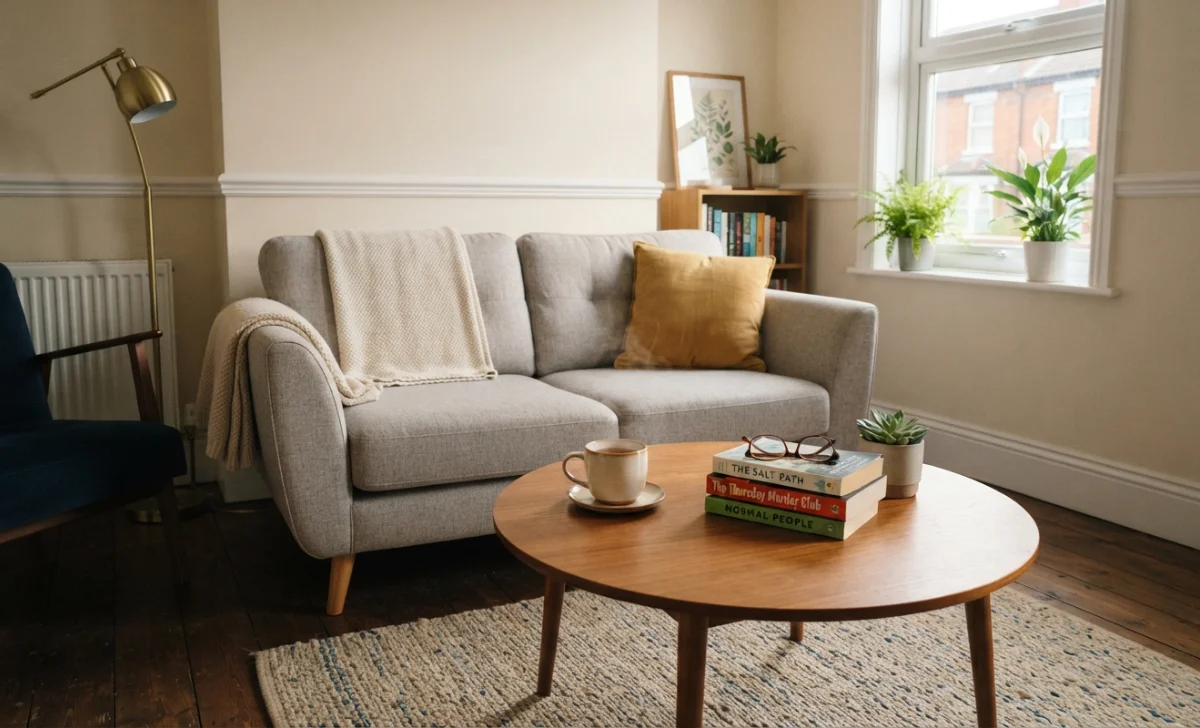
Transforming a compact British living room into a functional yet stylish sanctuary requires careful consideration of every single furniture piece, starting with your central surface. When updating your interior layout, exploring a broad catalog of coffee tables can reveal unique designs tailored specifically to maximizing limited square footage without compromising on aesthetic appeal or everyday utility. Selecting the ideal centerpiece demands a balanced approach that respects spatial limitations while fulfilling your lifestyle requirements.
1. Introduction: Navigating Space Constraints in Modern UK Homes
Modern British homes, from charming Victorian terrace conversions to contemporary urban apartments, frequently present unique spatial challenges. Rooms tend to be narrower, and balancing comfortable seating with unhindered foot traffic can feel like solving a complex geometric puzzle. A poorly proportioned coffee table can instantly make a cozy room feel cramped, whereas the right choice enhances flow and visual harmony. Homeowners often struggle to find furniture that bridges the gap between compact dimensions and substantial daily utility without overwhelming the room layout.
The Challenge of Compact Living
- Spatial Limitations: Narrow layouts and period architectural features demand precise furniture sizing to maintain an open feel.
- Traffic Flow: Maintaining clear walking paths prevents a small lounge from feeling congested or difficult to navigate daily.
- Balance: Finding the equilibrium between aesthetic charm and practical storage keeps the room breathable.
Setting the Right Focal Point
The living room functions as the social heart of the home, and the coffee table serves as its gravitational center. It must balance multiple roles: holding morning cups of tea, storing remote controls, displaying curated books, and occasionally doubling as an impromptu dining tray during relaxed evenings. Understanding these multi-faceted demands is the essential first step toward selecting a wooden piece that serves your household perfectly throughout every season of the year.
2. Proportions and Dimensions: Scaling for Compact Spaces
Proportion is the absolute foundation of successful interior design, particularly when square footage is at a premium. Choosing a coffee table that respects the surrounding dimensions ensures that your room remains open, inviting, and functionally efficient for daily routines. Precision in measurements prevents the living area from feeling cluttered and guarantees comfortable movement for family members and visiting guests alike.
The Golden Rules of Clearance
Interior design experts generally recommend maintaining a distance of approximately 40 to 45 centimeters between your sofa edge and the coffee table. This ensures sufficient legroom and allows you to walk past comfortably without awkward maneuvering. Furthermore, your coffee table length should ideally span about half to two-thirds the total length of your sofa, creating an aesthetically pleasing balance that anchors the seating arrangement harmoniously.
Height Matters and Sightlines
Height alignment plays a critical role in visual balance within confined spaces. Ideally, your coffee table should sit level with or slightly lower than the seat cushions of your sofa. In smaller rooms, keeping the profile low prevents the furniture from visually blocking sightlines across the room, thereby preserving an open and expansive atmosphere that makes the entire living space feel much larger than its actual footprint.
3. Material Selection and Visual Lightness
The materials you choose dictate how heavy or light a piece of furniture feels within a confined environment. Selecting smart textures and finishes can completely alter the perceived spaciousness of your living area, turning a cramped enclosure into an airy, welcoming haven.
Embracing Natural Wood and Transparency
Solid wood brings warmth, character, and organic elegance to British interiors, tying together neutral color palettes and tactile fabrics. However, in smaller rooms, solid blocky structures can overwhelm the floor plan. Opting for designs featuring slender legs, raised platforms, or glass combinations creates an illusion of space by allowing light to flow underneath the furniture, maintaining visual continuity across the room.
Durability Meets Elegance in Compact Settings
To assist you in evaluating how different materials perform in compact settings, consider the following structural comparison table outlining their core properties:
| Material Type | Visual Weight | Best Suited For | Maintenance Level |
| Solid Oak / Ash | Medium to Heavy | Traditional & Rustic UK Homes | Low (Periodic oiling) |
| Glass & Metal Frame | Very Light (Transparent) | Ultra-compact & Minimalist spaces | Moderate (Frequent dusting) |
| Nested Wooden Tables | Variable / Adaptive | Multi-functional & Flexible layouts | Low |
| Storage Lift-Top Wood | Medium | Clutter-free & Small apartments | Low |
4. Multifunctionality and Smart Storage Solutions
In smaller living rooms, every square inch must earn its place through purposeful utility. Furniture that offers hidden storage or adaptable configurations is invaluable for maintaining a tidy, stress-free environment where relaxation takes center stage.
Hidden Storage and Lift-Top Mechanisms
Clutter accumulates quickly in compact spaces when items lack dedicated homes. Coffee tables equipped with built-in drawers, lower shelving, or innovative lift-top mechanisms provide discreet places to stow away blankets, board games, laptops, and magazines. This keeps your surface impeccably clean and your room feeling exceptionally spacious throughout the day.
Nesting Tables for Ultimate Flexibility
Nesting coffee tables represent a brilliant space-saving innovation for modern British homes. When you are relaxing alone, they occupy a minimal footprint. When guests arrive for tea or social gatherings, you can easily pull out the secondary tables to expand your surface area, then tuck them neatly away afterward without disrupting room flow.
5. Shape and Layout Optimization
The geometric footprint of your coffee table interacts directly with your sofa arrangement and overall room traffic patterns. Choosing the correct shape avoids sharp corners and dramatically improves domestic flow.
Round and Oval Silhouettes
Rectangular tables work wonderfully in long, spacious rooms, but in tighter or irregular living areas, round or oval coffee tables are exceptionally beneficial. Their curved edges eliminate sharp corners, making it much easier to navigate around them in narrow spaces while softening the room’s geometry and introducing fluid motion.
Optimizing Traffic Flow and Circulation
“A well-planned room layout ensures unobstructed movement from the doorway to seating areas, creating a calm, breathable environment even in modest square footage.”
By positioning your table thoughtfully relative to TV units, sideboards, and entryways, you maximize both functionality and aesthetic serenity, ensuring your living room feels balanced and harmonious every single day.
6. Conclusion: Bringing Style and Function Together
Choosing the ideal coffee table for a compact British living room involves balancing precise measurements, smart materials, and multifunctional design. By prioritizing proportions, incorporating storage, and selecting shapes that enhance room flow, you can elevate both the comfort and visual appeal of your home. To explore expertly crafted wooden centerpieces tailored for sophisticated living, visit https://maxiwoods.com/ to discover pieces that perfectly complement your interior vision.