

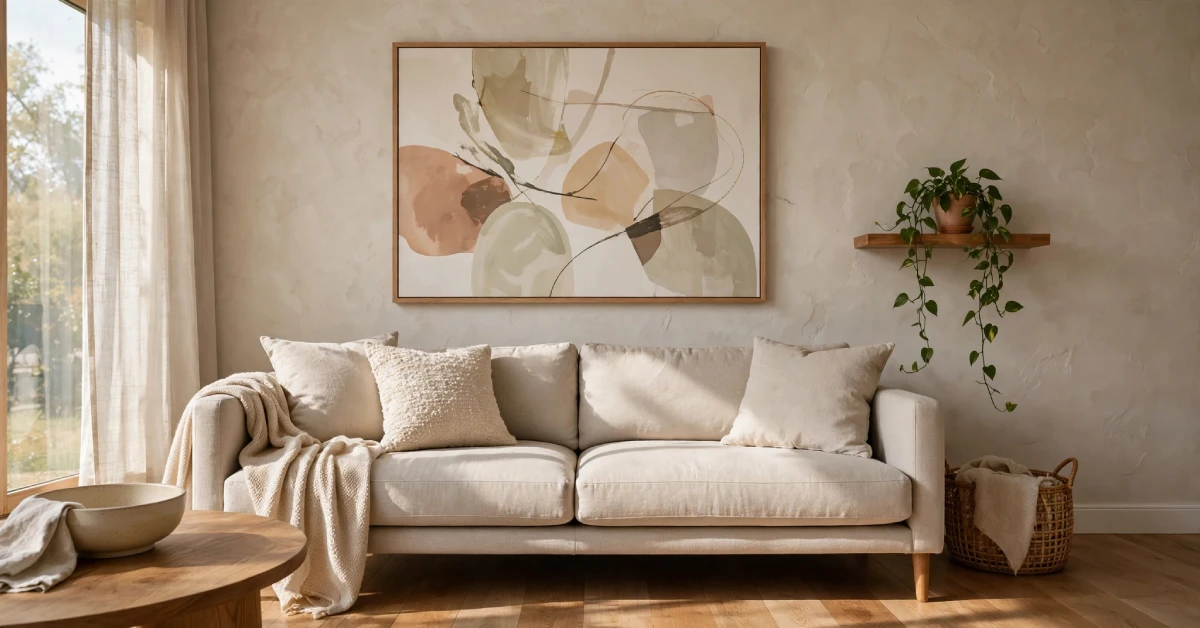
A blank living room wall is not a flaw. It is unused space waiting for a plan. Do you have a stretch of wall that never quite comes together, no matter what you hang on it?
This guide walks through eight living room wall decor ideas that hold up in real homes, not just styled photos. You will find placement tips, current design data, and options at nearly every budget. By the end, you will know exactly which approach fits your space and your wallet.
Most living rooms only need one or two of these ideas working together, not all eight at once. Read through the list, pick the approach that matches how you actually use the room, and treat the rest as options to revisit later.
Choose One Statement Piece Over the Sofa
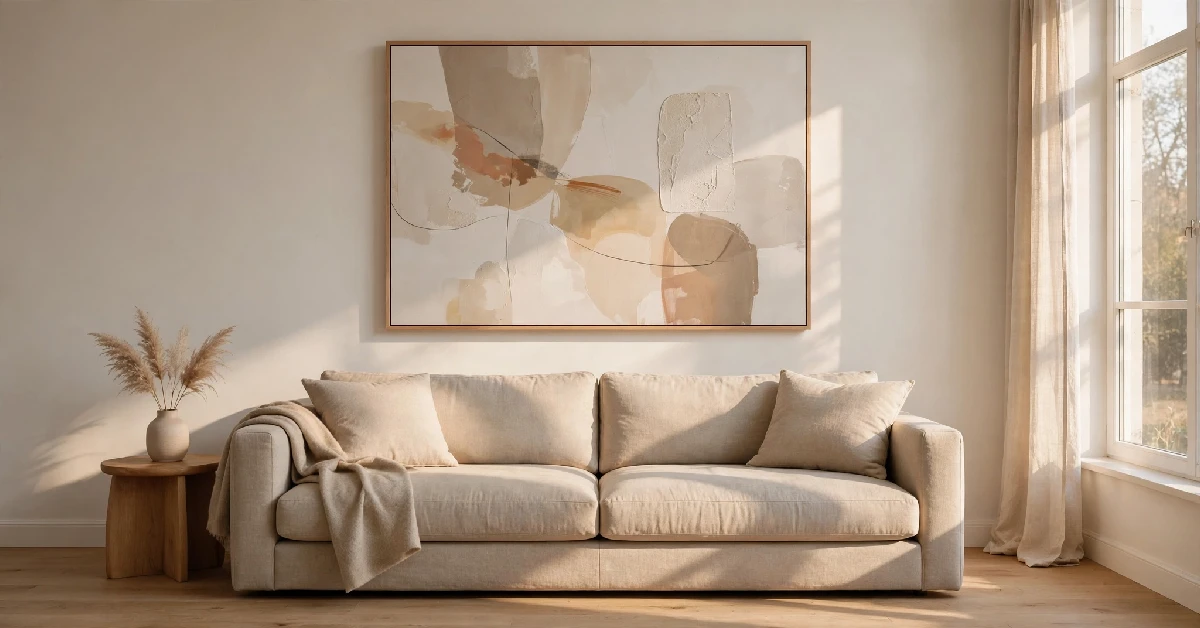
Start big before you start small. A single oversized print, tapestry, or piece of textile art above the sofa creates a stronger anchor than five scattered frames ever will. This is one of the clearest shifts in 2026 wall decor, according to recent design coverage.
The rule of thumb is simple. Your art should span about two-thirds the width of your sofa. Hang the centre at eye level, roughly 57 inches from the floor, so it reads as part of the room instead of floating near the ceiling.
If you already have art you love but it feels too small for the wall, do not force it. Pair it with sconces or picture lights on either side instead of buying something bigger. That combination fills the space without changing the piece you already treasure.
Textile art and woven tapestries work especially well for this approach because they cover a large wall without the weight or cost of a framed canvas that size. A tapestry also softens a room acoustically, which helps in a living room with hard flooring and high ceilings.
Build a Gallery Wall With Layered Frames
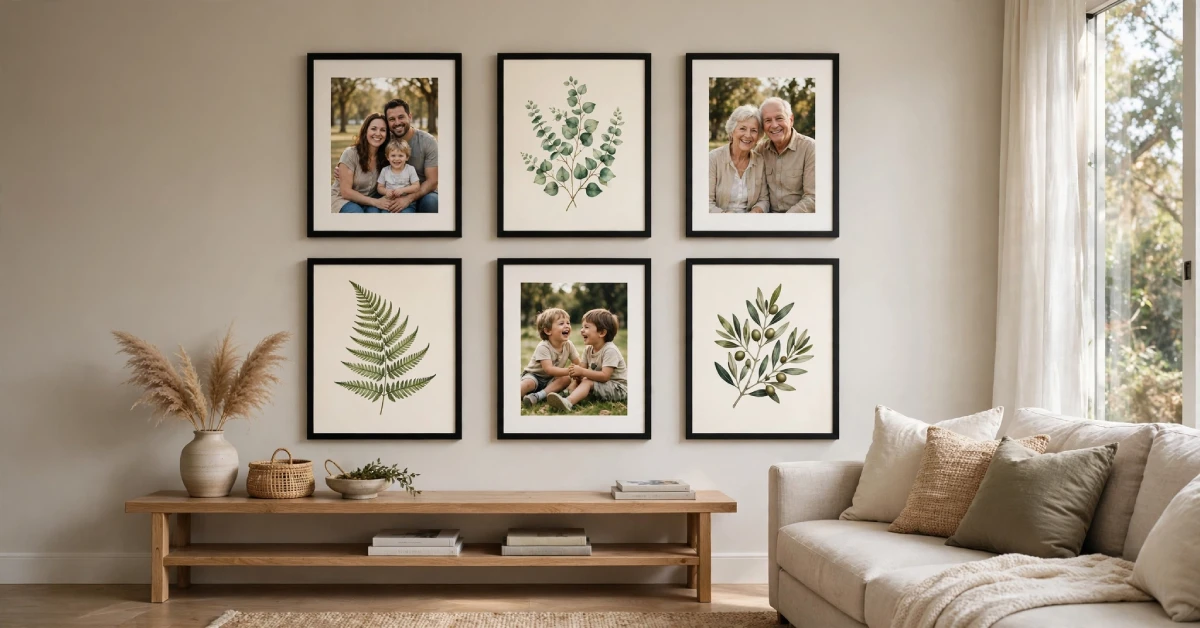
Gallery walls remain one of the most searched living room wall decor ideas, and for good reason. They let you combine photos, prints, and small objects into one cohesive display instead of committing to a single expensive piece.
Interest in this format spikes seasonally. Search demand for gallery wall layouts rises 20 to 30 per cent during peak home-styling months, typically March through May and again from October through December, according to market research firm IndexBox.
Keep the layout calm by sticking to one frame colour or finish. Lay the arrangement out on the floor first, then transfer it to the wall using painter’s tape as a guide. A grid of six matching frames looks more polished than a random mix, but an organic cluster works if you keep spacing even.
Leave two to three inches between each frame so the grouping reads as one display instead of separate pieces bumping into each other. If your living room already has a lot of pattern in the rug or curtains, keep the gallery wall itself in black-and-white photography or simple line art so the wall does not compete with the rest of the room.
Mix Wood Panels and Natural Textures
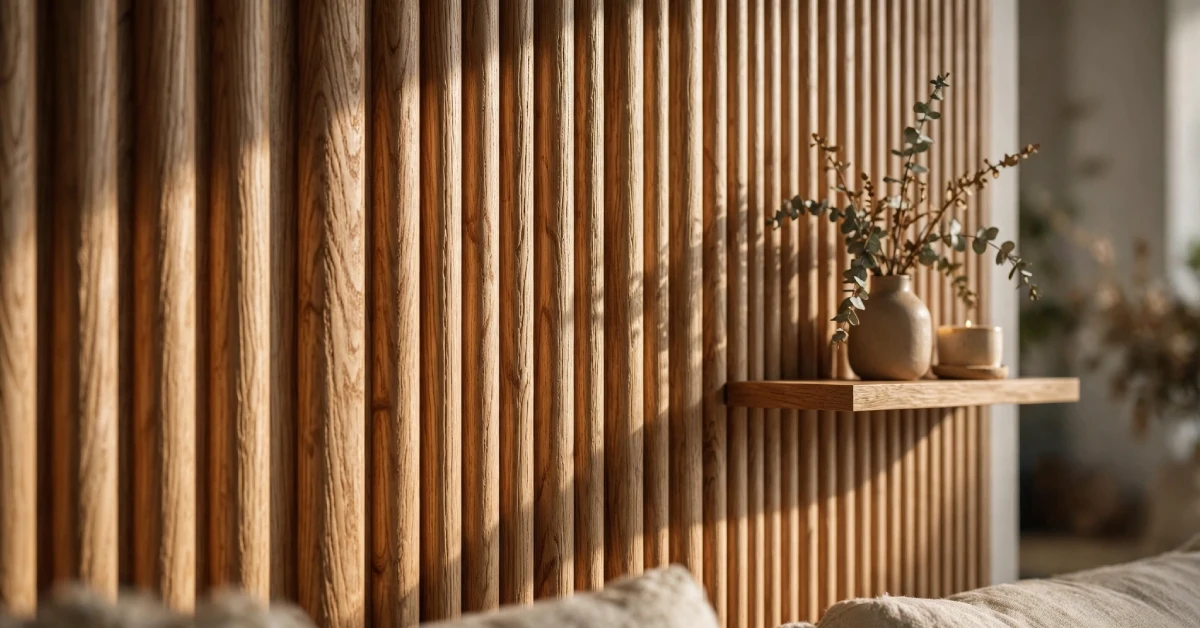
Flat drywall is losing ground to textured surfaces. Fluted wood slats, usually in oak or walnut tones, have become one of the most requested finishes in interior design right now, and pre-assembled panel kits make a weekend DIY install realistic for most homeowners.
Plaster finishes and limewash paint offer a lower-effort alternative if full panelling feels like too much of a commitment. Both add tactile depth without requiring carpentry skills, and both work on a rental-friendly budget when applied to a single accent wall rather than the whole room.
If your living room already leans traditional, classic picture-framemouldingg pairs surprisingly well with contemporary furniture. It adds architectural depth without making the space feel dated.
Add Mirrors to Open Up the Space
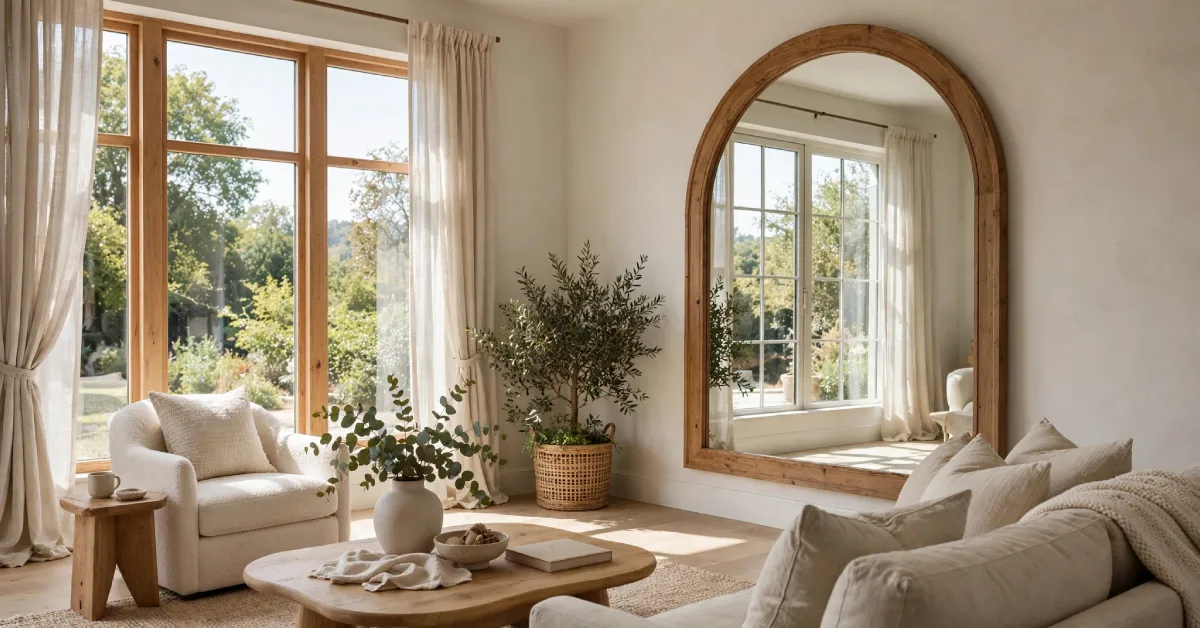
Mirrors do double duty. They bounce natural light around a dim room and act as sculptural wall decor at the same time. Arched and rounded mirror shapes have overtaken sharp rectangles as the preferred silhouette, softening a room that already has a lot of straight furniture lines.
Position a large mirror across from a window whenever possible. This reflects daylight deeper into the room and makes a small living room feel noticeably larger. A leaning floor mirror works well if you are not ready to commit to hardware in the wall.
Avoid placing a mirror directly across from a television. The reflection and glare will make the screen harder to watch in the evening.
If you rent and cannot drill into the wall, look for mirrors designed to lean rather than hang. Many now come with a stabilising bracket that keeps a large piece secure against the baseboard without a single nail, which makes this one of the easier living room wall decor ideas to reverse when you move.
Use Floating Shelves for Styled Display
Floating shelves solve a problem that flat art cannot. They give you a spot for books, small plants, and rotating decor that changes with the seasons. Pair two or three staggered shelves with a small piece of art tucked behind a plant for a layered, collected look.
A recent home design trend report notes that maximising wall space with shelving reduces the need for extra floor furniture, which keeps smaller rooms feeling open.
Keep the shelf styling loose. Group items in odd numbers, vary the heights, and leave visible negative space between groupings so the display does not read as cluttered.
Mount shelves at slightly different heights rather than in a perfectly even row. A staggered arrangement gives you more room to lean framed photos, stack a few books, and tuck in a small plant without every shelf looking identical.
Bring In Plants and Woven Textiles
Plants count as wall decor once you factor in how much visual space a tall, leafy plant takes up beside a wall. A large fiddle leaf fig or olive tree in the corner softens hard architectural lines and adds colour that changes with the light throughout the day.
Woven wall hangings and macrame have moved from niche craft item to mainstream decor staple. Handcrafted textures like these are also driving broader authenticity-focused trends in wall decor for 2026, where personal, lived-in spaces are replacing showroom perfection.
If you want the plant look without the maintenance, a well-made faux tree in a textured planter reads just as intentional from across the room.
A woven wall hanging above a low console or credenza fills the same visual role as a framed print but adds warmth that flat glass cannot. Look for pieces made from jute, wool, or cotton rope, since these materials hold their shape and colour better over time than synthetic blends.
Try Colour and Wallpaper Accents
Colour and pattern deserve more credit as wall decor in their own right. Saturated paint tones and patterned wallpaper give a room personality before a single frame goes up. Consumer research shows over two-thirds of shoppers prioritise interior aesthetics when furnishing a home.
A single accent wall, painted or papered, behind the sofa or television gives you the colour impact without overwhelming the whole room. Deep greens, warm terracotta, and rich ochre tones are performing especially well in 2026 living rooms, pairing naturally with the wood tones already trending in furniture.
For renters, peel-and-stick wallpaper panels offer a reversible way to test a bold pattern before committing to a permanent finish.
If bold colour feels risky, start small. Paint the inside back panel of an open shelving unit or the wall behind a narrow console table. You get the visual punch of a saturated colour in a contained area, so it is easy to repaint if your taste changes next year.
Budget-Friendly Living Room Wall Decor Ideas
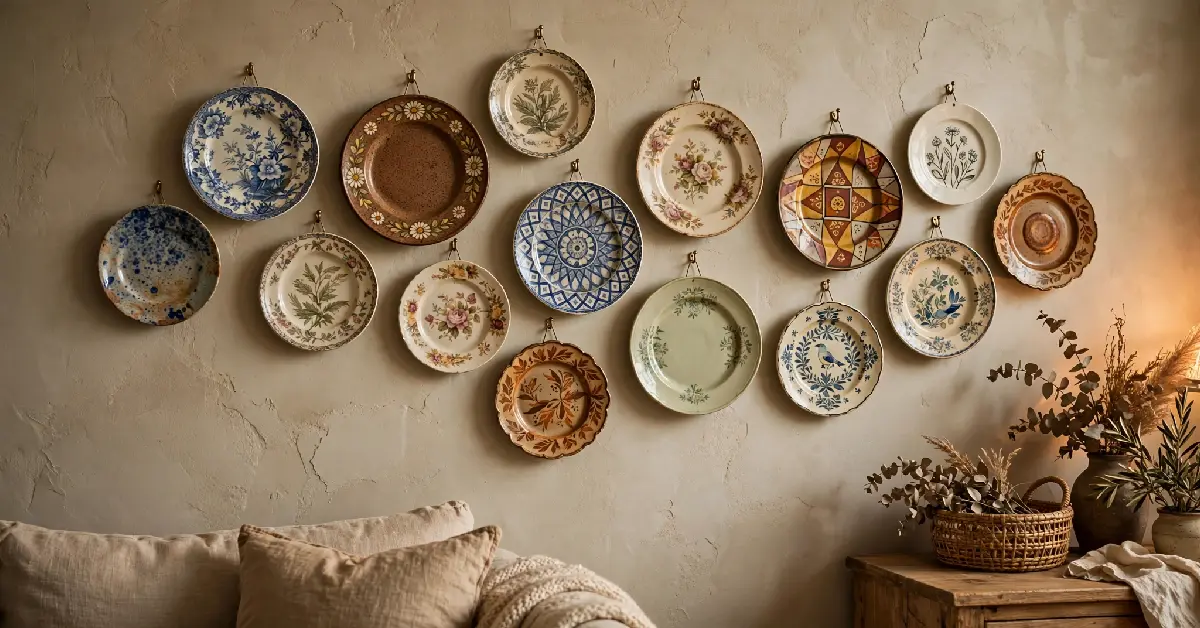
You do not need a full renovation to update a living room wall. These living room wall decor ideas work on a tighter budget,t and most can be finished in a single afternoon.
- Frame a favourite fabric scrap or scarf instead of buying new art
- Create a plate wall using thrifted ceramics and Command hooks
- Group three affordable prints from the same series for an instant trio
- Add a single string of warm LED lights behind a shelf for evening glow
- Repaint one wall in a saturated accent colour for under fifty dollars
- Hang a large mirror from a secondhand shop instead of buying new
Start with one item from this list rather than trying everything at once. A single well-placed change often does more visual work than five small additions spread across the wall.
You can browse layout inspiration in our guide to sofa ideas for the living room to see how wall decor and seating work together in a finished space.
Final Thoughts
Living room wall decor ideas work best when you commit to one strong move first, whether that is a statement print, a textured panel, or an oversized mirror, and build layers around it. Trends will keep shifting toward warmer materials and more personal, lived-in spaces, but the fundamentals stay the same: scale, balance, and a bit of texture.
If your living room feels tight on wall space to begin with, our guide to decorating a 250-square-foot room covers layout tricks that free up more usable wall for decor.
Permit yourself to change your mind. Wall decor is one of the least expensive parts of a living room to update again later, so treat your first choice as a starting point rather than a permanent decision. Swap the art seasonally, rotate in a new print when your taste shifts, and let the wall grow with the rest of the room.
FAQs
What is the best height to hang living room wall art?
Centre it about 57 inches from the floor. This is the standard museum height and works for most ceiling heights, though you can adjust slightly lower if your sofa back sits higher than average.
How much wall art is too much for a living room?
If you can name every single piece on a wall without pausing, you likely have too much. Leave visible breathing room between frames and objects so the eye has a place to rest.
Do gallery walls ever go out of style?
No. Gallery walls have stayed a top living room wall decor idea for years because the format adapts to any style, from formal frames to a casual mix of photos and prints.
What is a cheap alternative to buying new wall art?
Frame fabric, wrapping paper, or a favourite page from a large-format book. A well-chosen frame does most of the visual work, so the content inside does not need to be expensive.
Should wall decor match the rest of my furniture?
It should coordinate, not match exactly. Pull one or two colours from your rug or sofa into the art or frames so the wall feels connected to the room without looking like a matched set.
How many pieces should I hang on one living room wall?
There is no fixed number. A single large piece can carry a whole wall on its own, while a gallery format might hold six or more smaller frames. Judge by how much breathing room is left, not by a count.
Can I mix different wall decor ideas on the same wall?
Yes, and it often looks more intentional than sticking to one type. A floating shelf holding a small plant next to a framed print, for example, combines two of the ideas in this guide without feeling busy, as long as you keep the colour palette consistent.
For more ways to bring a collected, personal feel into your space, take a look at our vintage home interior inspiration.