

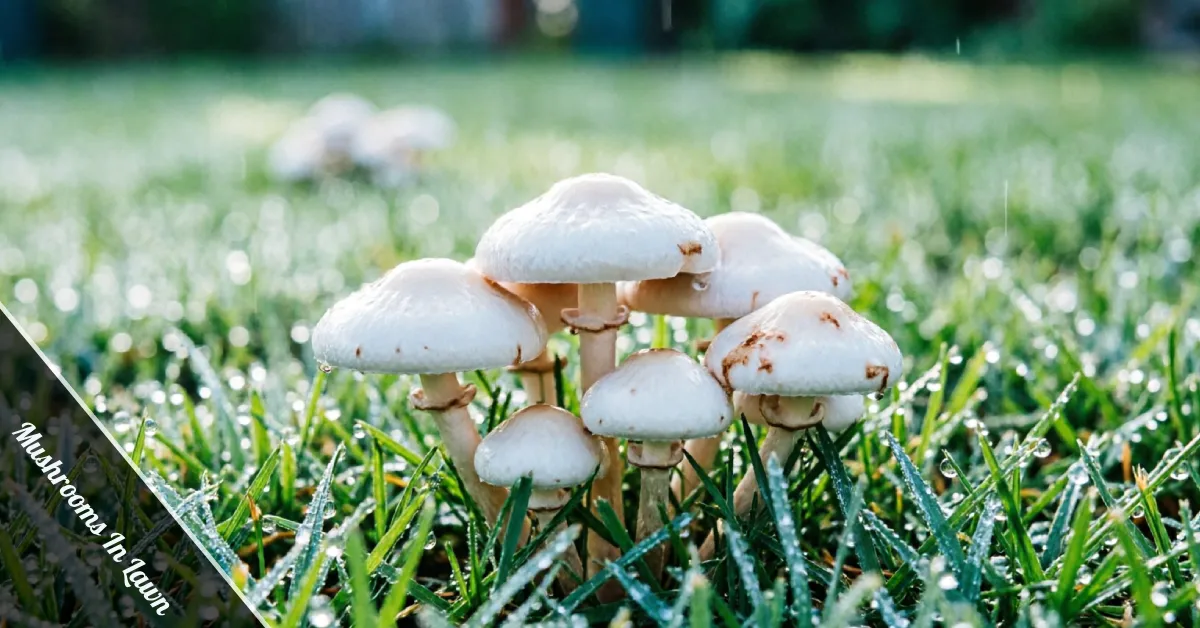
Spotted mushrooms in your lawn after a rainy week and wondered what’s going on? You’re not alone. Mushrooms in lawn grass are among the most common lawn surprises homeowners encounter, especially once the weather turns damp. The good news is that in most cases, they’re a sign your soil is healthy, not a warning sign. If you’re also thinking about adding structure to your yard with something like a yew pine plant, it helps to understand soil moisture first, since both mushrooms and healthy plantings respond to the same conditions underground.
Why Mushrooms Grow in Lawns
Lawn mushrooms grow from a network of fungal threads called mycelium living just under the soil surface. This network feeds on decaying organic material, like old roots, buried wood, or leftover thatch.
When conditions are right, the mycelium sends up a mushroom to release spores. That’s really all a mushroom is: a temporary fruiting structure.
Lawns with a healthy amount of organic matter in the soil are actually more likely to grow mushrooms, not less. It’s a sign of active decomposition happening below ground.
Mushrooms in Lawn After Rain
Rain is the biggest trigger for lawn mushrooms. Moisture speeds up the growth cycle of fungi, which is why they often appear within a day or two of heavy rainfall.
Warm, humid weather makes the timing even faster. Fungi thrive in moist, shaded spots, so lawns with heavy tree cover or poor drainage tend to see mushrooms more often than open, sunny lawns.
If you’ve noticed mushrooms popping up in the same corner every time it rains, that spot likely holds water longer than the rest of your yard. Improving drainage there can reduce repeat appearances.
What Lawn Mushrooms Reveal About Your Soil
Mushrooms are a signal, not a threat. They tell you there’s buried organic material breaking down, whether that’s an old root system, a fallen branch, or leftover mulch.
In most cases, this process actually improves soil structure over time. Fungi break down tough organic matter into nutrients your grass can eventually use.
Common Types of Mushrooms in Lawn
There are several types you might spot in your yard, and identifying them helps you decide whether action is even needed.
Puffballs are round, white, and often appear in clusters. Inky caps are tall and thin, turning black and melting away within a day or two.
Stinkhorns have a strong odor and unusual shape, while a fairy ring shows up as a circular pattern of mushrooms or darker grass, marking the edge of an underground fungal colony.
| Mushroom Type | Appearance | Common Trigger |
|---|---|---|
| Puffballs | Round, white, clustered | Decaying organic matter |
| Inky caps | Tall, thin, melts to black | Buried wood or roots |
| Stinkhorns | Unusual shape, strong smell | High humidity |
| Fairy ring | Circular pattern in grass | Underground fungal network |
Are the Mushrooms in Your Yard Poisonous?
This is usually the first question people ask, and it’s a fair one, especially with pets or kids around. Some species growing on your lawn are toxic if eaten.
You should never try to identify a mushroom as safe based on appearance alone. Many toxic and harmless species look nearly identical to an untrained eye.
If a child or pet may have eaten a lawn mushroom, contact Poison Control or your vet right away rather than waiting to see what happens. It’s always better to be cautious.
Safe Ways to Remove Mushrooms from a Lawn
If you want them gone from your yard for appearance or safety reasons, removal is simple. Pick them by hand or knock the caps off with a rake.
Wear gloves when handling mushrooms, especially if you’re unsure of the species. Bag and dispose of them rather than leaving them on the lawn to spread spores.
This won’t eliminate the underlying mycelium, so that mushrooms may return in the same spot later. Removing the visible caps mainly addresses the immediate concern of spores and curious pets.
How to Get Rid of Mushrooms in Lawn Permanently
Getting rid of them for good means dealing with the moisture and organic matter feeding the mycelium underground, not just the caps you see on top.
Start by improving drainage in low spots where water tends to collect. Aerating compacted soil helps water move through instead of pooling near the surface.
Removing buried wood, old stumps, or thick thatch layers takes away the food source fungi rely on. Once that’s gone, the mycelium has nothing left to grow from.
Fungicides exist, but they mostly treat symptoms rather than the actual cause. Most lawn care experts recommend cultural fixes over chemical ones for lasting results.
Long-Term Prevention and Lawn Care
Preventing regrowth long-term comes down to consistent lawn care habits rather than one-time fixes. Good drainage and airflow make the biggest difference.
Mow regularly and avoid overwatering, since soggy soil is exactly what fungi look for. Water deeply but less often, giving the soil time to dry between sessions.
Dethatching once a year removes the buildup of dead grass and organic debris that fungi feed on. This single habit prevents a lot of future mushroom growth.
If you’re planning bigger yard changes anyway, like swapping patchy, problem areas for something lower-maintenance, it’s worth comparing synthetic grass installation price options, since artificial turf removes the organic matter fungi need almost entirely.
Treatments That May Not Solve the Problem
Store-bought fungicides often disappoint homeowners dealing with this. They can kill visible fruiting bodies but rarely reach the mycelium deep in the soil.
Baking soda and vinegar are popular home remedies online, but neither is proven to work against lawn fungi and can actually damage your grass if overused.
The most reliable fix is always addressing moisture, drainage, and organic debris directly. No shortcut replaces those three basics.
Frequently Asked Questions
Why do mushrooms appear in my lawn after rain?
Rain adds the moisture fungi need to grow quickly, triggering mushrooms to fruit within a day or two of heavy rainfall.
Are little white mushrooms in my yard poisonous?
Some are, some aren’t, but you can’t tell by looking. Treat unidentified mushrooms as unsafe, especially around kids and pets.
Will fungicide remove mushrooms in lawn permanently?
Not usually. Fungicide treats what’s visible but rarely reaches the underground mycelium, causing regrowth.
Do mushrooms mean my lawn is unhealthy?
Not at all. They usually signal healthy organic decomposition happening beneath the surface, not damage to your grass.
Conclusion
Mushrooms in lawn areas are rarely a real problem, more a sign your soil is doing its job breaking down organic matter. Focus on drainage, mowing, and removing debris, and you’ll see fewer of them over time. And if you’re already reworking your outdoor space, this is also a good moment to look into planting something interesting, even a low-maintenance fruit tree like cherimoya, since healthy soil that resists fungal buildup also supports stronger plant growth overall.